Tuesday, 17 November 2015


                                         Harvesting grain; ancient Egyptian hieroglyph

Agricultural societies succeeded hunter-gatherer ones, and values such as patience, foresight, diligence, and perseverance quadrupled in importance. These values, which farming requires, would not replace the hunter-gatherers’ values totally and immediately, but the farmers’ values and their way of life grew until they, in their multiplying societies, had largely made the old values obsolete. The new agricultural way of life was just better at making more humans over the generations.
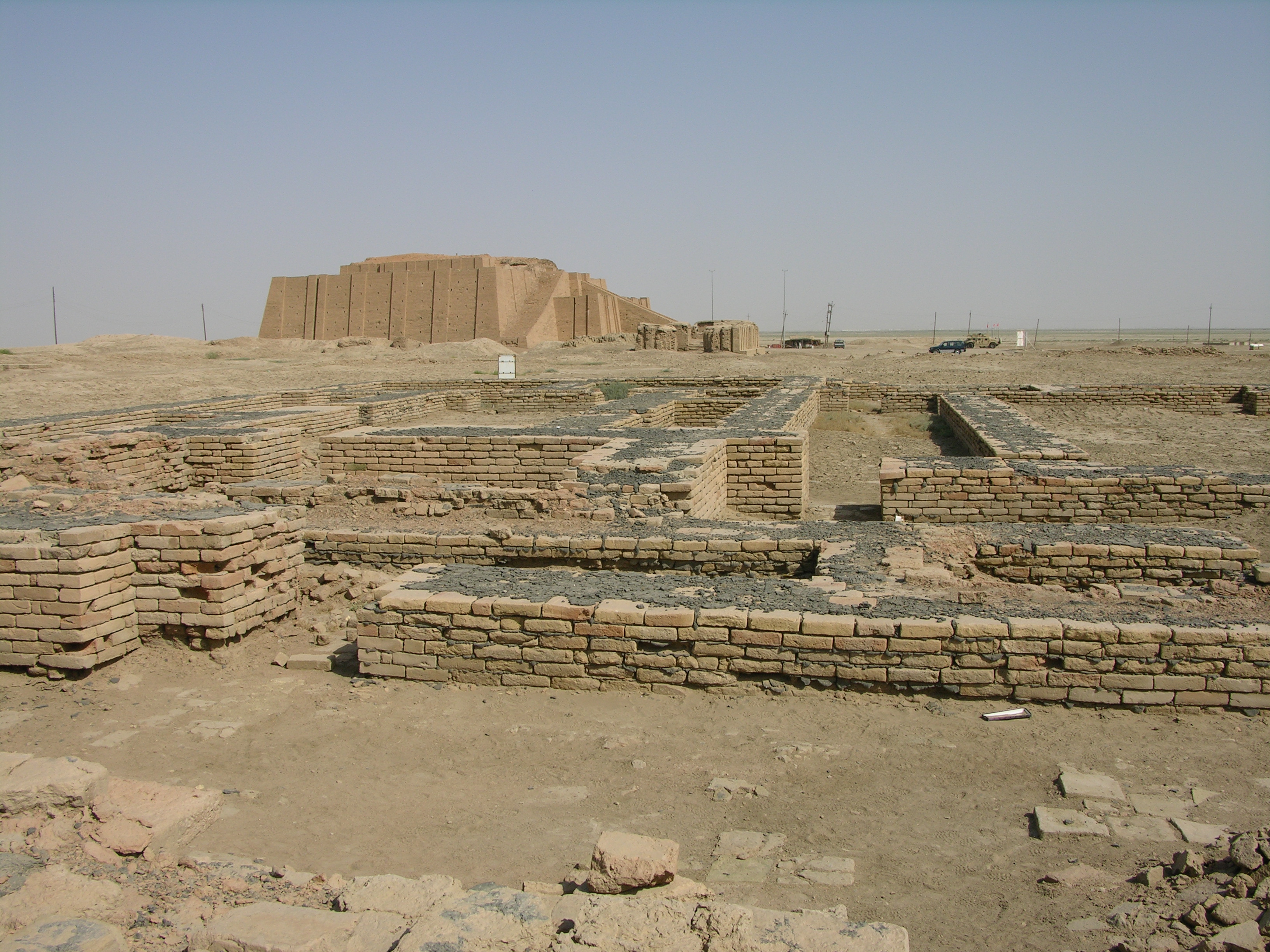

  
                                            Ruins of Ur, ancient Mesopotamian city

When hard grains that could be stored indefinitely were domesticated, towns were formed as an efficient way to store the community’s food wealth in a central, defensible site. Of course, the progress from stage to stage had many recursions. Nomadic tribes with little food and plenty of aggression to spare were lurking, and the most aggressive of these tribes might for a time subjugate and exploit the city dwellers. Two ways of life tested themselves against each other. But in the end, the city dwellers won.

Inside a city’s defenses, governing bodies with administrative offices became necessary to ensure fair distribution of the tribe’s food and to organize the tribe’s members in ways that brought domestic order and protection from invaders. Following them came craftsmen and merchants who found a protected, central site with a large population more conducive to the practice of their arts than a rural setting.

             
                                                    A potter in action at a potter’s wheel

Cities and their ways proved fitter for economic progress than decentralized farm communities or nomadic tribes. More citizens working in increasingly specialized skilled tasks helped to increase the population. Values shifted toward making all citizens comfortable while they functioned in densely populated neighborhoods, causing the rise of behaviors that encouraged citizens to respect their neighbors’ property. Don’t bear false witness against your neighbor and don’t covet the things he has in his yard next door. The Bible directed believers not to covet their neighbors’ goods because envy leads to friction and then violence.

A city’s laws expanded on the farmer’s rough guidelines for living in a thinly populated farming community of familiar faces. The laws prescribed more precisely what kinds of behaviors were acceptable in nearly all activities of city life. Urban crowding requires more civility. Even the word law came to be associated with reverent feelings (e.g., for Socrates7).

Most of all, the city had at its immediate beck and call large numbers who could fight off an enemy attack. Successful cities even progressed to the point where they could even afford to keep, feed, arm, and train full-time soldiers, professionals who were capable of outfighting almost any swarm of invading amateurs. The farmers remaining in the hinterland moved closer to the city because life was better there. Just one generation of life in or near the city taught citizens to be patriotic to their new stat. Programming that survived made loyalty to one’s city-state automatic; patriotism is a virtue conducive to the city-state’s survival. Away from their city, morés, and values, people came to feel that there was no truly human life.


                                           Urn showing blacksmith at work in ancient Greece


Literacy, metals, machines, and the technologies of industry, communications, and computers all brought values shifts to the nations in which they first arose. When the ways of life they fostered proved more vigorous than those of nearby competing societies, the values shifts, morés, and behavior patterns that rose up with the new technologies were eventually adopted by those other societies (usually with accompanying revolutions, nonviolent or violent). Of course, societies that resist these shifts in values and behaviors must find or create competing alternative behavior-generating programs within their own cultures, programs that are equally effective in the cultural-evolution game. Or they get overrun.

Monday, 16 November 2015

The word principle is a term for patterns that are common in even larger groups of things or events. Terms like danger and edible name very general principles that a tribe has spotted in many, many real life experiences of many tribe members. The terms are harder to learn than tiger or nuts, but also very useful in real life. The term danger enables one tribe member to tell another to get away from something quickly and stay away. It covers tigers, snakes, bears, crocodiles, unstable cliff faces, avalanche zones, poisonous plants, and so on. It’s an efficient term and one worth learning and keeping. The term edible covers nuts, berries, maggots, eggs, frogs, fish, lizards, and many more things an individual may come upon within the tribe’s environment. It enables one tribe member to tell another that the substance they’re looking at is worth gathering because it can be eaten, even if sometimes it doesn’t smell or taste very nice.

The society or tribe has gradually learned that these general terms are useful in providing guidelines for the design of patterns of behavior that will be effective in the tribe’s struggle to survive. Finally we come to values, which are the most general of principles, ones that apply to huge patterns in our memories of sense data. We care about defining good because, deep down, we need to know what good is in order to survive in increasing numbers over the long run.

Terms for values name meta-behaviors, programs that are called up and run within the confines of the human skull. By values terms learned from our elders, we continually form judgments about what we are seeing. Note, however, that most of the time we don’t take any action when an experience is evoking one of our values. Sometimes we recognize a thing or an experience is harmless so we cease to think about it. Being constantly aware of, and wary of, the details in our surroundings does not always mean we‘ll take action, even though we are always contemplating whole sets of possible actions. Thinking, even thinking about our ways of thinking and which of them have been getting good results lately, is internal behavior. Often, what shows on the outside—to the frustration of the behaviorists, who want to study only what is objectively observable—is nothing at all.


                                                        Vaccination of Chinese babies


Some ways of thinking enhance our chances of finding health and survival. Tribes are constantly seeking those ways. The ways of thinking that seem to work most effectively over generations are the ones we keep and teach to our kids. Conversely, people who live by principles and values that don’t work in reality don’t survive and, therefore, don’t have children. In short, principles and values can be understood as tested and proven techniques for sorting and responding to real life. They help us to organize our sense data and our memories of sense data. Over generations, they help tribe members, individually and jointly, to formulate effective plans of action in timely ways.

So let us now consider the ways in which early humans probably formed and used early principles. Early hunting and gathering tribes, for example, taught their young people methods of killing elk, fish, birds, mammoths, and so on. Crush the spine, right where it enters the skull. Or pierce the heart. Or cut the throat. Study the tracks and droppings. If the tracks are in new snow, or the droppings are still steaming, the animal is close by. There were many species to hunt and many ways to stalk and kill each of them. Over time, the thoughtful, resourceful hunting tribes thrived best and multiplied.


                                         Artist’s conception of Neolithic mammoth hunters

A hunter needed far too many behaviors in his repertoire for those behaviors to be learned or called up one at a time, so hunting principles were invented. In nearly all cases, hunters found it useful to recall general rules about what they’d seen and been told of their target’s habits in past encounters. Using these more general principles, the hunters would try to anticipate what the animal would do in the upcoming encounter, on this particular day and in this terrain. The hunters would then prepare psychologically for violent, team-coordinated, physical action—if the hunt was to be a successful one.


The exact process by which each kill would be made could not be known in advance, but the hunters knew that they would need to act with intelligence (in the planning stage) and skill and courage (in the implementation stage). At the most general level, successful hunting tribes needed to teach the values that we today call courage and wisdom to their young in order for their young to have better chances of surviving, reproducing, and passing the same values on to their children. Again it is worth noting that the mechanism of human evolution discussed here is not a genetic one but a socio-cultural and behavioral one, and it requires conceptual thinking.

Sunday, 15 November 2015

Honouring parents preserves and enables the increase of the tribe’s total store of all kinds of knowledge. Avoiding committing adultery checks the spread of sexually transmitted diseases. It also increases the nurturing behaviors of males, as each man’s confidence that he is truly the biological father of the child he is asked to nurture increases. Not stealing and not bearing false witness have benefits for the efficiency of the whole community, in commerce especially.

By this point in our argument, explaining the benefits of more of these moral commands should be unnecessary. A major fact is becoming clear: a moral belief and the behaviours attached to it become well established in a tribe if the behaviours help tribe members to survive in both the short and long hauls. It is also clear that individuals usually do not see the large, long-term picture of the tribe’s survival. They just do what they were raised to believe is right.


                                                        Modern children planting rice (India, 2012)

Children may not enjoy some of the behaviours their elders dictate, nor may they enjoy them later when they are adults. Work is hard. Building shelters is work. Making clothes is work. Gathering food and preserving it for the winter is work. Raising kids is work. Work is tedious. But for survival, individual happiness is not what matters. Patterns of living that maximize the resources of the tribe over many generations are what matter, and these ways of living do not always make sense to the people being programmed to do them. But tribes that don’t teach hard work and loyalty to family and tribe die out.


To illustrate further, another example of a custom that seems counter-intuitive to Western minds but that works can be offered here. Polyandry allows and encourages one woman to have two or more husbands, legally and with the blessings of the community. It seems counter-intuitive to us. But the practice is not only viable in some cultures, it even promotes better survival rates. In some areas of the Himalayas, when a man knows that finding work may require him to be away for an extended period, he can pick a good second husband for his wife. 

Then he will know that she, his children, his property, and the children and property of the other man will be protected. If she becomes pregnant while he is away, it will be by a man he has approved of.5 As long as all three really are faithful to the marriage, the risks of any of them getting an STD remain small.

This train of thought brings us to a deeper implication embedded in my argument.
Close analysis of individual human behaviours reveals that they cannot be completely explained by their collective advantages to the tribe. We can’t reason our way to a moral code for all humans without first understanding that humans are capable of forming very large patterns of thinking—patterns we usually call concepts or beliefs.

Behaviorism’s model of human thinking is left behind at this point since this model does not adequately explain conceptual thinking. It connects stimulus to response in a one-to-one, mechanical way. It then explains some individual behaviors for which stimulus and response can be clearly described in limited, detailed, objective terms. The behaviorist reports that “The organism sees and recognizes these colors, shapes, and sounds, pushes the bar, and gets the food-pellet reward.” For example, I go to work at the big, grey factory, punch my time card at the clock beside the brown door, put bolts on widgets for nine hours, punch out, collect my pay, and go home.

   This photo of Abiola Ogungbenle who came to the U.S. from Africa in September seeing snow for the first time has gone viral online.
                                              Nigerian man experiencing snow for the first time 


But a human can confront situations that are not, by sensory evidence, like anything the human has encountered before, and still the human can react effectively. The English hunter who had never seen a moose, kangaroo, or rhinoceros in muskeg, outback, or veldt still knew where to shoot in order to kill one. Polynesian sailors navigated well by the stars of a new hemisphere when they first came to Hawaii as did European sailors when they first began to explore the lands and seas south of the equator. In each of those situations was a set of concepts—ideas underlying those terms, ideas based on patterns found in large numbers of experiences. For example, the animal’s heart lies at the bottom of the ribcage, slightly to the left of center, and a heart shot is fatal for every animal on this planet.

Further, a man may react in one way to a new stimulus in his first attempt at something and quite differently in his next attempt, after he has contemplated the stimulus situation for just a bit longer. He sees, hears, or feels a deeper, more general pattern that he recognizes, and then, based on concepts stored in his memory, he plans and executes a more effective response to it. The lists of concepts and their uses could go on for pages.

Nearly every human past the age of eleven or twelve is capable of forming generaliz-ations based on what he has learned from his individual experiences and, to an even greater degree, what he has been taught by the adults of his society. Conceptual thinking is as human as having forty-six chromosomes. It comes to a child at the age when, for example, he realizes that the short, wide cup holds more soda than the tall, slim one. Volume is a concept. (I take Piaget as my guide here.6)

The programmers of society—parents, teachers, shamans, and others—make use of this faculty in their young subjects, greatly increasing these children’s chances of surviving by programming them with more than simple, one-to-one responses to recognizably repetitive sense data patterns in the tribe’s territory. The young subject is ready to be programmed with categories and then, at higher levels of generality, with principles, beliefs, and values.


Every tribe has labels (words) for large groups (categories) of similar things or events in the tribe’s environment. These category terms are taught to the young because they are useful in the quest for survival. The Sami (Laplanders) have many words for describing a reindeer because they sometimes need to differentiate between them. A single word to describe a dark brown, pregnant doe is useful if she is in labor, in distress, and in need of immediate care. And for Cro-Magnon tribes, it probably was useful to have many terms for rock or stone or boulder or pebble or flint because only certain types of flint could be used to make effective weapons and tools. By contrast, most visitors to Lapland speak only of reindeer does, bucks, and fawns, and some visitors may have no words for reindeer at all. 

Saturday, 14 November 2015


But if humans act as they do mostly because of parental programming, why or how did some behaviour patterns ever become established in the first place in the earliest of human societies? And why did many behaviors obviously possible for humans vanish totally or never get tried at all? Why don’t most people on this planet eat Rowan berries or turn their children into slaves? The answer is obvious: the morés that help us to live are kept; the ones that don’t serve the needs of survival aren’t. We keep alive the morés that keep us alive.

The second step in the explanation of social morés and cultures is this: behaviour patterns become established in a society and passed on from generation to generation if they enable people to live individually and as a community, to reproduce, and to program the behaviours into their young. If new morés or behaviour patterns are to last, they must achieve these results at levels of efficiency at least as high as those the community knew before its people began to acquire the new behavior patterns. This is the theory around which is built the field of sociocultural evolution, a field of study that began to develop as a branch of science only in the twentieth century due to the work of people like sociologist Gerhard Lenski and anthropologists Leslie White and Marshall Sahlins.3

The gradual process of adoption of morés into the cultural code of a society is vital to the survival of the morés themselves. None of the phases in a society’s adopting a new more necessarily entails any of the others. A behaviour recently acquired by one person on a trial basis may make that individual healthier and/or happier, but this does not automatically mean he will reproduce more prolifically or nurture more effectively or teach his morés to his children more efficiently. Other factors can and do intervene.

Many examples can be cited as evidence to support this generalization. Some of the tribes in Indonesia taught every member of the community to go into the forest to defecate. The individual had to dig a hole in the earth, defecate in it, then cover the excrement with earth before returning to the tribe’s living spaces. Children were taught to hide their excrement so no hostile shaman would find it and use it to cast an evil spell on such a careless child.4

In the view of most of us in Western societies, the advantages of the practice lie in the reduced risk to the community of diseases such as cholera. Similar practices are taught to people in Western societies (and described in cultural codes as early as those found in the Old Testament of the Bible).

Orthodox Jews and Muslims have long been taught not to eat pork. What survival value lay in eating beef, chicken, and fish but not pork? The answer, from a scientific perspective, is that pigs for hundreds of years have been the main intermediary hosts carrying trichinosis to humans. The early Jews and Muslims did not know that such was the case; trichina eggs and worms are microscopic. But Jewish and Muslim communities nevertheless benefited over the long haul by eliminating pork from their diets.

For centuries, many Europeans drank large quantities of malt liquor, wine, and beer, and later, tea and coffee. This custom was based in tradition rather than religion, but its beneficial effect was felt just the same, since local water often contained dangerous bacteria. While the benefits were mixed because they were offset by the negative effects of alcohol and caffeine abuse, the important thing to see is that these people did not need to know anything about bacteria in order to arrive over generations, by trial and deadly error, at a set of behaviours that enabled them to survive in greater numbers over the long term. Of course, in China, the drinking of tea had been looked on as a healthful practice for both the individual and society for much, much longer.


Another example of the morés that guide our cultures can be found in a different area of life, in the laws of Moses. These instruct followers of the Hebrew, Christian, and Muslim faiths to “Honour thy father and thy mother, that thy days may be long in the land that the Lord thy God hath given thee.” (Exodus 20:12) The faithful are instructed to care for, treat respectfully, and consult their parents (therefore, by a small logical extension, all citizens of the community should be cared for in their old age).

Honouring our elders means consulting with them on all kinds of matters. Before writing was invented, an old person was a walking encyclopedia to be consulted for useful information on treatment of diseases and injuries, planting, harvesting, and preserving food, making and fixing shelters and tools, hunting, gathering, and much more. Knowledge and wisdom were passed down through the generations by oral means. By honouring elders, the people in a community preserved and thus had access to much larger stores of knowledge than if they had simply abandoned their elderly as soon as they became a net drain on the tribe’s physical resources. 

An elder’s knowledge often solved both small problems and major crises for the entire tribe. Over many generations, societies that respected and valued their elders gradually outfed, outbred, and outfought their competitors.

Imagine an elder in a primitive tribe. She might very well have said: “We have to boil the water. This sickness came once before, when I was seven summers old. Only people who drank soup and tea did not get sick. All who drank the water got sick and died.”

It is worth noting that the commandment in its original wording read, “Honor thy father and thy mother, that thy days may be long …” and so on. “Thy” days, not “their” days. At first glance, this seems odd. If I honor my parents, they will likely enjoy a more peaceful and comfortable old age, but that will not guarantee anything about my own final years. By then, my parents, even if they are grateful folk, will most probably be long since dead. At that point, they can’t do much to reciprocate and so benefit me.

On closer examination though, we see that there is more here. As we treat our elders with respect in their last years, consult their opinions on a wide range of matters, include them in social functions, and so on, we model for our children behaviors that are imprinted on them for a lifetime, and they, in turn, will practice these same behaviors in twenty years or so. The commandment turns out to be literally true.


Note also that there is a deep and complex relationship between our morés or patterns of behavior and our values programming. The common behavior patterns in a culture, patterns that we call morés, are just ways of acting out in the physical world beliefs that are held deep inside the individual’s mental world, beliefs about what kinds of behaviors are consistent with the individual’s code of right and wrong, appropriate or inappropriate, sensible or silly. More on these matters as we go along.

Friday, 13 November 2015

If we keep asking why, the answers seem to spread further and further from one another into a variety of human morés and then cultures; human morés vary widely within any given society and much more so from society to society. But if we persist in analyzing masses of the evidence, patterns begin to emerge. Based on these patterns, we can make some general statements about people and their ways. For the most part, people act in the ways they do because they have been programmed to act in those ways by their parents, their teachers, and the communications media of their cultures. For example, close observation shows that the vast majority of humans learn to perform the actions that relieve their bodies’ physical needs in the ways that are considered most socially acceptable in their particular culture.
                 
        
                                 Balut is soft-boiled fetal duck that is commonly eaten in Vietnam

Another example: I far prefer to eat dishes I find familiar from my upbringing. And in my culture, I wash my hands before eating to remove disease-causing germs I might otherwise ingest with my food if I ate it with dirty hands. I’ve never seen these tiny animals, but I’ve been trained to be wary of germs. Therefore, I take measures to neutralize the danger I believe they pose to my well-being. I also make an effort to urinate and defecate only in places deemed acceptable in my society, no matter how urgently nature calls.


                                       Staphylococcus bacteria (common on human hands)

It is important to note the profound way in which human behaviour patterns differ from those of nearly all other animals. A turtle need not ever see another turtle, from hatching to dying of old age, in order to be turtle-like. Alone, a turtle would not be able to complete its genetically-driven reproductive behavior each mating season, but it would at least try to find a mate. The rest of the time, it would live in ways that are completely normal for turtles, entirely directed by its body’s genetic code.

Creatures such as ants, crabs, and fish that came early in evolutionary history clearly are more fully programmed by their genetic codes than are those of higher orders such as cats, dogs, apes, and humans. But even most higher-order animals learn only small portions of their behavioral repertoires. Kittens, in time, will stalk balls and then mice and birds, even if they are taken from their mothers still blind and helpless. Puppies are genetically programmed to bury bones. Humans, by contrast, if raised by dogs, become humanoid dogs, and demonstrate hardly any human behaviors at all. We humans—unlike turtles, apes, and kittens—learn how to be human-like by “socialization” that is, almost entirely from other, older humans.1,2

Most animal behaviors are instinctive, programmed into animals genetically, especially in the lower-order animals. As we rise up the scale of complexity, we arrive by degrees at humans, in whom most behaviors are programmed by nurture—by their upbringings, in other words. A set of behaviors, along with the body of knowledge that a given community of humans consults in order to judge when to apply specific behaviors to specific real-life situations, how to perform the behaviors, and then how to verify that each behavior has been done appropriately, forms what is called the culture of that human society or tribe. Put a dead fish in the ground with each corn seed that you plant and wear your tuxedo and black tie to the opera.


The first step on our journey to answering the question about humans and their ways is simply this: human patterns of behavior are mostly the result of programming by the adults around them in their formative years.

Wednesday, 11 November 2015

Chapter 9 – The Mechanism of Cultural Evolution

In order to build a universal moral code, we must now do two things: first, explain how moral codes become established and amended, and second, extract from our best modern models of the physical universe the principles we should use to guide us in building a moral code so that it is consistent with, not disconnected from, all our other knowledge in modern times. We need to make our ideas of good connect to our most coherent and effective ideas of real.

Most of us are raised and conditioned to be fiercely loyal to the way of life we grew up with, so we can expect that analyzing the roots of morality will be difficult. Powerful and subtle internal programming steers us toward affirming the morals and morés that we grew up with. But difficult does not mean impossible. Most importantly, we have the evidence of history and of life as it is lived by real people in real societies today to check our theories against.

And what do we notice about moral code systems if we closely analyze various human ways of life, that is, the cultures of a variety of human societies, present and past?


Humans baffle one another and each of us even baffles him/herself. Why do we do the things that we do?


The reasoning process that answers this question contains several steps. To begin with, we can analyze the everyday actions of the people around us. Why does this man get up when his alarm clock rings? Why does he even have an alarm clock? Why does this woman shampoo her hair and then dry it with a hot-air blowing electrical device? In similar ways, dozens of mundane questions may be posed about the everyday life of our society or any society. Of course, these actions and the motivations behind them seem obvious to the people who live in the society in which they are practiced. To the people in a given society, their actions seem simply to involve people being people. But to people in other cultures, the reasons for them are often not merely obscure, they’re unknown.


Another interesting example of a custom that is commonplace in some societies but not others is the one that trains men to shave their beards. In some cultures, men who are clean shaven are seen as being neat, presentable, and attractive. In other cultures, a man without a beard is seen as being weak or alien. In some cultures, men are forcibly shaved as a form of punishment. 

The fascinating questions come when we ask “Why?” Why shaving? Is there some survival advantage in some environments for men who were trained by their fathers to shave their beards? For example, do men who shave daily appear younger or more attractive to women? 

Do they reproduce more successfully and prolifically and thus pass their ways on to more progeny, especially the boys who watch them shave?

Research on such shaving questions is sparse and inconclusive. However, in our present context it is important to see that asking questions about cultural morés and customs in terms of their possible advantages in the survival game entails thinking scientifically about morés in general. Under this view, none of our actions or habits are trivial or meaningless. They all matter. Under this view, the mundane rapidly becomes the fascinating.


Tuesday, 10 November 2015

Over two hundred years ago, David Hume spotted a major problem with the whole method of reasoning by induction. Deductive reasoning begins from some general rule that we trust totally. We then apply the rule to a problem in front of us. Inductive reasoning begins by looking at a whole lot of examples of a problem and trying to find a common pattern among them. Then we formulate a rule about how these kinds of situations turn out, a rule based on the pattern we think we have spotted. Then we test the rule in new situations, over and over, until we really sharpen and deepen our understanding of it. Inductive reasoning is the reasoning method that empiricism and science depend on.3

However, Hume said that if we draw generalizations from our masses of experience of the real world, no matter how careful we are in how we observe reality, formulate our generalizations, or conduct research to further test, refine, and bolster these generalizations, we still can’t say with certainty that any of them is true. To do so would be to posit that the events of the future will be like the events of the past. We can’t make that larger claim because we haven’t been to the future.


Bayesianism slips out of the problem of induction. It simply says we are always gambling, checking the generalizations that inform our gambling—even our most basic ones, the ones we need in order to see reality and form generalizations at all—against real-world data constantly. By choosing to live in this state of permanent tentativeness, we are gambling on alert, rational gambling as being our best gamble.

But we aren’t putting all our eggs in the single basket of any one model of any part of reality. Rationalists end in doing that, as they attempt to reason their way from sets of concepts they say they just know to premises they won’t question to policies they won’t analyze, no matter how ineffective or destructive the consequences of those policies may appear to be.

With Bayesianism, we also don’t get stuck like the empiricists, stopping in a stymied funk in our progress toward a kinder, wiser world, which is what happens if we keep staring at the problem of induction and refuse to get on with life until that problem is solved. It isn’t going to be solved. Bayesianism gives us a viable way out.

Thus, we can get on with it—the task of formulating a moral code based on our best current models of the real world. In the coming chapters, the Bayesian view of the human mind, combined with two of the most basic ideas in physics and a model of cultural evolution, will enable us to build a modern moral system. And then, finally, we may be able to make a case for theism, a belief in the existence of God.


Notes

1. Douglas R. Hofstadter, I Am a Strange Loop, (New York, NY: Basic Books, 2007).

2. Plato, The Phaedrus, Perseus Digital Library. Accessed April 17, 2015. http://www.perseus.tufts.edu/hopper/text?doc=plat.+phaedrus+265e.


3. John Vickers, “The Problem of Induction,” Stanford Encyclopedia of Philosophy, March 14, 2014. http://plato.stanford.edu/entries/induction-problem/.