Tuesday, 19 June 2018


                                    refer to caption

                                     Quarterback A. J. McCarron, in play, weighing options 
                                     (credit: Keith Allison, via Wikimedia Commons) 


Freedom Grants A Sporting Chance


As promised, in this post we will begin to discuss free will and how sports can enlighten us on what freedom is and whether we have it. This discussion must be broken up into two pieces. Today, we will settle for clarifying the moral realist position on free will. In my next post, I will then apply what is said today to the realm of sport.

A major question in Philosophy that has stayed unresolved for centuries is whether humans have free will. Do we have the freedom to change the flows of events around us in our environments? Or are we caught up in flows of events that are already locked in place by forces we don’t have any power to change?


                                                   Soccer ball with no humans around 
                                   (credit: Peter Glaser, via Wikimedia Commons)


The view of the universe believed by philosophers during the Enlightenment assumed that all events that have happened, that are happening, and that will happen were, are, and will be, shaped by earlier events. Thus, the very idea of humans having free will is a delusion. We’d like to think so, but we really don’t have free will. This was the view in the heyday of Newtonian Physics.

That view is called “determinism”, and in formal terms, it says that if  …if …a person could know all the data about all the particles in the universe, and all the laws of Physics, then s/he could predict all of the future and retrodict all of the past of the whole universe. The collisions of stars in space and the moment when life sparked into existence on our planet, Napoleon’s orders to his officers at Waterloo and Dickens’ deciding to write a Christmas story rather than a report on data that he’d been given on the poverty in the England of his time – all these events were directly caused by events that came just before them, and those earlier events were caused by even earlier ones. The sequences go right back in chains of cause-effect to the origins of the universe.


   File:Walker James Alexander Napoleon Watching The Battle Of Friedland 1807.jpg

                                      Napoleon watching a battle unfold 
                       (credit: James Alexander Walker, via Wikimedia Commons)


Even our so-called “choices” are shaped by chemicals reacting in our brains and those chemical reactions occur in response to sense data coming in through our eyes, ears, etc. into our brains from events, objects, live things, and people around us as we move through our day. We are robots programmed by our heredity and upbringing to react in predictable ways to what is happening around us. Unfree events outside of us cause unfree events inside of us. There is no room in that picture of reality for human freedom.

On the other hand, modern Physics is very different from the Newtonian kind of Physics. Quantum theory says that at the tiniest levels of matter (sub-atomic particles like electrons and quarks), particles move in jumps and not in fixed chains of cause and effect. All the way up to the events that happen at our level of resolution (“medium-sized dry goods” is how one philosopher put it) and then to the stars, events are connected in chains that are not locked into one fixed sequence. All events that have happened, are happening, and could happen are only more or less likely, in varying degrees. They are never certain.

Quantum uncertainty does not tell us how free choices may be coming from the insides of human brains (or the insides of any other living things), but quantum uncertainty does break the back of classical determinism. The events of our lives are not set into an unshakable sequence by the forces of the universe. In fact, no matter how much data we might have at any given moment, or how well we understand the laws of Physics, no mathematical calculations can tell us with certainty what is going to happen in ten million years or in ten seconds. We can list a whole range of possible events to come and give estimates of the odds for each of the possibilities on our list, but we can’t know for certain that any of those possible outcomes is going to be what will happen. And no list is ever perfect and complete. The possibility that we may see an event for which we have no precedent – a total surprise, in other words – is always there. 

"There are more things in Heaven and Earth than are dreamt of in your Philosophy, Horatio." (Hamlet) 

In the moral realist view of the universe, we assume free will and we assume that there are programs in living things that enable those living things to detect events around them and calculate the odds of their, for example, getting buried in a landslide or swept away by a rogue wave on the beach. The wave coming in may only be visible ten seconds before it hits the beach, and that may be just enough time to run up to the second floor of your hotel before it hits. But you have the capacity to see, think, and do, i.e. to perform that action. 

Living things can intervene in the event flows driven by Physics and change the odds of some of those events happening. We can increase the odds of the ones that look like they'll bring us good things (health, pleasure) and decrease the odds of the ones that threaten to bring us bad things (illness, pain, death). We're free. 

Is that action you do in your hotel "free"? We can say this for sure: the lamp in your hotel room is not going to run away from the oncoming wave. But you may. 


      CSIRO computer image of rogue wave hitting a semi-submersible platform
                       (credit: James Alexander Walker, via Wikimedia Commons)


On the other hand, if you are already on a ninth-floor balcony looking down at the beach, you will probably calculate that you are safe. You’re ninety feet above the level of the sea at this time of day and your hotel is made of reinforced concrete. The wave is only ten feet high. You might even hurt yourself if you panicked and dashed for the hall and the stairs. Probably, the smart move is to stay put. You are calculating odds for various possible responses to what your senses are telling you about what’s happening around you. 

Similar calculations tell most of us not to drive rapidly through parking lots. Lots of cars. Small spaces between them. Limited vision. Many kids, dogs, and old folks going into the mall. What are the odds? How can we improve the odds that all of us will return home safely?

With even a little education, we soon make washing our hands a regular part of our everyday routine. We’ve learned that there are lots of germs, some of them virulent. Washing hands is easy to do in our culture. I can choose to make hand-washing a regular practice for myself and my children and in under ten minutes total out of my day, reduce the odds of my getting sick by over 95%. 

And I avoid vicious dogs and I study before my test in Math and so on. I act to improve my odds of enjoying health and happiness all the time.

Humans especially have spent the last 200,000 years getting better and better at controlling not just the things around them, but also the things in them. We have spent much time in writing and re-writing the programs in our heads that make us react to events in our environments. In other words, we strive to learn how our world works, and then to pass that knowledge on to our kids. We keep re-writing our programming. In just the last century, we have gained the power to re-write our heredity as well. 

By studying our environments and how we act in them, we can change both the genetic codes used to build the computers inside our bodies and the “apps” (the knowledge) we put into those "computers" once they’re built. Heredity and environment can be met and handled by genetic engineering and education.  

So, in the first place, moral realism says as a starting assumption that all living things have at least some free will. The evidence in the real world indicates that this is so. Every living thing has a capacity to follow the situations happening around it that are likely to aid it to stay alive and avoid the ones that are likely to destroy it. Or, sometimes, to react with nothing more than a glance. A butterfly is no threat to me. I can notice it, look more closely, and then just smile.


                        Child and butterfly (credit: Wikimedia Commons) 


In the second place, moral realism claims that humans have the greatest degree of freedom of all living things we have discovered so far. We aren’t “free” to flap our arms and fly away, but we have the degree of freedom that let’s us move out of the wind and toward food, shelter, and our loved ones. And we have the capacity to investigate the reality around us and learn more and more about how it works. Maybe even study the curve of a bird’s wing in the wind and figure out how to build a machine that can fly us through the air much faster than any bird has ever gone. We can then pass on what we have learned to our kids. 

Over time, we have learned to plant crops, store grain, build canals, vaccinate our kids, and so much more. We pass on to our kids the practices that work and the knowledge that explains why and how they work so the kids can learn even more. Or to characterize our ways of life over the millennia, we can say we have worked hard to become freer and freer with each generation that passed. 

Now the really determined determinists scoff at this way of describing what living things are doing in the real world. They argue that all of these choices on the parts of human beings, and all other living things, are just subtler and subtler interactions of forces that are still beyond anything like those living things' control. One wonders what would constitute proof of free will to such thinkers. 

In the scenarios in which a living thing is sensing, and reacting to, events around its body in ways that improve its odds of surviving intact (not in smaller and smaller pieces, which is what the forces of pure Physics would normally do to it), there is no entity, force, or field in that scene that could be steering that living thing out of the path of destruction other than that living thing itself. There it is, defying what, by Physics alone, we would say are the odds. To make sense of its behavior, we are going to have to attribute a quality or trait to it that enables it to do that steering. That trait we see in all things that dodge or fight the destructive forces in their worlds could be given many names. But the simplest choice is just to use a term we already have, namely the term "free will". 

To repeat: the physical universe is providing only forces that should destroy that life form. Forces that, with anything that has clear boundaries around itself, normally work to burn it, freeze it, or smash it into pieces. That is what happens to rocks, icebergs, planets, and stars. 

But there that living thing is, defying all the odds of its surviving in its harsh and dangerous surroundings. If we don't call it "free", at least in some degree, we render ourselves incapable of talking about what we see in life. What makes life is free will, in at least some degree, even in protozoans, and what has free will is only things we call "alive". The one is the other. That irreducible core concept of "free will" is essential to our being able to talk about life at all.    

On this site, we try another approach. We postulate as a starting point that living things have a quality that is easiest to just call "free will" and we develop that concept to see where it can take us. 

Anything that can get out of the way of the events in reality that would damage it can be said to be, in some degree, “free”. 

A planaria worm can swim to the side of the petri dish that is out of the direct sunlight, and, in fact, it will do that because direct sun will kill it. A grain of sand in that same petri dish is not going to swim anywhere. Even trees are, in a degree, free. They maintain themselves against destructive forces in their surroundings. They even warn each other of a pest moving through the forest toward them.

All life is "free" in some degree. It can act in some ways to preserve itself. 

But no other living things are free in the degree that humans are free. Lions see gazelles and, if the lions are hungry, they stalk those gazelles in ways that are fairly limited. But we, over time, have learned to make weapons, so that even though we are not sprinters, we bring down those same gazelles with arrows and spears, and in the end, feed our kids more reliably than the lions feed their cubs. 


             Wolves stalking bull elk (credit: Doug Smith, via Wikimedia Commons)


We have multiplied many more times than the lions or gazelles or wolves or deer because we have got better and better at spotting patterns in the events happening around us, calculating what is likely to happen in a minute or a day or a year, then planning and acting to intervene in that anticipated flow of events so that we improve our odds of surviving in greater numbers over the long haul. We plant, rather than merely gather, the seeds of grasses; we tame, rather than merely hunt, the goats living in our part of the world. We remember which herbs ease a fever and which ones heal cuts. Other animals do some behaviors that indicate thought and planning, but they are small achievers next to us. 

It is worth stressing again that none of the foregoing description of real things in the real world proves for certain that humans have freedom. It gives evidence that indicates that it is reasonable to assume that all living things have free will, then follows that assumption to see where it leads.

In our time, the free will option has been made plausible by Quantum Theory. If we simply assume that we have it, for the sake of argument, we can follow that hypothesis to see whether it leads to conclusions that are consistent with more and more of our observations of the world.

That is how Science proceeds. Study reality. Form a hypothesis about how some part of it works. Then, investigate to see whether the hypothesis is supported by the evidence in the real world. 

Choosing to make the assumption that we do have free will is a leap, but that is all any theory in Science ever is. Every scientific theory begins by someone’s making a guess, then investigating further to see whether it works, whether believing it leads us to useful results.

Finally, even if all the complex responses we engage in as we react to events (i.e. as we act to dodge or enhance the things we encounter in reality) are still just the results of our genetic and cultural programming, it makes far more sense to assume we’re free, and then plan to make the most of the opportunities that likely will come our way, than the determinist alternative does. It makes more sense to assume we can do something about our circumstances, no matter what they are, than it does to cower and stare at the dark, which is what we are enjoined to do if we don't embrace the idea of our own freedom. When we assume we can influence events around us, and try to learn more about how to do so, we get on with life. 

The question is not: “Do we have free will?” The real question is: “If we assume that we do have free will, what results does this hypothesis get us?” 

Belief in our own free will "gets us" a capacity to face and handle the patterns we see in events in our environments. Over the long term, that belief has given humans who take it as their starting point better odds of survival.

So this is why the idea of free will has survived: it enables its carriers to survive. 

For millennia, the folk who believed implicitly that they had free will survived and spread. Those who didn't ...didn't. It has turned out to be a good gambling strategy in the cosmos casino. We aren’t fearful hominids cowering and clinging together in caves anymore. Someone got the idea that s/he wasn’t powerless to affect the flows of events around her/him, then watched, thought, and acted.


                               National Museum of Mongolian History diorama 
                              (credit: Nathan McCord, via Wikimedia Commons)


Therefore, even if we can’t prove with inescapable logic that we do have free will, we can say this: if we provisionally adopt the view that we have free will, and then act in ways that are suggested by that starting assumption, we get good results. We live. In greater and greater numbers. To say that may not seem like much, but it is enough to let us get on with …everything else.    

Next time, we'll look at the evidence of free will that we see in sports. 

In the shadow of the mushroom cloud, have a freely chosen day.

Sunday, 3 June 2018


                      Muhammad Ali NYWTS.jpg

                 Muhammad Ali (credit: Ira Rosenberg, via Wikimedia Commons)


                                              The Reality of Sport

An interesting way to apply moral realism to everyday life is in the realm of sports. Sports of some kind are found in all human societies, and the ways in which people play games reveal deep things about individuals, whole cultures, and even our whole species.

Let’s consider first the epistemology of sports that is implicit in the ways in which we play them. There are no athletes who, in the middle of a match, have any questions about whether the ball, or puck, or opponent’s fist they are seeing is real. There’s no time during competition for such thinking. The player hits the ball with the bat in his hands if he judges that he can, or he takes the puck passed to him onto his stick as smoothly as he can. The boxer ducks the oncoming fist.


               Kevin Pillar bunting (credit: Terry Foote, via Wikimedia Commons)


Could the sense data telling the player the rate and angle of approach of the ball, puck, or fist coming toward him be mistaken? Yes. Just as much as Descartes could be seeing men walking away that are really just clockwork men, or Gilbert Harman could be a brain living in a vat and seeing only an illusion, the athlete could be perceiving a set of sense data that seem to fit the reality he thinks is happening, when in fact, there is no real ball, puck, or fist at all. The sense data the athlete thinks he’s seeing could be complete illusions.


              Martina Navratilova (credit: robbiesaurus, via Wikimedia Commons)


But the athlete in that situation does not care. He will try to his utmost ability to catch the ball, or receive the passed puck, or duck the fist as well as he can. Why? Because he doesn’t want to get knocked out. If you make the case to him, before the match, that what he is about to see could all be an illusion, he will probably reply with something like, “What difference does this ‘could be’ make? Even if I can’t prove that what I’m seeing is real, I’m going to gamble that it is and react accordingly anyway. In the end, philosophical speculations about whether what I am seeing is real will not make any difference to how I, my teammates, or our opponents are going to act. We will gamble that what we are seeing is as it appears to be. We want to get on with the match.”


                 Hideo Nomo (credit: Ryosuke Yagi, via Wikimedia Commons)


Why do I bring such an example up? Because it captures in a short space the epistemological view not just of athletes, but of people living ordinary lives. They can’t prove that a fly ball in a baseball game is arcing toward them in the way their eyes tell them it is. The fielder could be tricked by the stadium lights; he could be seeing a ball coming at him on a high parabolic trajectory when in fact it is coming at him via a totally different line of approach. A line drive, hard, flat and dangerous. He may even suspect that what he thinks he is seeing may not be what is actually there if he has been fooled by the lights in this stadium once before. But he will gamble on the best probability-of-success action he can calculate. And if he’s been fooled before in this stadium, it likely is also true that he has caught over a hundred fly balls successfully here too. He may be about to get hit in the teeth by a line drive. But what else can he do except go with what his judgment tells him is his best gamble: “the ball is most likely coming at me in the way that it appears to my eyes to be doing.”

If he catches this high fly ball (if that’s what it really is), his team will win the game. So he chooses what he believes is his best option, based on an analysis of what his senses are telling him right now combined with his memories of past catches. He chooses to attempt the catch, rather than cringe behind his glove. Then, he chooses what looks to him like his best gamble and executes it.

And so goes life. I can’t prove beyond all doubt that the car coming at me is straying across into my lane. But my visual sense data are telling me that is the case. I choose now to swerve out of the way of the imminent collision. My perceptions are also telling me that a small edge of my left index finger is in the line of travel of the knife that I am using to cut my sandwich. So I move my hand. Even making lunch contains philosophical assumptions.

Bottom line? Sport reveals to us that we gamble on our best judgments of our best sensory impressions and clearest, most trusted memories all the time. Life is happening. If I am to win, eat, and save my teeth, I gamble on what looks to me like my best bet. Is that gamble ever a perfect certainty? No. But it is good enough for now, which is all I ever really have anyway.  

Moral realism begins from the assumption that all of the actions of life are but rational gambles based on our best perceptions of our surroundings and our best odds-calculating, memory-scanning mental programs. We do our best to update our odds-calculating programs all through our lives right up until the moment of action. We try to learn from our mistakes and from other humans. But there are no certainties. We take gambles and do actions most of time because we must do something. Or else get hit in the mouth by a baseball.

I’ll gamble. And act. So will you. Life contains worse hazards than baseballs.

The ontology of everyday life: what appears to our senses and our judgment to be real, most of the time …is. If it’s not, sooner or later, pain will teach us what the real situation is. Pain is a harsh but effective teacher.   

The epistemology of everyday life: I use my memories and reasoning program as well as I can to learn which actions work and which ones don’t, and I use what I have learned to make choices and act. Can I prove my ways of knowing and acting are foolproof? No. Am I going to use them anyway? Yes.

Rational gambling. This is Bayesianism, the starting point for moral realism.

I also try my best to update my memory and reasoning programming day by day, based on what I see works. (“This stadium again!”) Even though I’m mistaken sometimes, I take the gamble, learn from the pain, re-write parts of my programs and move on. My only other choice is catatonia. I’d rather live. Actively. Here. Now. In reality. (Roughly, Neo’s choice in “The Matrix”.)

Rational gambling is the policy in real life that makes possible real life.

And that’s enough for today. Next post, we’ll go on to the assumptions about free will that underlie the thinking of sport.

In the shadow of the mushroom cloud, nevertheless, for at least some of today, throw, catch, run, and jump. Do life and feel that you are.


Tuesday, 8 May 2018


                         File:Karl Marx.png


Marx’s Bastard Offspring

Karl Marx was born on May 5. 1818. Two hundred years ago. He is definitely an individual worth discussing. Probably, only a handful of other humans in human history had as big an effect on history as he did. Communism, Marx’s idea went from being a ridiculed thesis in a book by a man two generations dead to ruling more than half the world’s population in less than one human lifetime.

He is fascinating for me because he tried to create a science of human group behavior. He believed human history could be seen and understood under the microscope of Science, and that from the study of our history, we could figure out the rules that govern how we move and change as whole classes and nations. Once we had these rules clear, we could use that knowledge to guide our destiny and end the miseries we keep going through. Famine. Plague. Economic depressions. Revolution. War.

I like his intention. I agree with his concluding that the sufferings of humankind are over 90% avoidable, and since that is the case, we should be exerting ourselves to avoid them. To do otherwise is stupid. Irrational. Why would we want to suffer if we don’t have to?

But I don’t think he saw far enough, which is why his recommendations for how we should behave as nations didn’t work when they were tried in the real world. In short, the misery that his “communism” inflicted on people unlucky enough to come under its yoke is not due to the fact some of his disciples were immoral men. The problem lies in the vision itself; it’s a flawed vision.

Marx’s theory was that the set of facts we call “History” is a record of a struggle between two classes – workers and owners. In every era and nation, in every department of our lives - art, science, politics, work, health care – in every human activity – the rich are working to keep workers toiling, ignorant, beaten, starved, and scared. Churches, for example, are always being used by the rich to keep the poor ignorant, superstitious, and fearful.

The struggle has gone on for centuries because people who are clever at getting the big share of the value of the goods and services produced in a society then do not want to share that wealth with anyone else. The rich – whatever the country, whatever currency the people in that country use – hoard the wealth and use it to exploit the workers and keep them on the brink of bare subsistence. The rich then spend the remaining wealth, the surpluses of goods and services – which are made by the workers – on luxuries and pleasures. In the meantime, the workers and their children are skillfully steered by schools, churches, and propaganda, into starving, contracting preventable illnesses, fighting each other, and dying young.

Marx said that someday, as the workers grow in understanding, they are going to get fed up, get confidence in themselves, organize, and kick the rascals out. Kill them if need be. Then, the workers will take over, organize production of the things that they need to live comfortably, do moderate amounts of work, and fill their days with art and leisure activities. Enjoy life.

The responsibility of every decent person, regardless of his or her class, gender, race, etc. is to work in his or her best way to bring about that day. “Workers of the world, unite! You have nothing to lose but your chains.”


                        File:Stalin 1902 Colour.jpg

                                                          Stalin at 24 years old 


Communism’s big flaw is not apparent at first, but practical experience over the last hundred years has repeatedly shown us that flaw.

Communism is a fanatic belief system. It doesn’t make provision for any person to disagree with its worldview. It does not call for free speech and free elections inside a democratic state. Instead, Marx calls for violent overthrow of the existing order, annihilation of any who talk of gradual steps to social justice, and then the establishing of a "dictatorship of the proletariat".   

If you aren’t part of the solution, you’re part of the problem. If you aren't with us, you're against us. 

Consequently, in the real states set up by nations that try to bring communism in as their form of governance, it makes available early on the governmental machinery of total control. The world worker’s paradise, that is supposedly coming someday, instead becomes a vague justification for ending all dissent. The tiller of tyranny is there for an opportunistic person to seize and hold onto. But all nations contain opportunists. Someone always seizes that tiller.


                    File:Thomas Jefferson by Rembrandt Peale, 1800.jpg

                    Thomas Jefferson (painting by Peale, via Wikimedia Commons) 


It’s worth noting that Marx’s vision is opposite to that of the founding fathers of the U.S.. Adams, Jefferson, and their colleagues aimed to write a constitution in which the first design principle would be to prevent any one individual, class, religious organization, or corporation from ever gaining total control of the state. 

They set out to make a country in which people must discuss, compromise, and reach consensus before they can organize and act. Before they can get anything on a community scale done, they must talk to each other. That was to be the only way, in Adams and Jefferson’s vision, for all levels of government to work. So they divided up the power – executive, legislative, judicial – in such a way that any two of the main organs of governance could always stop the third if it got out of hand, i.e. if it got mean and greedy.

Marx’s communist state is designed to be populated by optimistic cooperators. Jefferson’s republic is designed to be populated by cautious realists.

Communism failed because it does not make provision for the restless nature of humans themselves. In every community, nation, or tribe, there will always be some who are curious, creative, defiant, and restless. That restlessness, that need to keep pushing the envelope of life outward, in spite of the destruction it has sometimes caused via the tyrants of history, has nevertheless, at the same time, been the driver of all that is creative and noble in us. Human curiosity and the human need for constant testing of the limits of our lives will never be tamed; but it just might be managed, channeled, and invested if we consciously choose to start managing ourselves. Pluralistic democratic ideals, widely believed, could enable us to end the madness.

It is worth noting here too that in the real experience of the last hundred years, one of Marx’s most fundamental maxims has turned out not to be true. A mistake. A false portrayal of reality.

Marx said that the capitalists will always seek to get richer and richer and push the workers harder and harder. The rich do not share, and in this, they will never change. They hate the very idea of sharing, at least in Marx’s view.

But the wealthy of the U.S., for example, could see in the 1930’s that if they did not share at least some of what they had, they were going to lose it all. The Russian Revolution was still fresh in the minds of the people of the world. Its lesson? See what happens when the rich get too arrogant. They lose their heads. Literally. When the poor have nothing, they have nothing to lose. And there are many, many more poor than there are rich.


                               File:FDRoosevelt1938.png

                                            Franklin D. Roosevelt (Wikimedia Commons) 


So when Roosevelt told the rich of the U.S., many of whom were his personal friends, as he had been born among them, that they were going to have to invest in workers and their welfare, they listened to him. Partly because they did care about the suffering that was going on in all the U.S. states. (Kids were dying of malnutrition while food was being burned to keep the price up.) But also partly because those same rich did not want to end up like the Romanovs and their friends. Or the Bourbons of France a century or so earlier. The prospect of one’s own horrible death has a marvelous power to focus the mind.

In other words, while communism is extremely seductive in its idealized form, and extremely difficult to overthrow once its inevitable tyrants come in and secure their grip on the military and media, it eventually does crumble. The crumbling comes about partly because communism’s inherent flaws make the people who live under it gradually learn to hate it, and partly because its coming into real world existence forces its competitors on the world market of ideas – the free market, capitalist societies – to evolve. Opposing memes fight to survive. When the rich see they really could lose it all, including their own heads, they change their attitudes.  

The memes by which the societies of the human social world are built and run are like the genes of the living creatures of the natural world. They keep restlessly combining and re-combining, and combinations that don’t work in the current real circumstances of the world lead the individuals and species programmed with them into dead end paths. The species that are obsolete and the societies that are obsolete die out.

The problem for the cynics and pessimists of the world who say that this essay only proves life is inescapably miserable and doomed is that if we can grasp and discuss these ideas of how societies emerge and flourish and how they fall out of touch with their environments – if we can think with these ideas as you and I are right now – then we could learn to write and re-write our ways of life so that we don’t have to do the wars, revolutions, plagues, and famines anymore. We could learn to evolve peacefully.

“There is no inevitability as long as there is a willingness to contemplate what is happening.” (McLuhan)  


                                   File:Marshall McLuhan.jpg


                         Marshall McLuhan (Josephine Smith, via Wikimedia Commons


During the Enlightenment, several of the finest thinkers of the West believed that reason could lead us into a Golden Age. We could fix the human condition. The more I understand of how fools and bullies come into power and go out of power, and how societies keep evolving, the more I think it still could be so.

Why not? “We have nothing to fear but fear itself?” (Roosevelt)

In the shadow of the mushroom cloud, nevertheless, have an intelligent and compassionate day. (Wendell)

Thursday, 3 May 2018


                File:WW2 Marine after Eniwetok assault.jpg

                    A thousand-yard stare (U.S. military, via Wikimedia Commons)


Over a month with nothing posted. Today, a personal, universal post.

These days, I tend to spend much of my waking time gazing into space. What Americans call a “thousand-yard stare”. Or absent-mindedly poking my tongue at an incipient cavity in one of my lower molars.  

Why?

I’m seeking among the memories of my life in this world – all my experiences, all my education – for large ideas that will explain all the experiences and all the concepts gleaned from all my years of living and studying. My best friend, a friend of 60 years, tells me I stare into space with my mouth half-open and a glazed look in my eyes. Not a pleasing sight.

But none of that matters if one is on the trail of truth.

So this post will not be an event-specific post.

I’ve been trying to write about specific events for over a month: the coming summit-level meeting between U.S. President Trump and President of the DPRK (North Korea) Kim Jong Un; the withdrawal of the U.S. from the Iran nuclear deal; the political unrest in Armenia; the failure of the factions “left” in the West, so far, to find consensus on anything; the latest climate-change models.

But I’ve come to a useful conclusion: the vicissitudes of daily events in the world are nowhere near as important as understanding the big idea that tells us what the events mean. First, we must get that clear. Then, we can formulate policy, change laws, change school curricula, and so on with a goal in mind.

These events are driven by our species’ software packages – the cultures of the world – interacting and evolving, all the time. Human speaking and acting is driven by human thinking, which is driven by cultural programming. We strive to live out what we have been taught is “right” and “normal”. The problem is that ideas of “normal” and “right” vary widely from culture to culture.

What I insist is that we must get conscious control over our cultural evolution. Stop being puppets and start being agents. Human society is a giant ecosystem, one that can be managed. That’s the big idea.


             Bullfrog in pond ecosystem (Public domain, via Wikimedia Commons)


Human societies run by cultural programming. They are phenotype instances of genotype cultures. Our social world contains a lot of elements – societies and factions within societies, sometimes cooperating, sometimes competing. These elements are constantly seeking a balance that interfaces effectively with physical reality. As conditions change, each society keeps adjusting its beliefs, values, and patterns of behavior so that it can keep on getting food, healing injury and disease, having and raising children, and so on. 


                   desert ecosystem (Tomas Castelazo, from Wikimedia Commons)


Conditions in empirical reality keep changing. But empirical reality is the stuff we must swim in every day and in every generation. To live, we must change with it.

Every human tribe programs its members from childhood on up to preserve, enhance, and extend the tribe. Thus, all humans think and act to preserve the system they grew up in. In the meantime, each system functions to preserve, enhance, and extend itself. Individuals, each human society programs, drives, and uses up. My proposal is that we move on to a better, more conscious way. Learn to see our social reality as an ecosystem, one that can be adjusted.  


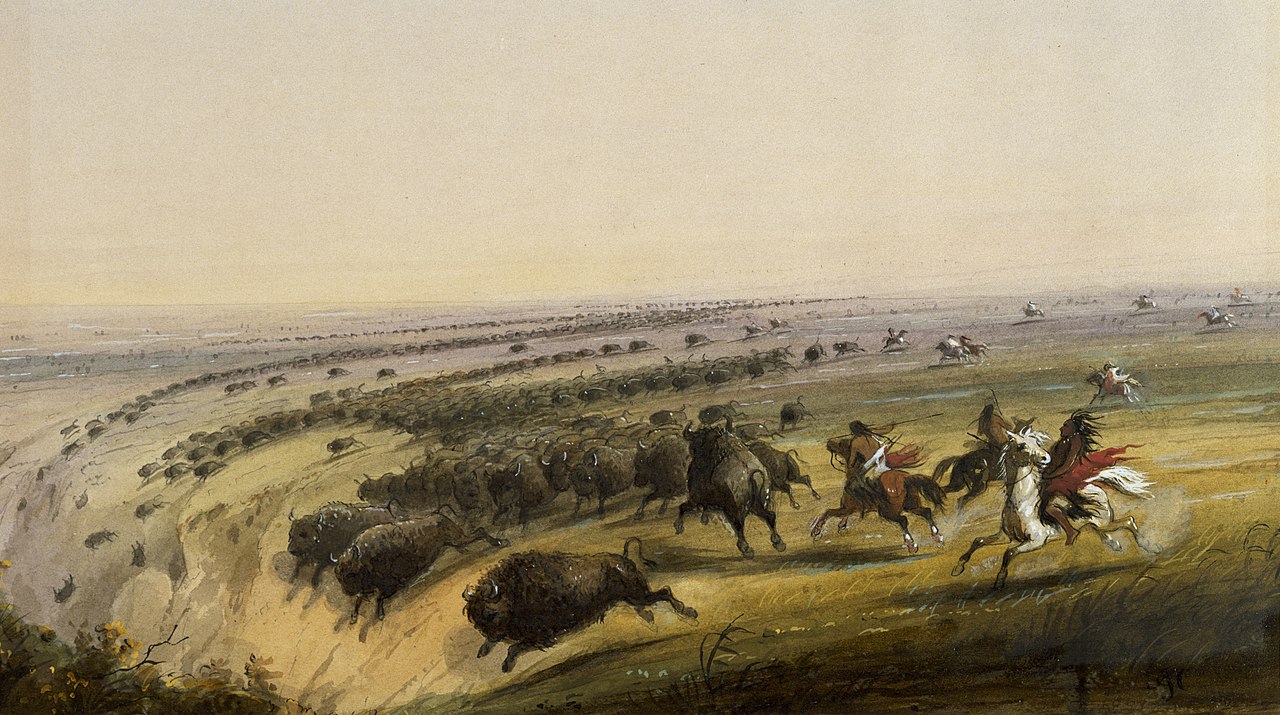
                  plains natives, horses, buffalo, grasslands: a prairie ecosystem 
                     (artist: Arthur Jacob Miller, via Wikimedia Commons) 


The largest problem for us is that the way by which human tribes have updated their balances in the past will kill civilization and probably most of us if we don’t rise above it: consciously see and choose to program our children to choose how their society maintains, reproduces, and evolves.

We must learn to re-program the thinking underlying the “ways” that have over and over led us into war. In today’s world, this means that we must become one tribe that is constantly adjusting – balancing capitalism with socialism; invention and individualism with environmentalism, empathy, social justice, and compassion.

Large challenges demand that we think in large ideas. Is balancing all these abstract concepts in their imperfect real-world forms going to be difficult? Of course. But finding that balance – efficiently – is what democracy is for.

Do we have another choice? No.

We will take on this challenge – not just the smart people of the world, but all the citizens of the world – and work on it, day to day to day. We will become a world society in which arguing about when we need stiffer laws to regulate how businesses treat their clients and employees and when we can get laws out of the way of the entrepreneurs and let them invent and create, when the rights of the individual must supercede the rights of the community and when the reverse is the case, and so on.

We will learn to balance all the elements of our world by the democratic processes of debate and compromise or we won’t anything. 

If we don’t make debate over the managing of ourselves our daily intellectual fare, management and professional classes will devolve into treating worker and consumer classes with more and more cruelty and exploitation until a revolution occurs. Or the tribes of the world will keep getting more and more mutually suspicious and hostile until we use our nuclear weapons. Or we’ll pollute our planet past repair. All these hazards are growing.

And then, we’ll be done as a species.

Look down the corridor of time. To handle these challenges, the reasoning power of the human mind is the only real tool we have. Thinking.

Big challenges demand that we think with big ideas. Debating big ideas and how they work in daily life – that activity should not be called the “American” way, the “Euro-centered” way, the “Western”, “Protestant”, or “scientific” way. It’s democracy and it’s just sense. If we are to survive, there is no other way.


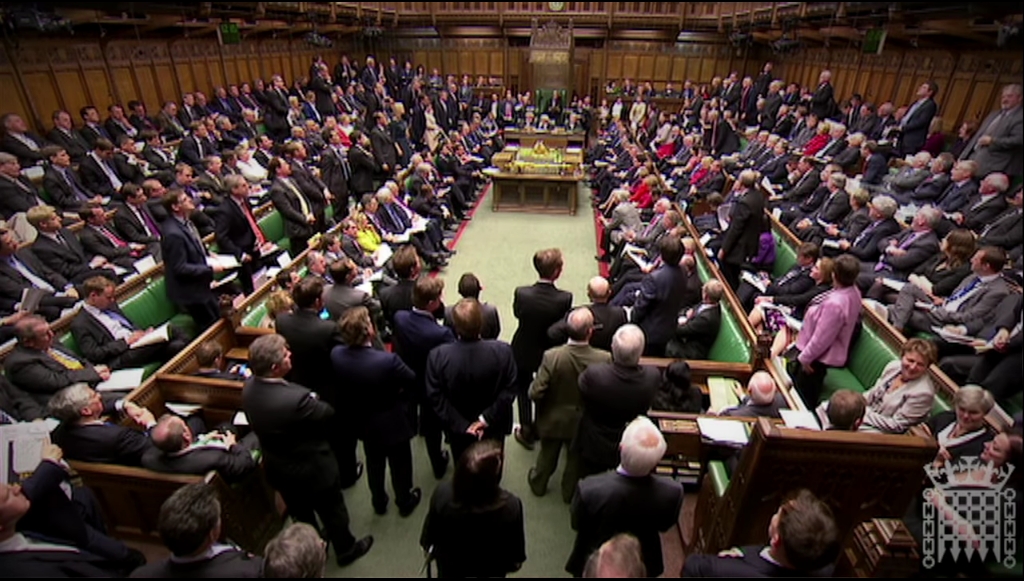
                     Questions for the prime minister, House of Commons, U.K. 
                                                         (Wikimedia Commons)


If we want to live, we must rise above the ways of our past. Learn to think and act while consciously focusing on the cultural evolution of our species. Think of human society worldwide as an ecosystem, one that can be adjusted by prudent, strategic action – changes to education systems, health care institutions, laws, foreign policy, and so on. So that we stay alive.

However, one problem with tackling this challenge is that it sometimes causes a person to stare into space with her or his mouth open.

But nevertheless, in the shadow of the mushroom cloud, have a thoughtful day.


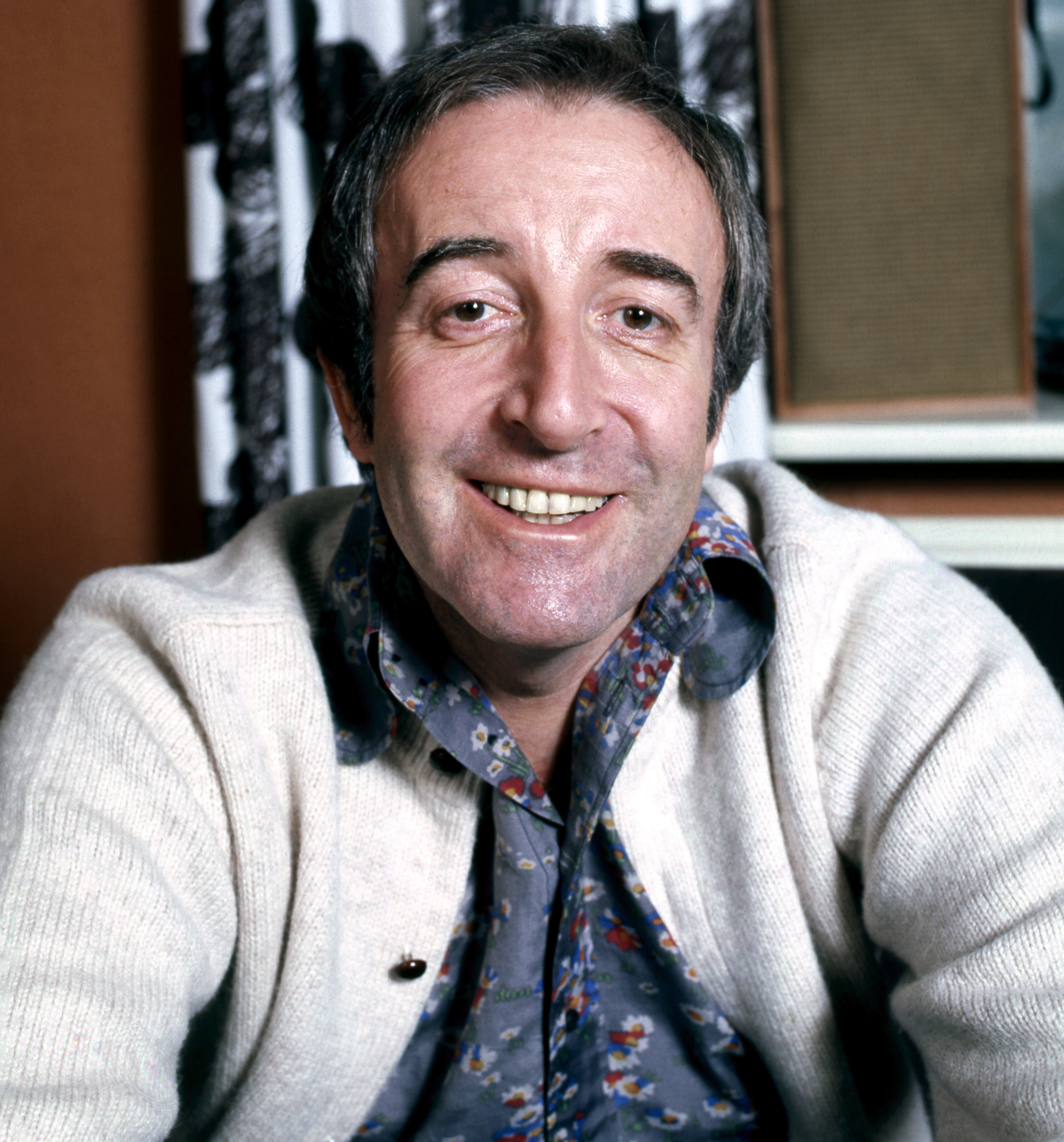
                                            "The Pink Panther" star, Peter Sellers 

                                          (credit: Allan Warren, via Wikimedia Commons)