Saturday, 11 November 2017

File:Second Battle of Passchendaele - 16th Canadian Machine Gun Company.jpg
                Canadian 16th machine-gun company soldiers at Passchendaele 
                       (credit: William Rider-Rider, via Wikimedia Commons)


We have to give top priority to the matters that matter. That, for me, is a prime aim in all of our political wrangling. So …what are our priorities and why do we say so? I think there is one giant principle that subsumes all the others. I think hardest about it on Remembrance Day.  

November 11 is a day of very solemn ceremonies in Canada. In fact, visitors to our country are often stunned by the seriousness of our Remembrance Day ceremonies. But, of course, we Canadians have reasons.

On November 11, 1918, the armistice that halted all the World War One fighting was signed. The worst war by far that the world had ever known up till that time finally ceased after four years and four months of bloodshed and horror and death. Cannons so big they needed rail cars to move them, tanks, fighter planes, dirigibles, machine guns, poison gas, flame throwers …all new technologies that were used first in World War One to achieve assembly line killing power.  

Drawing from a population of about 8 million, Canada sent an army of over 600,000 men to WWI. Of these, 1 in 9 died over there; three or four times that many were left permanently scarred physically; an even greater number were scarred mentally, doomed to lives of alcoholism, social dysfunction, and early death. Similar per capita casualties happened to the British, French, Italians, Americans, Austrians, Germans, and Russians, and all their allies. But I am Canadian, so I write from a Canadian perspective.

The nations waited only a generation and did it again with more nations, more terrible weapons, and much bigger numbers. 1939 to 1945. How many burnt lungs, busted skulls, dismembered legs and arms, and rotting, putrid corpses? And yes, those are ugly images and no, I don’t apologize for using them. 

Some of the young today get it into their heads still, after all the pain humans have inflicted on one another, that war can be glamorous, exciting, or heroic. A kind of adventure.

Eric Remarque’s novel “All Quiet On The Western Front” silences all of that kind of thinking completely. It ought to be required reading for all students in all parts of the world. The dedication at the beginning of the novel says:

This book is to be neither an accusation nor a confession, and least of all an adventure, for death is not an adventure to those who stand face to face with it. It will try simply to tell of a generation of men who, even though they may have escaped shells, were destroyed by the war.

First novel the Nazis burned. I wept when I finished it. I wanted to tear my teeth out of my head. The uselessness of all that pain and cruelty hit me like an emotional tidal wave. But unlike many other stories I read as a younger man, which faded in power and significance for me as the years went by, this one has gotten harder, yet more profound, with the passing of the decades.

I was born after World War II. 1949. But I saw what war did to people, men and women, who lived in my neighborhood.

Len lived across the avenue from us. I played with his sons, Roy and Melvin, from the time I was 3 and they were 3 and 4. I knew the family well.

Len had joined up at 18 in 1939. He was a big farm boy who could shoot. He was the average Canadian soldier in both world wars, though those boys were anything but average. They took on the hardest fighting, and they won nearly every time.

But back to Len. My mom, looking out her kitchen window as she worked at making meals in my early years, could not help but notice that Marion, Len’s wife, washed an awful lot of sheets. She had at least two double bed sheets drying on her line every day, even in winter, and sometimes did up to 6 a day, along with her other laundry.

At last, after a year or so, Mom asked Marion, tactfully, why she washed so many sheets. Marion confided that Len had seen some very fierce action in Europe and that he had been seriously wounded twice. He did sleep most nights, but only in bits. He had terrible nightmares. He would sweat right through upper and lower sheets sometimes three times in a night as he struggled to achieve normalcy again.

I couldn’t grasp it at 5, 6, and 7 years old. Then, they moved away to a small town 100 km. from Edmonton, close to Len’s original farming community. He seemed to do better. Or maybe he was beginning to heal. The human mind can be an amazing survivor when it has to be. Anyway, I never did see them again. I only heard about them through mutual friends in our neighborhood now and then.

Today? Today, my heart aches for Len. And for all those that he represents. Boys. They were just boys. They went away to fight to the death in a foreign land because a whole lot of people around them, adults they trusted, said they should. They had no idea whatsoever about the thing they were getting into.

And, of course, I knew of some who never came back. My grandmother’s closest neighbor and friend, Mrs. G., allowed her 17-year-old son to sign up because he begged and pleaded and promised that he would get into the signal corps and stay out of the real fighting. He got only a few weeks of training. It was ’43 when he joined up. Canada was desperate for soldiers. They were sent up too young, too fast. He was sent straight to the hottest fighting in Italy in early ’44 and was dead 6 weeks into his combat tour. Mrs. G. never recovered. She went insane, was put in an asylum, and waited out the rest of her life in an emotional state so fragile that loud noises would make her shriek right into the late 1960’s when she finally died, at home, still under psychiatric care.

I could go on. Some of my war stories come from Canadian friends who went south and joined the U.S. Army during the Vietnam War.

But enough. The stories all start to sound miserably similar. They stretch out to the crack of doom. We need to get to a point here.

And my point is simply this: We have to stop this insanity. And there is a way.

The way out is to overtly and universally teach kids in their schools to hate war and to resolve that they will find non-violent solutions to their disputes from the time they are in kindergarten on up. And to teach them negotiating skills. And to teach them that everywhere in the world all other human beings are like them inside. Vulnerable. Scared. Hopeful. Coping as best they can. Even the bullies are the same in their quiet, secret thoughts.  

Cliché? You bet it is. It’s just never seriously been tried. Naïve, the cynics say. I say otherwise. We’ll do this and do it right or we won’t anything.

We live in a time when another full-out war between the superpowers could end human life on this planet in less than six months. Three quarters of the human race could die in an afternoon. The rest from radiation, starvation, disease, and so on over the next four or five months.

However, we also live in a time when communication with any other human individual or group anywhere on earth is possible for all of us at anytime. We really could write a world Social Studies course that would teach the simple lessons of peace to all kids, kindergarten on up, and we could require all the nations of the world to put it into the curricula that they teach to their young.

Enforcement would be by social pressure, or as consensus of the world grew, by economic sanctions. In short, it really could work. No one would want to openly argue against the measure. To do so would draw the wrath of the vast majority of the rest of the world. The curriculum could be promoted on social media and on television. And so on. It really could work. 

If I sound like a dreamer to you, then I have every right to rejoin …what do you suggest? We have done war over and over for as long as humans have been human. I know that. But what is different today is that we now have the weapons to do it one final time. Absolutely final time. And we will if we do nothing but pray and meditate and hope for the best. Saving our species is going to take more.

We cannot sit, as individuals or as complacent groups, in our social fortresses on our social islands. The evidence of history shows unequivocally that if you try to ignore the nastiness in the world and hope it will all go away, it will not only not go away, it will come for you. As Obama said, the brutes of the world are not going to go away because we close our eyes and sing a particularly touching rendition of “Kumbaya”.

I say we need to do more than pray and meditate and hope for the best. The Brits did that in the interwar years. Where did it get them? We must start to put in place measures that will stop the warmongers from occurring. Peace education in the schools. Everywhere on earth for all kids.   

Yes, there will always be differences and disputes between humans. No, they do not have to end in violence. We can teach the kids that democracy and rule of law offer a better way.

Therefore, all other issues involving men and women, black and white, Asian, Caucasian, African, Indigenous, gay, straight and so on can be put under this one giant umbrella. Peace Ed.. If we make that our prime goal, the rest will follow.

At the core of our peace curriculum will be this guiding principle that all the children of the world will learn: all forms of unfairness and persecution have in common the simple fact that they are not just hurtful, they’re stupid. The strongest society will always be the one that contains as many different kinds of people with as many varied knowledge and skill sets as we can produce.

In a universe that evolves in unpredictable ways, pluralism is the best gamble. It maximizes our chances of surviving. Racism, homophobia, sexism, and so on are the opposite. They are bad gambles because they diminish our talent pool.    

We’ll teach the kids, all the kids: let your neighbor be. As long as he/she is not directly harming you, let him/her be. Negotiate in all disputes. Or at most, let the law handle it. When you get used to the other person’s ways, even the ones that used to make you nervous, you might even find it easy to just be nice.

Spend your energy on the improvement of your own knowledge, talents, and character, not on ridiculing others. Love your neighbor. Work for your living.

If it’s truly necessary, defend those whom you can see are not able to stand up for themselves. Just remember that the objective is always to achieve fairness in your town, not promote one race or one creed over all others, or any other promotion of one slice of humanity over its competitors, and that goes for men and women, gay and straight, black and white, etc.. Open free markets of goods, services, and ideas and if all else fails, the rule of laws written and amended by elected officials from within your own ranks.  

Live and let live. Officially, overtly, and publicly. 
Image result for united nations headquarters nyc

Do not withdraw from the troubles of the world and hope they will all go away. That withdrawing is just what the bullies of the world love. It makes their path to power so easy.

Our days of declining to say what we really think and placidly hoping for the best are over. So is fighting to solve our disputes. They both must end or they will end us. World democracy is the third way, the way out.  


In the shadow of the mushroom cloud, nevertheless, have a decent day. 


                                            United Nations building, New York City, U.S.A. 
                                                   (credit: Neptuul, via Wikimedia Commons) 

Thursday, 2 November 2017

"There is a war between the rich and poor, a war between the men and the women.
There is a war between the ones who say there is a war and the ones who say there isn't.

Why don't you come on back ...to the war?"

                                                         (Leonard Cohen)                     


                        File:FrederickDouglass-1848.jpg

                                 Frederick Douglass (credit: Wikimedia Commons) 


                                                      A Common Thread

There is a common thread that runs through all of the social justice issues now being disputed in pretty much all of our world and it is this: if you wish to revise or even dispose of some moré or custom or law, and if you are an adult citizen, the onus is then on you to explain what you will put in its place.
The social order is an easy thing to take for granted when it has been basically stable for generations, and, for the most part, it works. We mustn’t forget what life looks like when all social order stops working. There are only a few societies in the world now in which roving gangs of bandits rape, plunder, and kill with little or no fear of consequences.
But make no mistake. The bullies have always been about, and they are there in your neighborhood today. They would take what they wanted in ten minutes if they believed they could get away with it. A basically cooperative community of citizens used to supporting each other via laws protecting what we call “human rights” is all that stands in the way of the bullies in your hometown.
A nation in which most people no longer care about their own laws is speeding down the road to collapse. Anarchy. 
Somalia comes to mind. It is what we call a “failed state”, which only means that over most of its map, no rule of law exists. There are only local warlords whose empires keep changing by the month. They hijack ships, buy ammunition and guns, and kill any who dare to interfere. They rape at will. We need to keep in mind that there are such states and there is nothing in the nature of humans here, in the West, or anywhere else that makes any of us exempt from falling into similar straits.  
Every area of the world has known such times, Europe and America included. And all of Africa, Latin America, China, India, the rest of Asia. We humans are depressingly similar in our vices. We don’t want Al Shabaab, the Taliban or Isis ruling in any part of the world. They are mostly hated even in the territories that they still control, and for good reason. They hurt people. But they will conquer and rule if we dissolve our own democracies and open the road for them. 
I believe that people who criticize any system anywhere, if they are adults, know this. They may hate some features of their nation’s system, but they do not want to, as some SDS leaders said in the 60's, "burn it all down". Responsible adult citizens can see what we get if we simply "burn down" whatever current system is in place in our society and put nothing in its place. The Bully Wars leading to the Big Bully rule.


                                            File:George Francis Train.jpg
              George Francis Train (credit: Matthew Brady, via Wikimedia Commons) 


What makes much better sense is for us to dismantle the parts of our society that we can see are unjust by democratic means and then replace them with better institutions, ones that take the health and happiness of all the citizens into account and try to make provision for them. The order needed in society if commerce and daily life are to go on must be balanced with measures that protect the rights of individuals and/or oppressed groups, especially their right to work to reform the parts of the system that they abhor. A democratic government’s job is to balance these elements and enable many different kinds of people to live together, work, trade, and get along.
I repeat: adults know this. First, we get a system that, for the most part, works. Then, we figure out how to make it better, to update it regularly, without having to go to war with each other as we try to make social evolution happen.  
This is why the deeply moving thing about some of our biggest peaceful heroes all through history into modern times is that they offered a vision of a society that really could replace the corrupt one they were trying to fix.


                                                        File:Mott James photograph.jpg
                                                                  James Mott                                          
       (credit: Anna Davis Hallowell and Lucretia Mott, via Wikimedia Commons)


Nelson Mandela said that he envisioned a “rainbow nation, at peace with itself and the world.” He did not say all non-Africans had to leave. Martin Luther King’s political effectiveness came in large part from his attracting millions of white people to his marches. As white people looked at their society and the events of daily life there, and then they looked at Martin’s way, his marches and his speeches, they saw that the status quo’s way of life was wrong in many ways. But more importantly, they also saw that it did not have to be so. Keeping an effective social order did not require that the citizens endure with these injustices. Decent people really could replace the bad and build a better world.    


                                       File:Henrybrownblackwell.jpg

                          Henry Blackwell (credit: Library of Congress, via Wikipedia) 

My point today is that this insight applies to the hardest dispute of all, namely the ongoing struggle being waged by millions of women against the male-dominated world in which they must live. The women of the world, especially of the West, I feel, can learn something from Mandela and King. 
Get inside the heads of the people who are not female but who nevertheless see that you are living in a system that puts unfair limits on your opportunities. Reach out and make allies of them. In short, ladies, you would be wise to get inside men’s heads; you will discover that many of the painful things in your world are in the male one as well. From finding common ground, you will then begin to build a coalition analogous to that found by Nelson and Martin and, in more recent times, Barack. 
And Susan Anthony and Cady Stanton. They had male allies, lots of them, who were fed up with the male order of their time. They had lived through the Civil War and seen how its horrors were driven by the racism and sexism of patriarchy. They were men who saw that to deny people who were just people, just as capable of rational thought as men and who brought some fresh and valuable insights to all tables at which they were heard – to deny women these basic democratic rights -- wasn’t just wrong: it was stupid. It robbed the state in which it occurred of half of its most valuable assets, namely its human assets, its capable citizens.

Yes, there are plenty of words and actions of women in what are nebulously and loosely called “feminist” organizations that are hypocritical or naïve or outright cruel. No, men, that should not mean that we should shut them out, anymore than male naivetes and hypocrisies and cruelties will ever justify their shutting us out. We are justified in telling them that we will not put up with, for example, female teachers who hate little boys. (I've known such people.) In short, we are justified in discussing real grievances with candor, reason, and evidence. But we are never justified in shutting other people out just because they aren't "like us". That view makes no sense in any case, but especially not in this one. If they can speak, they deserve to be heard.  
Why? Because along with our different sensibilities and worldviews in the real world comes this basic fact of reality: men and women have been built for one another by literally billions of years of evolution. The women, with all their gifts and flaws, are an emotionally and politically necessary part of our reality and their reality and in other words, the world as it is. Nothing is ever going to change that. So however hard it may seem at times to communicate to the other sex what we really think, we have no other choice. If we don’t make and keep making that effort, our world is not just going to stay stupid and cruel. It is going to get worse. Catastrophic climate change. Nuclear arms proliferation. I don't need to sketch images of how these scenarios end. 
Get motivated. Articulate. Compromise. Find consensus. 
We have only a small chance of fixing these things if we, the socially conscious of all genders and races, work together. But if we fall into squabbling and squander our energies in wrangling, we have no chance at all. 
My thoughts, anyway, to all the troopers in the gender wars. 
In the shadow of the mushroom cloud, nevertheless, have a fine, pluralistic day. 


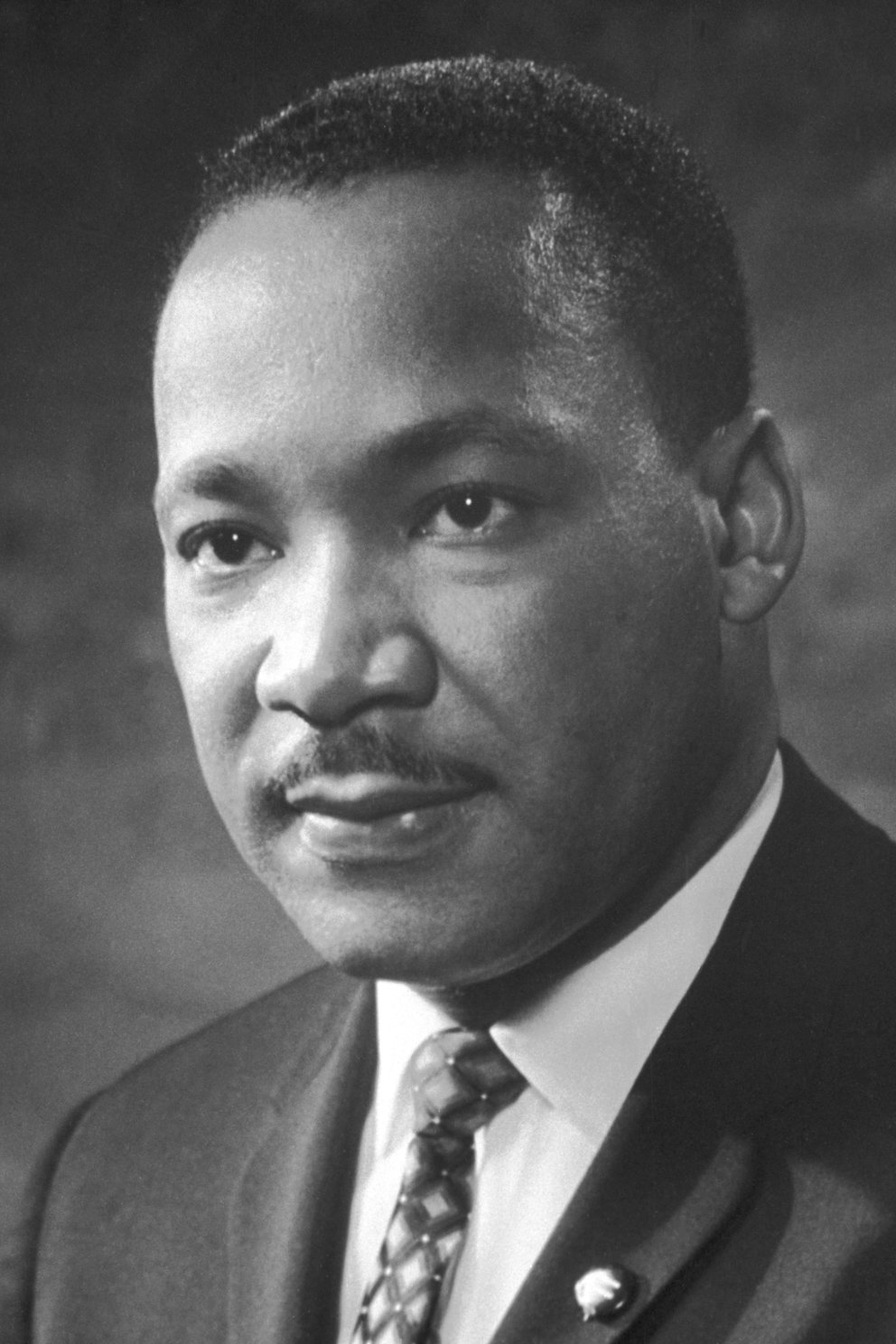
                                  Martin Luther King Jr. (credit: Wikimedia Commons) 


Tuesday, 17 October 2017


             Charleville musket 1766 (credit: G. Garitan (Own work), via Wikimedia Commons)


For one more post, I have to deal with the gun violence issue. The psychological roots of the obsession that some people, especially American males, have long had with guns. 

There are lots of theories out there about the psychological roots of some people's fascination with guns. A Freudian one that irks me claims that a gun is a kind of "phallic extension" and that is why guns appeal so primally to some men. 

But the idea that a gun is a "phallic extension" for insecure men, for me, just makes no sense. The link between the image of a gun and that of a phallus is just too tenuous and far-fetched. At that rate, shovels and conductors' batons and so many other objects could be seen as "phallic extensions". Wotan! That theory is founded on about as much evidence as Norse mythology.

On the other hand, I think some models from the science of Comparative Psychology do have things to tell us. One that I find interesting is called the "cichlid effect".  


It has been cited by several major writers. I first learned about this "effect" in 1970. Kate Millett, in a book called "Sexual Politics", discussed the ways in which human sexual relations are analogous to relations in the political world. There are opening moves, proposals that are subtle or not so subtle, counter-proposals, agreements that are spoken - or more often implied - disputes, resolutions, etc. - in politics and in human relationships. Sex as politics is a useful metaphor. 

But the model that she described which fascinated me most came from the research of Nobel Prize-winning biologist, Konrad Lorenz. He studied many animals' patterns of behavior. In several species, but most clearly, in fish called "cichlids", he found that when spawning season came, the males of this species would only attempt to mate with females that were "awed" by the male (his term). In short, a male would not perform sexually with any female who did not act deferential when he approached her. Millett made it clear that she was contemptuous of the idea. I thought it deserved a bit more consideration. 


There is a reproductive advantage for dominant males and submissive females. That is what Lorenz' followers claimed. Under this model, females get more opportunities to reproduce if they "kowtow" or "knuckle under" to a male. And dominant males get most of the females. Genes for these traits get passed on to more offspring more often.

Does this biological imperative drive human sexual behavior? Lorenz and some who came after him claimed that the answer was "Yes". Men want and need to feel superior to a woman before they will approach her in any sexual way. Control makes confidence. That's the theory. 

I, on the other hand, have doubts about the applicability of the model to human beings. But what does the evidence seem to say? 

Would this model explain the gun obsession of a small but scary number males in the U.S.? The need to own guns, to flaunt them, and, in some cases, to use them on other human beings? Do guns give one a sense of control and dominance? In short, has a deep but powerful sexual need caused the spread of gun culture in the U.S.? Does a sexual need underlie gun violence? 


It is generally acknowledged these days that males, especially white Western males, are feeling more and more under threat. The macho role models that they once looked to for direction are more and more becoming socially taboo. Much of what made the dominant place of Western males in their own society has been discredited. Values, works of art, images in advertising and in the media in general - these are all becoming more and more derogatory in tone toward the old images of "real men". Hairy-chested, gun-handling, hard-punching he-men are largely out of fashion. Maybe, modern confusion about what a man is supposed to be has caused some men to feel a need to carry and collect guns in order to get their confidence back. The return of self-confidence comes with the sense of power carrying a gun brings. Or so the "cichlid" explanation would go.  

The weak part of this way of explaining gun violence is that there are millions of exceptions to this model. Most men, in fact. Millions of men don't need a gun to have self-esteem. In fact, they don't feel a need to bully women period. If they are interested in a woman, they recognize that, unless the interest is shown clearly in return, they are probably wasting their time. They move on. She has a right to her preferences. There are plenty of other cichlids in the sea. 

In addition, millions of women now own guns. Millions more, without guns, are assertive, confident beings in their own contexts. And they have no trouble finding eager male partners for sex or company. In fact, millions of men today are attracted to confident, assertive women. 

In short, my reply to those who seek to find instinct-driven motives for some men's collecting guns is simply this: we aren't fish. What makes humans human is their capacity to recognize and rise above their primal programming. We learn about soils and pests so we can grow larger crops. The knowledge isn't gathered and passed on for the sake of curiosity. The same is true of our knowledge of animals, weather, diseases, etc.. And of our most primal breeding imperatives. We modify them and direct and re-direct them so that we can live together in communities and get along. Live. As whole nations capable of teamwork. Then, we multiply and thrive.  

Thus, men and women both learn to do better than fish do, or dogs or apes do. We don't need to yield to obsolete, primitive drives in order to just live. As a matter of fact, mostly we already have learned to live more sensibly. We do better than any other species on this planet because we can think and learn, change our habits and customs and adapt to changing circumstances. 

We are not fish driven by primal forces beyond our understanding. 

So speaking of learning, we have learned by harsh experience over the last few years, that automatic weapons are not legitimate arms for regular civilians to own. Some ordinary citizens like to hunt, but no one hunts deer with a machine gun. That, for sure, is not sportsmanship.  

The need of the community for basic safety clearly outranks the citizens' right to "bear arms" in the automatic weapons case. If the U.S. Constitution says otherwise, it needs to be updated. It was made by people; it can be changed by people. It was not passed down on stone tablets inscribed by a Divine hand. 

The welfare of the whole community is the focus of the law. And if a document like the U.S. Constitution even appears to claim that some males, to fill their need to feel secure or powerful or whatever else they want to call it, have a right to own as many firearms as they please of any type whatever, automatic weapons included, then that document is just wrong. 

Study harder. Go to the gym. Build twenty pounds of muscle. Practice your three point shot. Or practice guitar. Learn to cook like a real gourmet chef. Write. Sculpt. Paint. Sing. Compose a symphony. Get your mile under six minutes. Build a home. Take pride in how you love your wife and kids. Take one of your best business ideas and go for it. Most of all, become a master of your trade, work at it hard, and take pride in every job well-done. Take pride in your character, your instincts about right and wrong. These are not to be lightly valued. Millions of all genders, nations, and creeds have them, but millions more don't. 

There are lots of ways to be a better man in your own eyes and in the eyes of those around you. There always have been. Finding your "self" by acts of violence or the threat of violence is a way of acting and thinking that became obsolete centuries ago. Soldiers who have seen a real war may know how to fight to the death if they have to, but they don't glorify war. They know better from hard experience. Violence is sometimes necessary. But in our neighborhoods, we don't want or need that to be the case. In short, let the cops handle it. Too many men taking it on themselves to avenge every slight is why America is in the situation that it is in today. 


Therefore, to put it all together, you could even campaign and vote for a candidate who will put the automatic weapons only in the hands of the police and the military. There is no legitimate reason for them to be in the hands of regular citizens. Experience in recent years has shown over and over that, in fact, there are compelling reasons for them not to be. 


Finally, if you still feel that you have no sense of being worthy as a man unless you can have a machine gun, get help. There is something deeply wrong in you that no gun is ever going to fix. 

The whole idea that men, or women for that matter, have a need and a right to feel powerful over others is obsolete. We have to learn to live together and get along or we are done on this planet. Every incidence of gun violence is just more evidence which shows where our bottom line in the twenty-first century lies. We must learn to respect our neighbors. Maybe, even love them. The alternative, when it is extrapolated to the global scale, is too terrible to contemplate. The way of love, on the other hand, has to begin in our own towns.  

In the shadow of the mushroom cloud, nevertheless, have a great day. 


File:Sandy Hook Choir during Super Bowl XLVII.jpg

    Sandy Hook choir perform at Super Bowl, 2013 (credit: Au Kirk, via Wikimedia Commons)

Friday, 6 October 2017

   
                     Target 223 Savage 10FP 25 shots (credit: Arthurrh, via Wikimedia Commons)


What Are The Odds? 

Once again, a lone gunman – white, no known ties to any extremist groups – has bought an arsenal of guns and ammo and shot a bunch of people in the U.S. One of the posts on social media caught how people in other parts of the world, and even in much of the U.S., feel. The post showed a “news release form” that could be used to make up regular headlines for the news media. The fictitious form looked something like this:

“Breaking News: in _____________, U.S.A. _______ people have been killed, with an estimated ______ wounded and in hospital at the time of this news release. The alleged shooter died at the scene after being shot by police/taking his own life. (Circle one.) He has been identified as __________________, a man whom neighbors say seemed friendly enough. He so far appears to have been operating alone. The victims were at a …. (some public place where people gather to work or have fun). Of the ____ confirmed dead, ___ have so far been identified. Their names are  __________________________ …”

Et cetera.

Yes, America. Unfortunately, this is how you look to the world. 58 dead in the Las Vegas attack that occurred Sunday night. About double that number have been killed by guns in the U.S. in the four days between that shooting and the time at which I write these lines.

Let me try my best to get to the heart of the matter. America, you used to pride yourself on being rational. Crackpot ideas were for Europeans who still had kings and czars or Orientals with their emperors and emirs or Africans or Latin Americans with various dictators. America was down-to-earth. Sensible. Americans made a point of learning facts and coming to rational decisions based on those facts.

13,286 gun deaths in 2015, excluding suicides.   On this one, you have long since ceased to make any sense.

So here one more time is my case for serious gun control laws.

And for those who resist my case before they have even heard it, it might help for me to say that I grew up in a house that always held between 4 and 10 guns. My dad was a hunter. He also bought and sold guns because he knew a good deal when he saw one and he was willing to buy and hold. He taught me to shoot when I was about 7. I have shot game of many kinds. I know guns.

The thing that many people don’t get is that no matter how sensible you think you are, anyone will have had moments of rage in their life. You can bet on it. Everyone "loses it" sometimes.

So here’s the big point: if you do “lose it” for even a short while, the odds that you will do something irrational and cause major, irreversible, perhaps fatal, harm to one or more other persons are much, much higher if you have guns handy than if your only weapons are a knife, a club, or even a vehicle. Guns were invented, and have always since been manufactured and sold, because they are efficient, lone-attacker killing devices. That's why assassins use them. 

In plainer language, when guns are all around, more and more people will use them on more and more other people. And it’s not because the U.S. or any other gun-toting nation is full of crazy people. It is just a matter of statistics. The odds. A percentage of Americans are troubled with mental illnesses, but no more than anywhere else. It’s the availability of guns that makes these horrific outcomes follow as naturally as night follows day. Guns being so easy to get means that horror is statistically inevitable on a regular basis.  

What are the odds, when so many guns are so easy and relatively cheap to obtain, that they are going to be used to kill other people?

And that is the heart of the matter. What Americans should be asking each other, once they calm down again, is “What are the odds?” That is the rational question the gun rights folk should be answering.

And those odds, of course, are plain as the lumpy nose on my face.

So how do gun rights advocates answer this completely cool and calm rational argument?


   File:Declaration of Independence (1819), by John Trumbull.jpg

                                                               Declaration of Independence 
                                                   (credit: John Trumbull, via Wikimedia Commons)


Basically, their responses boil down to asserting that they have Second Amendment rights. The constitution says in clear langage that they have a right to “bear arms” if they want to do so. 

How then should those who wish to see much stronger gun control laws enacted answer this “bottom line” that the gun rights advocates see as sacrosanct and inviolable? Take it on. 
  
So once more, in a sincere attempt to be rational, calm, and open in our reasoning, let’s answer the Second Amendment argument rationally.

No, the Second Amendment is not the final word on the matter. The founding fathers of the U.S. were not gods. They were mortal men. They did their best, but they made mistakes in parts of the documents that they wrote for the new republic they were trying to set up.

They were men. Human. They had shortcomings. They sometimes could not foresee what the future might bring. They did not make provision for all possible eventualities because no one can. They made mistakes or left gaps. The Second Amendment is one.

No one in that painting of the founding fathers of America could possibly have foreseen the kinds of weapons that exist today. Paddock, the Vegas shooter, used more firepower in nine minutes than a company of men would have been able to get off in that time span in 1776.

Today, American gun control laws look to the rest of the world like madness, the opposite of what for so long Americans prided themselves on, namely common sense. When you make laws for millions of people, you have to look at the statistics. The odds.

The Second Amendment never really had the effect that Jefferson was hoping it would even in his time. He wanted citizen militias that would protect the citizens against the power of the federal government. The plan did not work. West Point was created because the local militias that Jefferson thought would be the American people’s protection against tyranny performed so badly so many times. British regulars in 1812 to 1815 whipped them over and over.

Note also that America’s biggest heroes of the Old West cleaned up towns that were run by gangs simply by making every person check his/her guns upon entering the town limits. Wyatt Earp saw what needed to be done and did it. Check your guns. No exceptions.
There are other gun rights advocates’ arguments, but they don’t hold up. Good guys protecting themselves and their families against bad guys? If those bad guys get “the drop” on you – which is pathetically easy to do – your plan is gone in a heartbeat. Then, too often, so is your heartbeat.
I could go on, but enough already. America, you always prided yourself on your common sense. Finally, after so much rage, pain, grief, and fear, show some. Not while everyone is emotionally overwrought, but later, when everyone is calmer.
No automatic weapons and no devices to make semi-automatic weapons automatic and no 20+ shot clips. The only exceptions should be for law enforcement personnel. For the rest, hunting arms only. Difficult to conceal. Long barreled. Maximum 6 shot magazines. And every device the gun makers cook up to get around these laws, legislators should block that week.                                                                  

You know the drill, America. I pray that this time, you will show, in the long run, grief, rage, and fear, yes, but then quietly and more determinedly, just some common sense.  


                                       Children's Day 2012, Chiang Mai Airforce Base, Thailand
                                                   (credit: By Takeaway, via Wikimedia Commons)


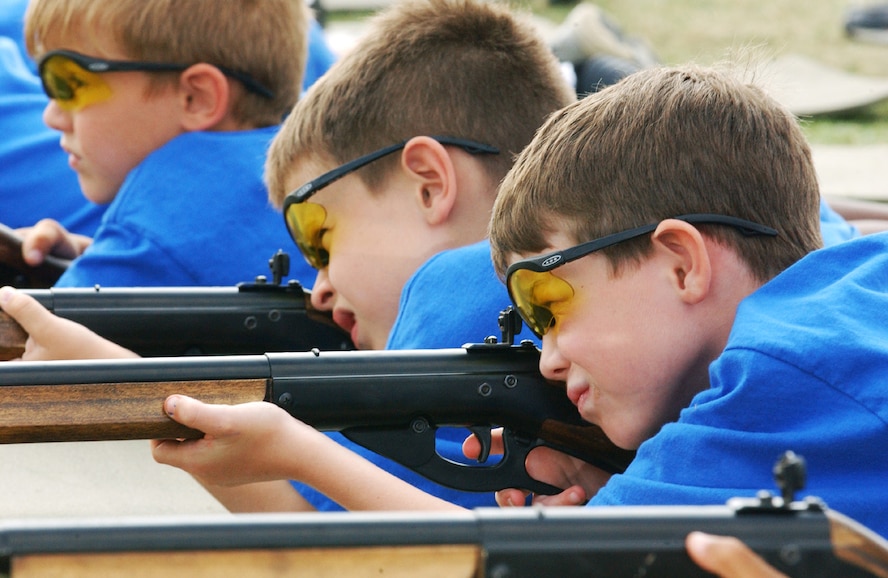
   ROYAL AIR FORCE FELTWELL, England -- Duncan York (right), John Slife (middle) and Triston Williams aim their rifles at the BB gun and archery station here July 28. The boys were shooting the rifles during a week long "Way Out West" Cub Scouts day camp. There were more than 100 volunteers from RAF s Mildenhall, Lakenheath and Feltwell involved in running the camp's activities. (U.S. Air Force photo by Airman 1st Class Cecil Carlos McCloud)

                    Taking Aim (credit: Airman 1st class, C. C. McCloud) (www.af.mil/News/Photos) 


Monday, 2 October 2017


   File:Lagrenee, Louis Jean - Penelope Reading a Letter from Odysseus.jpg
                            "Penelope Reading A Letter From Odysseus" (artist: L. J. Lagrenee) 
                                                 Artist's conception of Ancient Greek daily life 
                                                         (credit: Wikimedia Commons) 


On a site that I visit, a young person asked what I thought of moral relativism. Here is my reply:
Moral relativism is a mistake. It is a philosophical stance that says that the ideas behind what we call “right” and “wrong” are illusions. There are no universal standards of right and wrong. Right and wrong depend entirely on the culture in which one is located at the time when one is making a moral decision. What was right in ancient Athens would not be considered right today. Even in a given era, like today, what is right in one part of the world, like West Africa, may not be considered right in another part, like Canada.
There is a lot of evidence in History and Anthropology to support the moral relativists’ position. We can see that it may have been useful for the ancient Greeks to use infanticide as a form of birth control. We certainly know they did it. A lot. Some men could not feed all of the babies that their women kept producing. On the other hand, the men’s appetites for sex were at least as strong as those of men today. So they solved their family’s surplus population problem by exposing unwanted babies in the forest to be eaten by wild animals. Today we would be appalled at such a practice, but it made sense to them in their times when they had no reliable forms of birth control.
It is also common in our own times for little girls in West Africa to undergo what is called “female circumcision” by its supporters and “female genital mutilation” by its foes. An old woman who travels from village to village has girls brought to her for the “operation”. While female relatives hold the little girl down, the old woman uses a small knife to cut off the girl’s clitoris and inner labia. There are several versions of the operation, but this is the commonest one. Is it useful to the tribe as a whole? Its proponents claim it is. It curbs girls’ sexual appetites and reduces the risk of their having clandestine affairs which might tear a tribe or village apart.
Thus, different tribes arise, and each has its own sets of morés, beliefs, and customs. When tribes interact, too often in the past the result has been war. Then the tribe with the more efficient beliefs and customs nearly always has the larger numbers and better weapons; it conquers the other tribe, then assimilates it. War, to the cultural relativists, is an inevitable trait of the human animal. They have no suggestions for reducing the odds of wars’ happening. They shrug when you say that the next full-scale, all-out war, if we have it, will very likely kill us all.
The mistake, it seems to me, is implicit in the very ways we discuss the mores and customs of other cultures. We always talk in terms of why the custom got established in the first place and whether it serves some purpose in the larger community to which those practicing the custom belong.
Implicit in this whole way of thinking is the assumption that our customs, ways, and morés must serve the needs of the larger community in some fashion or we would never have set them up and gotten used to them in the first place.
The part the cultural relativists are missing or denying (I’m never sure which) is that we all must survive in the same material universe in the end. While tribes may move from one environment to another occasionally, and face different challenges than those that they knew in their old homes, there are always fundamental laws of Science that can’t be evaded no matter where you move.
The most important of these are entropy and uncertainty.
As whole cultures, we humans have learned, by trials and errors that sometimes got whole tribes wiped out, to teach courage AND wisdom to our offspring so that they will face the omnipresent reality of entropy. More recently (the last 2000 years) we have begun to learn that we must teach freedom AND love to these same offspring so that they will effectively handle the uncertainty of life. (I went into these matters in much more depth earlier this year on this blog site, beginning on April 13.)
In short, morals and morés are not relative. They must program the people who believe in them to behave, as whole tribes, in ways that enable them to survive.
There is a lot of room for many different “ways of life” to be set up differently in any given environment. But the “ways” that people practice and the values and beliefs that underlie them are not arbitrary in the way that a roulette wheel is arbitrary. In an analogy from Biology, we can say that many different species of animals may live in each environment and all find their respective niches, but they still must answer to the laws of Science. There are millions of species in the Amazon basin, but there are no polar bears among them and for good reason. Similarly, many different tribes might settle beside a lake that has just formed since the volcanic eruption six years ago, but if the lake is teeming with fish, the odds are very good that whatever tribes settle there, with baskets or hooks or spears or nets or bows and arrows, they will very likely learn to fish. This move in their cultural evolution is not arbitrary.
It seems clear to me that we don’t have to settle for the moral relativists’ position that leaves us all paralyzed and helpless when disputes arise between different cultures. We could work out the theory of a maximally efficient culture, one that lent itself readily to periodic updates, and we could teach it to the children of the world.
An idealistic vision, you say? I ask you to consider the WWIII alternative, which is where we’re headed if we don’t get past this moral relativist ennui, and then look at your kids, and then …think again.
But in the shadow of the mushroom cloud, have a nice day anyway.

   File:FGM-C reversal (12345332994).jpg
        (circumcised) African mother with daughter whom mother says will not be circumcised 
                                            (credit: By DFID, via Wikimedia Commons)