Wednesday, 21 February 2018


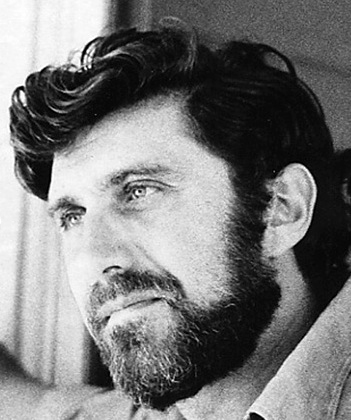
                    File:Stephen Jay Gould 2015, portrait (unknown date).jpg
                              
                                          Stephen Jay Gould (credit: wikipedia.org) 


There are many who call themselves “atheists” who find my claim to believing in both Science and God absurd. The two are incommensurable, they say.

American writer Stephen Jay Gould who wrote on the problem of reconciling the two domains, facts and values, called them “non-overlapping magisteria”. Two entirely separate “domains of teaching authority”. NOMA. The name has stuck. 

                          
His position has been widely accepted as the best that human thinkers can make of the puzzle. We are driven by arguments from one domain in some situations, and arguments based in the other domain at other times. We need to keep learning how the universe works, which is what Science tells us, but then we also need guidelines which tell us whether we should use the powers that Science gives us and for what purposes.


   File:Somali boy receives a polio vaccination.jpg

                                          Somali boy being vaccinated for polio 
                                  (credit: Andrew W. McGalliard, via Wikimedia Commons)


For example, why do the vast majority of parents in the world today get their children vaccinated against diseases such as measles, polio, diphtheria, etc.? The parents make this decision because long experience has shown that vaccines work. 

Children who get vaccinated generally go on in greater numbers to more fulfilling lives than do unvaccinated children. This is a science-based decision. Parents who get their kids vaccinated don’t know that those kids will go on to more complete lives. But they do know they are improving the odds for their kids by getting them vaccinated. Similarly, to get my car repaired or my computer cleaned of malware, I don’t seek out a fortune-teller. I go to an expert in the field.  

On the other hand, many of us are making decisions every day about the “rightness” of actions we could take, like whether or not we should give money to homeless people or pay more taxes to build housing for them.

Whatever their stories, even in housing built by the taxes of their fellow citizens, many of these people will die in a few years. They have higher rates of cancer, heart-disease, diabetes, etc. than average citizens do. They also use drugs and alcohol more excessively. Why don’t we just let them die and, as Scrooge says in A Christmas Carol, get rid of the excess population and save some money?

But our moral reasoning tells us this policy is cruel and inhuman. If we can give them a few more years in relative comfort, then we should do so. All the world’s major religions exhort us to practice compassion for our fellow human beings. 

The principles underlying compassion are moral, not scientific. Science can show us more things we could do every year, but it can’t tell us whether we should do them. Or at least not yet.

The problems arise when we are in situations in which we can’t decide whether to consult the moral domain or the scientific one. 

We often get very confused and anxious in these exact situations.


                                        Alfred Nobel (credit: Wikimedia Commons) 


Should Alfred Nobel have given his newly-discovered technology to the world? Late in his life, he was deeply upset at the thought that he might be remembered as the merchant of death. His invention, dynamite, was being used by hundreds of factories to make mines, shells, etc. that were far more destructive than any that had existed prior to his time. But his invention was already out there in the public domain, being used by arms manufacturers all over the world. All he could do, in the end, was leave most of his fortune to fund the Nobel Prizes. A small attempt to mitigate the destruction that his invention was causing. Should he have thought the matter through more carefully? Should he have kept the formula for dynamite to himself?

Heroin was invented in Germany in the 1870’s and it was soon being marketed to doctors to prescribe to their patients as a safe, non-addictive substitute for morphine. It, morphine, and cocaine were sold legally in the U.S. until 1920. It took that long for the U.S. Congress to realize that heroin was not a safe drug. By then, there were an estimated 200,000 heroin addicts in the U.S. Families of addicts today can’t be blamed if they wonder whether much real research had been done when heroin was first approved. By the time heroin had been on the market a year to two, conscientious research would have shown it was anything but a safe drug. Surely. But profits beckoned for the drug companies even then. 

Were they greedy? Negligent? Such judgements are moral ones, not scientific ones. Still today, drug representatives whose jobs depend on selling lots of drugs find rationalizations that exonerate drug companies and criticize anyone who would find the companies culpable for anything. “Let buyers beware!” they say.

Do investment counselors, as they call themselves these days, coax, cajole, and badger clients into buying stocks, derivatives, or other “instruments” (whatever that means) that are far riskier than the client has ever been told? It seems that the answer must be “yes”. Financial crashes have been happening since stock markets were first formed. Is the real fault in the clients who are greedy enough to keep wanting something for nothing? Or in the brokers whom investors are supposed to respect and trust?

When all is running smoothly, and all clients and brokers are making money, every person working for the system claims to be responsible for guiding his clients to building small fortunes on which they may retire in comfort. When a crash comes, no one is responsible for anything. No one could have foreseen what happened on the markets. Or so the brokers and CEO’s claim. There is a hypocrisy in this picture that stuns the mind. And yet they cry out to authorities for more legal latitude, greater degrees of risk allowed, as they sell and buy. When people’s pension funds, savings, and lives are ruined, is this due to fate – like an earthquake – or is someone culpable? Again, the answer to this question requires a moral judgement, not a scientific one.

Moral judgements are being made by most adults even in ordinary matters every day. Do I have a right to a gourmet coffee when my kids are all going to need new shoes in three months or less? Should I let the driver on my right slip into the traffic in front of me? She seems anxious to. Should I hire this man who has a record of petty theft? Should I call that customer back and tell her she forgot her change? We depend on moral values to guide us in such decisions. They are not scientific.

When I put these judgements to my atheist friends, most have little trouble in saying that parents should get their kids vaccinated, and financiers and brokers should have to pay out of their own fortunes to at least partly compensate investors that the financial advisors have “advised” into financial disasters. 

Nobel’s case is harder, but we’ll leave it as a problem for readers to ponder.

My point today is that when atheists are questioned closely on why they make the moral judgements that they do, their answers are very vague and evasive.

“Empathy is my guide” is no answer at all. We don’t give in to everyone who looks like she/he needs our “empathy”. We don’t let our children have all the foods they want even when they look like they’re really suffering from a lack of candy. We don’t give convicts their freedom simply because they hate being locked up. We don’t even let ourselves off the hook when we start to feel tired during a run or a gym workout. Empathy, by itself, is no guide to anything.

A complete analysis of all the reasoning for all the moral systems that have ever been presented to the world is much beyond one blogpost. Whole libraries have been written on the subject.

But I can confront my atheist, and often postmodernist, friends on the matter much more quickly than that.    

If you are sure it’s wrong to ignore the homeless, if you think the rest of us should be doing more to ease their lives – even if some of those lives will end before they are thirty – then you should be able to say why you think so.

On the other hand, while we’re waiting, the people who become very evasive at this point, who can’t really give an answer for why they believe some actions are just “right”, perhaps deserve some further explanation from me.   

I believe in compassion, honesty, and accountability. Why I believe as I do again takes more explanation than could ever be put into one post. But it’s in my book (posts from April 8 to September 13 of last year) for those who are interested. It’s a matter of doing real things to improve the odds of a vigorous, healthy future for our descendants. That is why we try to be “good”. And we have the values and morĂ©s we do mostly because our cultures have programmed them into us. Thus, cultural codes must be updated. They fall out of touch with the facts of reality every couple of generations. What we must do in this century is learn to update our cultures without war.

But these claims are not the point of today’s post. I have made these claims about cultural codes and probabilities, and defended them, many times.

My point in today’s post lies in an analysis of my atheist friends’ answer to this simple question: why do you believe in being empathetic and responsible?  

I think this policy of being honest, compassionate, and so on reveals something embedded very deep in the thinking of my atheist friends, something they may not care for my revealing. But here it is.

Atheists, if you try to live by a set of moral principles similar to the ones I have just described, what this reveals about you is that (much as you hate the word) you have a kind of faith. A belief in things not seen.

You believe that when most citizens do their best to live basically decent lives, this will lead to better results for all the citizens of your community in years to come. 

But you have not visited those years to come. And you can’t. Not even in your dreams.

Nevertheless, you gamble on the better effects that you think will come from you and your neighbors practicing empathy, responsibility, and honesty.

This faith in being good and in the healthful effects that your policy will produce – by simple, unemotional logic – must be somewhere in you. Otherwise, your policy and your principles would be irrational. Your actions would be no more than the twitchings of a dying animal. What sort of rational creature would strive to live up to these standards you are setting for yourself if she/he believed that the principles, and the behaviors they fostered, would never make any real difference whatsoever. That belief is the main ingredient in the mental state called “despair”.

And many people today are suffering from depression. But many more are not. They keep trying to be decent and hoping for the best. In short, somewhere deep inside their thinking, they have a kind of faith. The universe works in a way that generally gives slightly better odds to the good. All may yet be well. What is at the core of such a belief in the general decency and sense of the universe itself? If that is not a kind of “theism”, then what term would you prefer?  

And by the way, I believe passionately that, yes, all may yet be well. We just have to keep working hard and being decent …and one more thing.

We now must learn how values work, how they make us behave in some ways and refrain from behaving in others, and how whole codes of values, which are the key parts in what are usually called our “cultures” – how these codes evolve. Then we may get control – all or nearly all of us – by consensus, by democratic means – of our own cultural evolution.

And end war. Maybe, even go on to glory.   



A rearward view of the International Space Station backdropped by the limb of the Earth. In view are the station's four large, gold-coloured solar array wings, two on either side of the station, mounted to a central truss structure. Further along the truss are six large, white radiators, three next to each pair of arrays. In between the solar arrays and radiators is a cluster of pressurised modules arranged in an elongated T shape, also attached to the truss. A set of blue solar arrays are mounted to the module at the aft end of the cluster.

           International Space Station (credit: NASA, via Wikimedia Commons) 


Hard, but not impossible. In this twenty-first century, getting easier by the day.

To start, first, we must have a kind of faith. Life is not meaningless trivia. We are a team. All seven billion of us. And we are meant for the stars.

In the shadow of the mushroom cloud, nevertheless, have a hopeful day.  


Tuesday, 13 February 2018

Truth to Power?  

There are millions of educated, decent, well-intentioned people in the world today who try to speak, write, and live to “tell truth to power”. This, for millions of educated people today, is the measure of a speaker or writer’s decency or character. Does the person try diligently to tell truth to power? 

What they mean is that a decent person is willing to risk her/his own security, comfort, even life, to say what she/he truly thinks to authority figures. This is the postmodernist measure of virtue, the one used in most departments of most universities in the world today.

If you follow this blog, you know that I disagree bitterly with the postmodernist position. The reason is revealed in a close analysis of this “tell truth to power” worldview. The postmodernists are not evil. But they are dangerously wrong.  


                         File:Foucault5.jpg
                                                     
                                                        Michel Foucault (credit: Wikipedia) 
                         

We can begin to discuss why this is so by going back to some of the words of French philosopher Michel Foucault, the postmodernists’ main guru.

There is some impressive scholarship and thinking in Fearless Speech, a small but influential book based on a series of seminars he gave in the U.S. back in 1983, as he was rising to the peak of his influence in the academic world. Again, I repeat: I believe he was a man of good-intentions. He was just wrong.

Why? Because his case for fearless speech is full of incoherent reasoning. What he claims is a moral position for a person to take just makes a muddle of life in the real world. It is a position, or worldview (if you like), that gives real people little useful guidance as they try to make their way through life, and in fact steers them toward making more pain in the world.

What claims that he makes am I disturbed by? Let’s get into it.

He begins by borrowing the term “parrhesia” from the ancient Greeks. This is the term for the virtue exhibited by persons who confront people in power and tell the powerful ones what they are doing wrong. A parrhesiastes tells the truth to authority figures and does not let possible bad consequences for himself deter him. (In our times, we would add that a parrhesiastes can be a female person, but the Greeks 2500 or so years ago did not allow for this possibility.) 

The clear indicators that a speaker is a parrhesiastes are the following: 
       

Frankness: 
         the person is saying all that is on his mind and that is relevant to           
         the matter being discussed at the time.

     Truthfulness: 
          the person is saying what she/he absolutely believes is true. 

     Risk: 
          the person, by speaking out, is risking punishment from authority.

     Duty: 
          the person will not gain from speaking out; she/he is clearly acting out           
          of a sense of duty to some greater good (justice, democracy, etc.)                         


These descriptors match closely what a witness promises to do when giving sworn testimony in a trial. The truth, the whole truth, and nothing but the truth.

So what is my problem with “fearless speech”, this “telling truth to power”?

The problem seems glaringly clear to me, but maybe it needs to be said plainly.

What “truth”? Whose “truth”? And most of all, how do you know it’s true?

A person can be open, sincere, brave, and stuffed with honorable intentions, and still be wrong. Bravely saying to a tyrant things that one passionately believes are true does not guarantee anything about whether those things really are true, that is, are consistent with reality.

In the terms of philosophers, one of Plato’s criteria for any person’s being able to say she/he “knows” something has been lost. Knowledge, in his philosophy, is true, justified belief.

In an aside, we should say that Plato's larger body of work is useless to us if we want to figure out what qualifies as “justified”. He thinks sensitive souls can get the necessary justification for all true beliefs from inside the workings of their own minds, before considering empirical, sense data at all. This position has been shown by centuries of history, practical experience, and especially Science to be more likely to lead us astray than to lead us to any useful truths. Maybe, Plato’s fascist system in his major work, The Republic, was the inevitable outcome of his way of thinking about knowledge.

But in the defining of what makes knowledge, Plato was on a good track. We need to be able to give justification for the things we claim to know.  


                       Somer Francis Bacon.jpg
                                       Francis Bacon (credit: Wikimedia Commons) 


In the largest view of Philosophy, the way out of this problem of determining what we can say we know was shown by Francis Bacon. When you think you have hit upon a truth of any kind, said Bacon, you don’t delve further into your own deepest beliefs to see whether your new knowledge is consistent with the rest of your beliefs. You might be simply building a more complicated set of mistaken beliefs if you do that.

Instead, you do pretty much the opposite. You go back to the material world and test this new knowledge you think you’ve found. Figure out ways to test, in the real world, whether the model of reality that you say is so is really so. This is the “inductive” way to knowledge. It is the way of Science.


                                          File:Ent lady.jpg
                                                Ent lady (credit: Wikimedia Commons) 


And if your statement can’t be tested in reality, then, in the terms of Science, you are not talking about anything real at all. You are speaking fantasy. About as real as Tolkien’s ents or Frank Herbert’s melange. They’re fun to imagine. But in reality there are no ents.  

This trusting in the passion and courage of a speaker to indicate to us whether she/he is speaking something that we should be paying attention to is fraught with hazards. The problem is more than that the person can be honest, impassioned and apparently free of self-serving motives and still be wrong. And the problem is more than the fact that bitching with heat and a big vocabulary and no evidence is still, in the end, just bitching.

The bigger problem is that we may very well be convinced that we are telling a truth to power with no intention to gain anything for ourselves and yet be wrong even about our own motives. We might be gaining for ourselves comforts too subtly buried in our own subconscious minds for us to be aware of them.


                    File:Elliot Aronson 1972.jpg
                    Elliot Aronson (credit: Vera Aronson, via Wikimedia Commons) 


This matter was examined in deeply revealing ways by social psychologists Leon Feistinger and Elliot Aronson, years ago.

Essentially what they revealed is that all humans tend to notice the evidence and navigate to the arguments that support the views – the “truths” – that they wanted to believe from before they began to consider the matter that they are now speaking of. We humans constantly try to keep our present beliefs, words, and actions consistent with our past words and actions. We tend to constantly apply much more critical standards to those who disagree with us than we do to our friends and ourselves. Deep inside, apparently, we need to like ourselves. In Aronson’s terms, we are all inclined toward cognitive dissonance reduction. (Bacon saw and described this weakness in human thinking in the 1600’s.)

The hazard for any of us seeking truth and wishing to speak it to others is that we often, for deep, subconscious reasons, omit, ignore, or try to discredit what the empirical evidence is really showing us.

There are people who have risen above their own biases, but it isn’t easy to do. It takes dedication to the pursuit of observable results. The way of Science, in other words. Watch events. Form hypotheses, models, and theories. Figure out how to test whether your model gives a correct picture of reality. Do the test. Carefully observe what happens. Record what you observe with scrupulous honesty. Discuss what you find with colleagues. Revise your model or theory as you think it needs to be modified to bring it more in line with reality. Repeat.


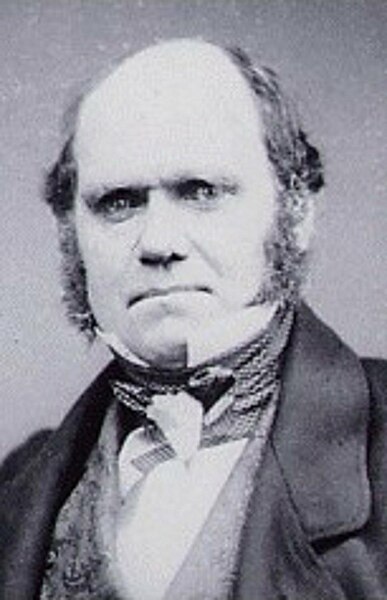
                                        File:Charles Darwin.jpg
                                    Charles Darwin (credit: Wikimedia Commons) 


For years, Darwin did not like what his observations of nature were telling him. Bohr, Heisenberg, Schrodinger, and the other quantum theorists could hardly believe the picture of matter that their theory was showing them. Einstein, the hero of many of them, refused to believe till his dying day that quantum theory was giving a complete picture of the universe. There are lots of other examples of people who pursued where Science led them, even when they did not like the conclusions that it was showing.

To Science, whether any of these people were comforted or discomforted by what their research was telling them was irrelevant. The point of the scientific method is that, strictly adhered to, it can lead us past personal biases.

Now, how is all this relevant to a discussion of “speaking truth to power”?  

Foucault and his adherents are chasing delusions. They are making every dispute worse. They leave us stranded in endless debates between irreconcilable views on pretty much every matter we might want to discuss. Why? Because passion, honesty, full disclosure, and unselfish motives may still be defending falsehoods. When feelings trump facts, no dispute can ever be resolved. 

How is a postmodernist judge to resolve a dispute between two parties who both cry exactly equal numbers of tears and both scream at exactly ninety decibels? 

We end with the clamor of millions of voices in which we are mired now. Then soon, the political thugs start to look pretty good to the masses of voters, simply because at least they can bring order out of the chaos. Creating chaos and then being the one to bring order out of it is what Dr. Goebbels did for the Nazis, and, in particular, Adolf Hitler. There are parallel examples in our times.

An interesting example to examine closely in this discussion is one described in Fearless Speech by Foucault himself. He notes that one does not have to be a student addressing a professor, a child confronting an adult, or a speaker facing a tyrant in order to be a parrhesiastes, a person telling truth to power. One may even be speaking a painful truth to a friend. The risk is not of punishment, but of the loss of a valued friendship. But the truth-telling will still take parrhesia.

Why Foucault’s own example is so interesting is that its logical implications can be followed to conclusions that probably Foucault and his adherents would not like. What I mean is that if we imagine a painful truth being told by one person to one of her/his oldest friends, we can envision the scene in detail more readily than we could the courageous ancient Greek standing before a tyrant. Most of us are not going to appear in any modern equivalent of that scenario, but most of us have felt moved to tell a painful truth to an old friend at least a few times in our lives. He has a habit that is annoying or he has just done something that was out and out morally wrong. 

“You should not have done that. It was hurtful and uncalled for.”  

The interesting insight comes when we see that the two persons involved are morally on the same plane as far as postmodernism is concerned. Both will be risking a valued friendship if they continue the discussion. Neither is on some sort of lower plane as far as power is concerned. Now, postmodernism, it seems to me, gets really stuck. How could any judge, even a very conscientious postmodernist one, ever pick which is the "decent" person here? But in real life, these kinds of disputes do get resolved. Even when one says the other is too bossy, and the other says her friend is too cautious and boring. Friends who really are friends often work out this kind of difference. 

Most often, one friend will, at least at first, disagree bitterly. She/he does not share the other's view at all. She/he may end the friendship right then and there.

But what’s far more likely to happen is that your friend will begin to examine things he has said or done in the past with an eye to showing that your analysis of his character or his actions is wrong. He is determined to show that he is not as you have just described him to be.

And here's the kicker. In the argument that will probably follow, this friendship may yet be saved. Both of you will look to your memories of real events, what really happened in the past. Physical, material, empirical reality. Then, you may come to agree on a path of self-improvement for both of you. Or agree to accept one another, flaws and all. In real life, friends do these things for each other. That is why they are friends. And sometimes, subsequent experience shows that one of the friends is right, and the one who is proven right is not always easy to spot on the basis of who has "power" in the relationship. Sometimes the stock the criticized one put money into really does go up. Sometimes the new employee she hired turns out to be a good worker. 


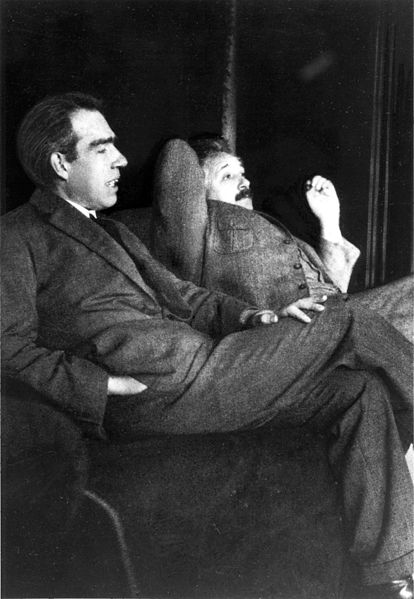
                                       File:Niels Bohr Albert Einstein by Ehrenfest.jpg
                                               Bohr and Einstein in discussion 
                                   (credit: Paul Ehrenfest Graf, via Wikimedia Commons)


Thus, implicit in Foucault’s picture of what it is to tell truth to power is the assumption that disputes can be resolved by reasoning and evidence.

And now we can expand that insight. 

Can citing evidence lead to beneficial resolution of a dispute even when courage and honesty confront really dangerous power? Yes. Like the two friends, the philosopher and the dictator always both have things they may lose. The king may seem to risk nothing as he takes up his side of the confrontation, but he is, in fact, always risking. If he makes a bad military decision and most of his soldiers get killed, he can be overthrown by a foreign king. And executed. History is also stuffed with examples of kings who were assassinated by their own officers. 

Maybe, the philosopher was sincerely trying to keep these things from happening. Most kings are aware that they can be wrong sometimes. If they aren't, then it is extremely unlikely that they will get to be kings. They know they can't know everything about everything. So they recruit and listen to wise counselors. 

The king may have the philosopher beheaded, but it is very likely if he has been in power for much time at all, he will be looking at the evidence to see whether what the philosopher was saying was correct. Are his people turning against him? Are assassination plots brewing among his officers? Is a foreign king landing troops on a beach a hundred miles away even now. What did that philosopher say? 

Evidence. Reasoning. More useful than impassioned, dutiful, unselfish honesty. In the end, it is reality that we all must answer to. 

The whole pomo house of cards collapses.

Postmodernist thinking is the root cause of the endless squalling that we see in the world. Debate after debate, speaker after speaker, including many postmoderns confronting each other, all are being justified by scared speakers on the grounds that they’re scared. Hurt feelings demanding to be soothed on the grounds that they have hurt feelings. 

Victimhood, feigned or real, is a measure of sense. What?

It can all be traced right back to the doorstep labeled “Postmodernism”. It is helping nothing. It is only making every trouble in the world today worse.

In the meantime, in spite of its flaws and shortcomings, Science can correct itself. In fact, that is how it is designed. To be updated all the time.  

Does Science have useful things to say about good and bad, right and wrong? I think that it does, but that is a much longer discussion. If you are interested, try posts on this blog from last April 13 to September 8.


And in any case, in the shadow of the mushroom cloud, have a thoughtful day. 

Wednesday, 31 January 2018

Evolutions, Biological and Cultural


Women's Marathon London 2012 002.jpg

                                 Olympic women's marathon competitors, 2012
                            (credit: Aurelien Guichard, via Wikimedia Commons)


In some recent posts, I have referred to the parallels between biological evolution, the process by which living species change over millennia, and the process of human cultural evolution. This is a useful, fruitful comparison, so I want to discuss it a bit further today.

The ways that living species and ecosystems change are shaped by two main general principles: genetic variation and natural selection.

Every living thing contains some core DNA that directs how that living thing will be built up from atoms and molecules, how it will interact with other things, living and non-living, in its environment, how it will reproduce itself, and how it will wear out and terminate. Die. The fate of all living things in the end.

Humans, like most living things of our type, i.e. mammals, are conceived in the uteruses of females of our species, born out of our mothers’ bodies, nurtured for fifteen to twenty years, and sent out into our physical environments, which usually contain a lot of others of our kind. These others are usually like us in anatomy, but also in cultural programming. We’re born, nurtured, educated, and sent out into our environments to live as independent members of the tribe. We usually find a partner to mate with, and the whole process begins again.

All living things follow a very similar pattern. Really simple organisms don’t use sexual reproduction. Each of them simply divides over and over again and their numbers grow in their locale for as long as they can do so. But otherwise, unicellular organisms are very similar in their life basics to complex organisms. Come into existence, feed, excrete, reproduce, die.


File:Paramecium.jpg

                                         Unicellular organism (paramecium)
                                (credit: Barfooz, via Wikimedia Commons)


But studied over time, life reveals that it contains much more. Living things don’t merely reproduce themselves and so survive in their offspring. They keep changing in ways that enable them to adapt to, and survive in, their changing physical surroundings.

Living things clearly fall into groups. Most of the group members look like each other and can only reproduce by mating with each other. But the groups, or “species”, as we call them, also change as they go forward. The members of the group gradually, over generations, take on new forms and behaviors till in 50 or 100 generations the members of the group look and act quite differently from their ancestors. The changes come by small steps, and in each generation, individuals whose special traits are not effective in enabling those individuals to survive die out before they can reproduce. They take their genes out of the pool of genes available to the whole species. Unusual coat markings, for example, attract predators that get their bearers killed. In desperate cases when environmental changes come rapidly, sometimes whole species become unfit and die out.

They die out because conditions in the environment around them change faster than the species can adapt. More often, however, some members of the species better suited to the changing conditions do survive, adapt, have offspring,  and pass their fitter genes on to a new generation of the species.


   Skeleton and model of a dodo

                                Artist's conception of the dodo bird (now extinct)
                          (credit: Bazza Da Rambler, via Wikimedia Commons)


Real environments change often and sometimes drastically. An ice age arrives, a drought sets in, a volcano erupts, blight wipes out a forest. One marvels at how living species manage to adapt and survive. What gives life such tenacity?

The answer is that members of a species may be very much alike in anatomy and behavior, and they may be capable of reproducing with the members of the opposite sex of their species, but no two of them are ever exactly the same. There are always small differences in intelligence, size, coloration, speed, strength, resistance to disease, heat, cold, hunger, and so on.

When an organism reproduces, it passes some of its attributes on to its young via the DNA that is implanted in the young one’s cell nuclei. But not all of a parent’s attributes get passed on to its young. Some inherited traits come from the other parent and some come through a parent from earlier ancestors. Some of a new individual’s traits, in other words, may have lain dormant in the DNA of one of its parents, and not shown up in the parent at all, only to turn up now, maybe generations since its last occurrence. Red hair, blue eyes, large stature, musical ability, reasoning ability, sprinting speed …lots of traits can skip one or several generations. Inherited DNA keeps getting stirred up. In fact, DNA sometimes even gets re-arranged by outside forces (like radiation, for example). New gene combinations, and living styles shaped by those new combinations, keep emerging. Thus, living species are always subtly morphing into new forms.  

So this is the first big point to get about all living things: they are experiments, every one of them, all the time. Life is always trying out new design ideas.


   File:Nagarhole Kabini Karnataka India, Leopard September 2013.jpg
                                                 
                             leopard (credit: Srikaanth Sekar, via Wikimedia Commons)


   File:Black Panther by Bruce McAdam.jpg

                                      Black panther (a color variation of the leopard) 
                                   (credit: Bruce McAdam, via Wikimedia Commons)


This first big principle of biological evolution is termed “genetic variation”.

The second big idea to get when we try to understand evolution is that though nature is always being creative and inventive, and nature seems in this picture to be kind and generous, there is a dark side. The real world is harsh, uphill, deadly. Individual organisms are dying in thousands of ways in millions of places all the time. The best creative ideas that nature has each year – the individuals that are designed in anatomy and behavior so that they can feed themselves, reproduce, and successfully nurture their young – these transmit their genes forward through time in their young. The rest don’t. They starve, they get killed by predators, they freeze, they fail to protect enough of their young to ensure that at least some of those youngsters go on …whatever. They and their closest kin die out. In nature, this is not sad; it’s just over.

This second big principle of evolution is usually called “natural selection”.  

Gradually, over many generations, the living things that do survive have done so because they kept adapting as their environments changed. When a drought came, or an ice age, or a blight killed off the plants they ate, or a new predator came into their area – or whatever – the winners went on because they were well-suited to handling the new reality.

Genetic variation: all living species are changing subtly all the time. The genes in their cell nuclei keep getting re-arranged and the individuals that are built up as each one implements its genetic plan are always subtly different from their parents. Species constantly experiment and tinker with their programs.

Natural selection: of the billions of small experiments going on all the time, many don’t work. In nature, only individuals whose design is suited to current conditions go on to reproduce; over generations every species keeps turning into something else – smarter, faster, stronger, better camouflaged – because not all members in any given generation pass on their DNA gene codes. Many die before they can reproduce, because they are slow, weak, unintelligent, etc.  

Genetic variation and natural selection drive the living world.

Except that in the case of humans, we have stumbled upon a way of evolving and adapting that is daring and dangerous, but much quicker than the process used by other species. We train our young to survive. We program their brains, and we do it generation after generation with great care. We pass on knowledge about ways of getting food, healing injuries, curing diseases, reproducing, fighting off predators, and so on to our young, not by coded information in DNA molecules, but by parents training kids to do behaviors proven to work.

Humans evolve almost entirely by refining their cultures, not their gene code. Human DNA codes have had very little revising in the last 10,000 or so years. We don’t use genetic evolution much anymore.

For example, our ancestors learned long ago that some seeds or fruits that were edible, but that they did not eat when they stripped the tree or grass of its edible parts, got missed, dropped or excreted. These seeds grew new plants that made even more fruit or seeds. It occurred to one of our early, smart ancestors that she/he could purposely put some seeds into fertile soil in the spring – i.e. could intervene in events in reality – and likely get some food for herself, himself, their children or even their whole tribe before winter came. Agriculture began.

Probably, in similar ways, our ancestors learned that the deer came to drink at the water hole just after sunset. Or that places in the river where the water was bubbling and swirling were likely to contain lots of fish. Aloe juice healed cuts. Ash wood made tough spears. Fire can be controlled if you control its fuel. We learned tricks that fed or aided us. Most of all, we then taught them to our kids.

Once that process of building up and transmitting knowledge began, it made new ways of life happen without any DNA changes. Cultural evolution. Then, the most useful new ideas for surviving and flourishing spread as their carriers spread. Good survival ideas spread like new combinations of genes spread, but much faster. Smarter, healthier, better-fed tribes took over more and more territory. 

Sometimes the new territory was in lands that used to be marginal for human existence, but more often it was in lands that were already inhabited by other tribes. Sometimes the tribes traded, learned to live together, interacted, and got along. Till they were interbreeding and making even more creative ways of life. But more often, they fought a war, and the more vigorous tribe overran the others.

In the cultural system of evolution, weaker tribes were hardly ever wiped out. They did not all die. But their way of life, their culture, did. The old ways were gone. In the cold judgement of Science, the old ways died out because they did not deserve to go on. To the individuals involved, the extinction of their way of life was often very sad, very tragic. But not to nature. Nature doesn’t care.

All this only shows that our emotions are programmed by our cultures so that we feel fiercely, even irrationally, loyal to our “way of life”. We get mad when we think our nation has been insulted or shortchanged. This programming of our emotions is due, in part, to the cultural code simply protecting itself. It programs its carriers to protect their way of life. But our feelings, in a scientific analysis, are just pieces in the bigger game. Yes, you are programmed to fight hard for your way of life. No, the depth of your feeling does not indicate you or your way of life are somehow “right” or “natural”. You can be very heroic, you can fight very bravely, weep profusely, and still be simply wrong. Obsolete.  

Cultural evolution proceeds in ways similar to biological evolution, but with some crucial differences. The tribe that has a breakthrough in agriculture or medicine or warfare or navigation, or whatever – a breakthrough that gives the tribe a competitive edge in its struggles with its neighbors – often is outbreeding and outfighting those neighbors in five generations or less. Cultural evolution is very quick. Note that genetically, the members of the tribe do not change in such a short time frame. Biological evolution could never work this fast.

Cultural memes are analogous to genes in biological evolution. Human tribes have been trying out new ways of getting food, healing diseases, expanding their territory, making more babies, fighting wars, and so on for millennia. Every tribe always contains a variety of lifestyles being practiced, just as every species always has a variety of individuals in its population. Cultures need innovators in the same way that species need mutations. The ones that work well, that have useful new ideas in the cases of the successful innovators, enable their cultures to adapt to, or even exploit, changing conditions in the environment. Then, the people living in that culture don’t have to change in their genetic makeup. They adapt culturally and behaviorally. For the tribe that learns to make them, beaver pelt vests turn out to be more than just a fashion. Colder winters come.

And there are many other features of the two forms of evolution that are analogous. Fatal ideas and fatal genes. Really vigorous idea makers and really vigorous breeders. And so on. I will leave them for you to muse over.   

For many people, probably many of my readers, this picture may look very sad. Disheartening. Does it imply that war will always be with us? That it is our species way of staying strong? Adolf Hitler thought so. “In eternal warfare, mankind has become great. In eternal peace, mankind would be ruined.” (Mein Kampf)  

The pessimists say that this scenario will end in a forest of mushroom clouds circling our planet. We now have the weapons to exterminate ninety percent of humanity in one day. The rest would probably die of radiation poisoning, starvation, disease, and subsequent fighting within less than another year.

But this is not the only conclusion we can take from a logical analysis of human cultural evolution. It is far more rational to say that we can change. Change our ways, our cultures, in comparatively short periods of time. We simply have to persuade a significant segment of the humans in one or two areas of the world that war has become obsolete. We must come to see it that way if we are to go on. We must write a new culture that stays vigorous and evolving. We must write it by our conscious choice instead of by the tribalistic conflict mode we have used for so long. But there is nothing in this more optimistic picture that is impossible. We can change without war. We have before. We can again.   

Tribe after tribe in the past has recognized that its neighbors had a better way of getting food and learned to copy that way. Or a better way of making tools, or preventing diseases, or making drinking water safer …or whatever.

WE CAN CHANGE BY OUR CHOICE INSTEAD OF BY BLIND FATE.

Pessimistic critics say we will we lose our vigor or our ability to feed ourselves, if we set out on a path to peace. I reply what evidence says so? I say the evidence indicates the opposite.

The collapse of the Soviet Union and its oppressive communist system is still the political miracle of my life. Monolithic superpower to gone in one lifetime. And it was defeated via economic, artistic, and scientific competition, not via war.

And Adolf Hitler with his vision of eternal warfare? He lost.  

We have it in us to get better and better at preventing disease, yes, but also at eating more intelligently, feeding our metabolisms, not our mouths. Exercising strategically. Designing better practices for preventing injuries and diseases.

Most of all, we have it in us to get better at teaching the kids to live together and get along. Competition will be at exam time or on the field or in the ring or on the hardwood court. Or in the marketplace. But it will be done without war and competitors who lose the race will come away with either a renewed dedication to training, or a more honest sense of where their talents lie, or both. 

Can we stand to be this free? Letting people pursue whatever recreation or work they want to, even if their ways seem strange to us. I believe we can. The markets of goods, services, and ideas in a democracy can sort these matters out as long as the competition is fair. No one should get advantages in competition except those earned by diligence, ingenuity, and teamwork. Then, yes, really open democracy, freedom in degrees that may scare us, nevertheless, can work.  

All we really need is to embark, at least a significant minority of us, on the path of reason. Study cultures all through history, spot the patterns of living that work, that get good results over the long haul, and teach the deepest principles embedded in these successful ways of living to our kids. Then they will outsmart and outcompete the warmongers, and yes, I really believe that.  

The purpose of this blog is to equip its readers with the ideas that they will need to build – at least a little in every humble life – toward that better future that could be ours. We can work very hard, strain for each new insight or innovation with unrelenting determination if …if …if we first have a vision to believe in.   

We will teach the kids the theory and practice of courage, wisdom, freedom, and love for their neighbors, all in balance in all their affairs, all the time. Strive for excellence, for success, but only while playing by rules that are fair for all. Courage and wisdom in balance. Under that vision, we don’t need war. It really will become obsolete.  

Will our species get it? In time? I think, yes. Why? Because most people want to live, and especially want their kids to live. When the whole case is shown to them, they will try to follow better values and better ways.  

“Human history becomes more and more a race between education and catastrophe.” (H. G. Wells)   

In the shadow of the mushroom cloud, nevertheless, have an optimistic day.  


   File:CTBT SnT2013 Conference- Young Scientists Evening (9260141921).jpg
                                  
                                            young scientists conference 
                 (credit: Official CTBTO Photostream, via Wikimedia Commons)