Sunday, 26 August 2018


The passing of John McCain 


I have to post this. Those times were crucial to me.

John McCain was a decent man. But he was an iconic American hawk in foreign policy.
Like too many Americans, he believed in American "exceptionalism", that the U.S. is somehow outside of, or above, or better than, the rules that govern other nations and their histories. And in spite of the fact that he was a brave man, and a devoted American patriot - no one can question those traits in his character - he was sometimes still wrong.
What we need to keep in mind as he is being honored today is that a person can be sincere and brave and smart and kind and still be wrong. The person's read of the facts and her/his chosen response to those facts can be mistaken.
McCain too often was.
America never should have gotten involved in the Vietnam War. No matter how brave, heroic, and patriotic many of the young men who fought there were, their country was in the wrong. They ought to be able to say that by now.
America never should have attacked Iraq in 2003. The attack on Afghanistan almost all civilized nations supported. The ruling Taliban in Afghanistan had given shelter and succor to Bin Laden. He had engineered the 911 attacks. Getting to him seemed only just to the big majority of the world's nations. But such was not the case in Iraq. The Iraqis had had nothing to do with 911. Full stop.
McCain supported all the hawkish foreign policies, including the U.S. attack on Iraq. One can somewhat understand why he had these hawkish inclinations. He'd been tortured horribly by the North Vietnamese during his POW years.
But a blanket policy of "my country, right or wrong" simply does not work. It leads to one's making bad mistakes. John McCain is a clear example of a man who made those kinds of mistakes. Too many times.
But still he was a decent man. And that's the larger point here.
Democracy is supposed to allow a nation of people to see past the errors of any one person to the larger truths. McCain was shiningly civil and decent when he ran against Obama in 2008. McCain also kept repeating how he longed to see a return to civility in American politics. Hear, hear.
So I wept for his passing when I heard of it this morning. I disagreed with him bitterly many times. But he was a clear example for me of how democracy is supposed to work. Honorable men can honorably disagree. Eventually, the people see whose judgement is more accurate and just.
Both sides of the current political scene in the U.S. now need to learn from his example, and enact what they learn, if democracy there and worldwide is to survive at all.
Democracy is much bigger than any one of us.
RIP John Sidney McCain (1936 - 2018)

Saturday, 18 August 2018


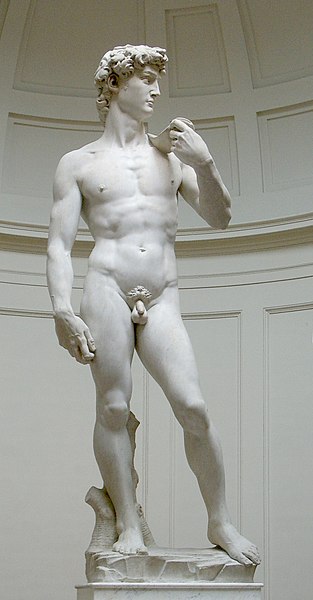
                                               File:David von Michelangelo.jpg

                                                                       Michelangelo's "David" 

  (Note the musculature, the leaning of his weight on one hip, the relaxed posture) 
                              (David is a warrior/athlete) (credit: Wikimedia Commons) 


                                            The Beauty of Sport

The last branch of Philosophy is Aesthetics, and in this area of human thought, sports also have a great deal to teach us. 

What makes beauty? To athletes, coaches, and fans, this is usually fairly clear.


                                                File:Female bodybuilders.jpg

                                                                        bodybuilders, 2008 
                                             (credit: petechons, via Wikimedia Commons)


First, in sport we see the beauty of the individual human body when it is in really fine condition. And different sports require different kinds of training and so lead participants to develop different kinds of physiques. But this is good. In the variety, and our discussions of which body forms we find more pleasing and why, each of us can learn a good deal about others and ourselves. Art serves this function, and other functions, in society. 


        Emma McKeon.jpg

                                       Australian swimming star, Emma McKeon 
                        (credit: JD Lasica/Cruiseable.com, via Wikimedia Commons)


The bodybuilders are in the business of making their musculature as large as they can. And many people find this attractive. There is also no question that the building of one of those bodies is hard work. 

Bodybuilding competitions are also hard. The posing that these athletes do may look like mere narcissistic display to those who don’t know the sport, but even those who have spent ten or fifteen minutes in what used to be called “isometric” exercise know that straining one muscle against its opposing muscle can be very tiring. 

In any case, the point here is that training and competing in sports gives serious athletes physiques that other people admire and find aesthetic. Long distance runners and swimmers, long and lean; bodybuilders, heavy and powerful. Other athletes’ bodies ranged in between.


                                 Louise Hazel-Heptathlon-200m (8460116786).jpg

                                              British heptathlon star, Louise Hazel 
                                     (credit: Kent Capture, via Wikimedia Commons)


But the beauty of sport does not end with beautiful bodies posing for photos.

In the second and far more gratifying place, as athletes engage in competition, they show viewers the beauty of the human body in motion. It is the grace and coordination and timing and flexibility of the whole body that is more likely to elicit “oohs” and “ahhs” from fans. A really well-executed overhead kick in soccer or a pass well-caught in football or a roundhouse kick well-delivered in martial arts – these are a joy for fans to watch. The beauty of the body in motion is what pulls fans to their favorite sport in the first place.


   Photograph of a man striking a ball in mid-air

                                   Ruben Mendoza performing an overhead kick

                                       (credit: Weechie, via Wikimedia Commons)


Then, in the third place, we can see in a sport the beauty of humans exercising a series of moves not only with grace, but with evident larger strategy in mind as they do the moves. When a boxer can feint so skilfully that he causes his opponent to reach out to deflect a blow that is not actually coming, and to drop his guard in a way that allows the more skillful boxer to deliver a knock out blow, that can be very fascinating and uplifting for a fan to watch. 

Or if boxing is too brutal a sport for you, you may find a similar sense of aesthetic satisfaction when a skilful tennis player sweeps her racket around to deliver a crushing topspin smash and at the last possible moment, pulls the sweeping stroke and barely touches the ball enough to get it over the net. It bounces once in the opponent’s court and dribbles into a second bounce long before the hapless opponent can recover and return the shot. 


   File:Boris Becker in action.jpg

                                          Boris Becker delivering a drop shot 

                                     (credit: James Phelps, via Wikimedia Commons)


There is a mind at work behind that drop shot. A clever mind expressing itself in the graceful movements of a fit, well-trained body. Beautiful to watch.


  File:Girls playing Soccer.jpg

                                                      Team play in soccer 
                                 (credit: Sarah Jones, via Wikimedia Commons)


Then, fourth in team sports, there is the beauty of several bodies and minds working together. This factor may be what makes team sports so satisfying for so many fans. 

The defender stops an attack with a skillful tackle and recovers the ball. She almost instantly drives it up the field, along the sideline to where she knows one of her midfield companions waits. The mid-fielder traps the ball, then turns and chips it in a well-placed arc to a striker who is running down the field, staying just barely onside until the pass comes in just over her head. If the striker then completes the play with a hard, precise shot that the opposing goalkeeper simply cannot block in time, and scores a goal, the crowd will erupt in cheers. 

The individual bodies look nice; the coordinated precise movements of each body in motion look nice; the clever planning that goes into each player’s movements is pleasing to the eyes of fans whose familiarity with the game enables them to see each mind expressing itself; but the most pleasing of all is the way that three different human beings, so quickly and so skilfully, can strike and handle a ball from one end of a hundred meter field to the other and end the sequence of all of their movements with the scoring of a goal.

Yes, it’s exciting. And it’s beautiful. And so it is that sports, in any society that has some wealth and time to spend as it pleases, will flourish. Watching all that beauty just feels good. Aesthetic. 

In the shadow of the mushroom cloud, nevertheless, enjoy the game.

Saturday, 4 August 2018


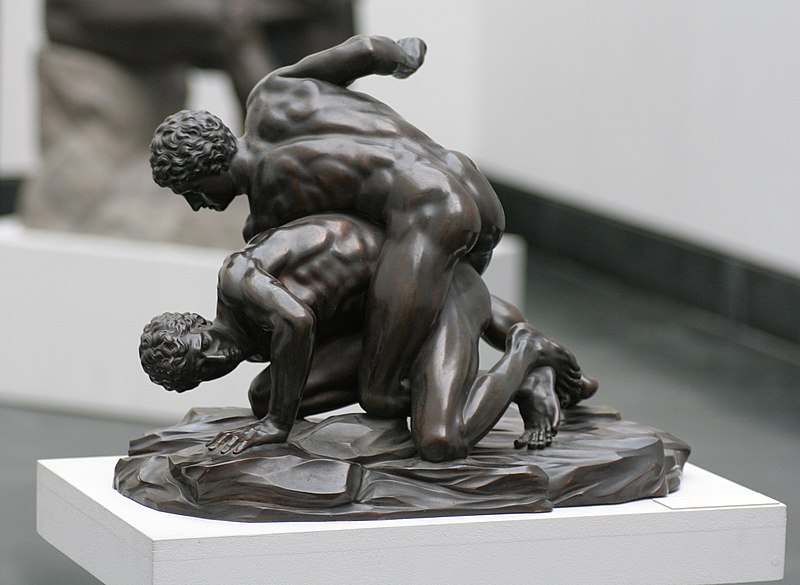
   File:Pankratiasten in fight copy of greek statue 3 century bC.jpg

                      Pankration fighters (from a copy of an ancient Greek statue) 

                                       (credit: Wikimedia Commons) 


The Ethical View Implicit In Sport


Sports have a great deal to teach us about all aspects of our philosophy of life, not our claims about our philosophy, but our real philosophy of life, the one that is implicit in the actions we do every day. And of all the components of our philosophy, sports reveal our moral philosophy the most deeply.

At first glance, the whole idea of a 'sport' sounds impractical. If I can win acclaim from my family, my village, etc. by directing a ball into a goal, why not pick up the ball and run with it until I am in front of the opposing team’s goal, then throw it in? The joy of being applauded by my family and friends, perhaps even my whole town, is appealing. We humans are a social species. We like praise. So why not get that praise in any way I can? Why worry about whether I touch that ball with my hands or not? Why care about the rules of this game?  

But no one will applaud if I score by cheating. In fact, I will bring dishonor to my family and my village. Cheating, breaking the rules of the game, is said to be 'unfair'. Clearly, sports activities are programmed by complex social norms. How we play a game is controlled by what we have been taught about how the game is supposed to be played. In short, sports show our moral values in action. 


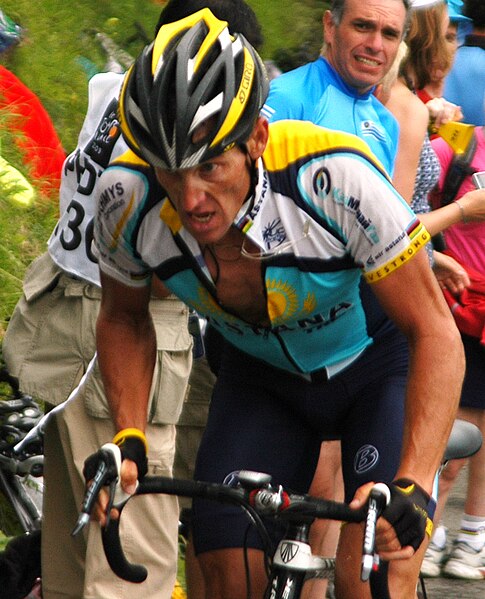
                     File:Lance Armstrong (Tour de France 2009 - Stage 17).jpg

                               Lance Armstrong, disgraced cyclist and proven cheater 

                                           (credit: McSmit, via Wikimedia Commons) 


What is this idea of 'fairness'? Why does it matter to us? We want to score goals and win races, but only in prescribed ways, it seems. Something deep in our natures is being revealed here.

So let’s begin by taking a long, careful look at what all sports have in common. What makes a sport a sport.

A sport is an activity that involves competition between two human individuals or groups who are striving, within a set of rules, to achieve opposing objectives. They want to score goals on us, while preventing us from scoring on them. We want the opposite.

Each player or team seeks to achieve their objective, i.e. to win the game, by exercising greater control over material things than their opponents. Handle the ball or the puck or the raquet or whatever objects the game involves with greater skill than their opponents and so score more goals, ace more serves, land better jumps, etc. than the opposition does, within a fixed span of time.

In many sports, the physical 'thing' being controlled is a ball of some sort, but it can be an object of some other kind (e.g. a puck in hockey), and it can even be one’s body as in boxing or gymnastics or synchronized swimming. The two parties in the competition must compete within a set of rules of the game made available in written form to all involved long before the competition begins.

Thus, it is competition that is not wide-open, but rather competition within a set of guidelines dictated by the rules of the game, that makes a sport a sport.


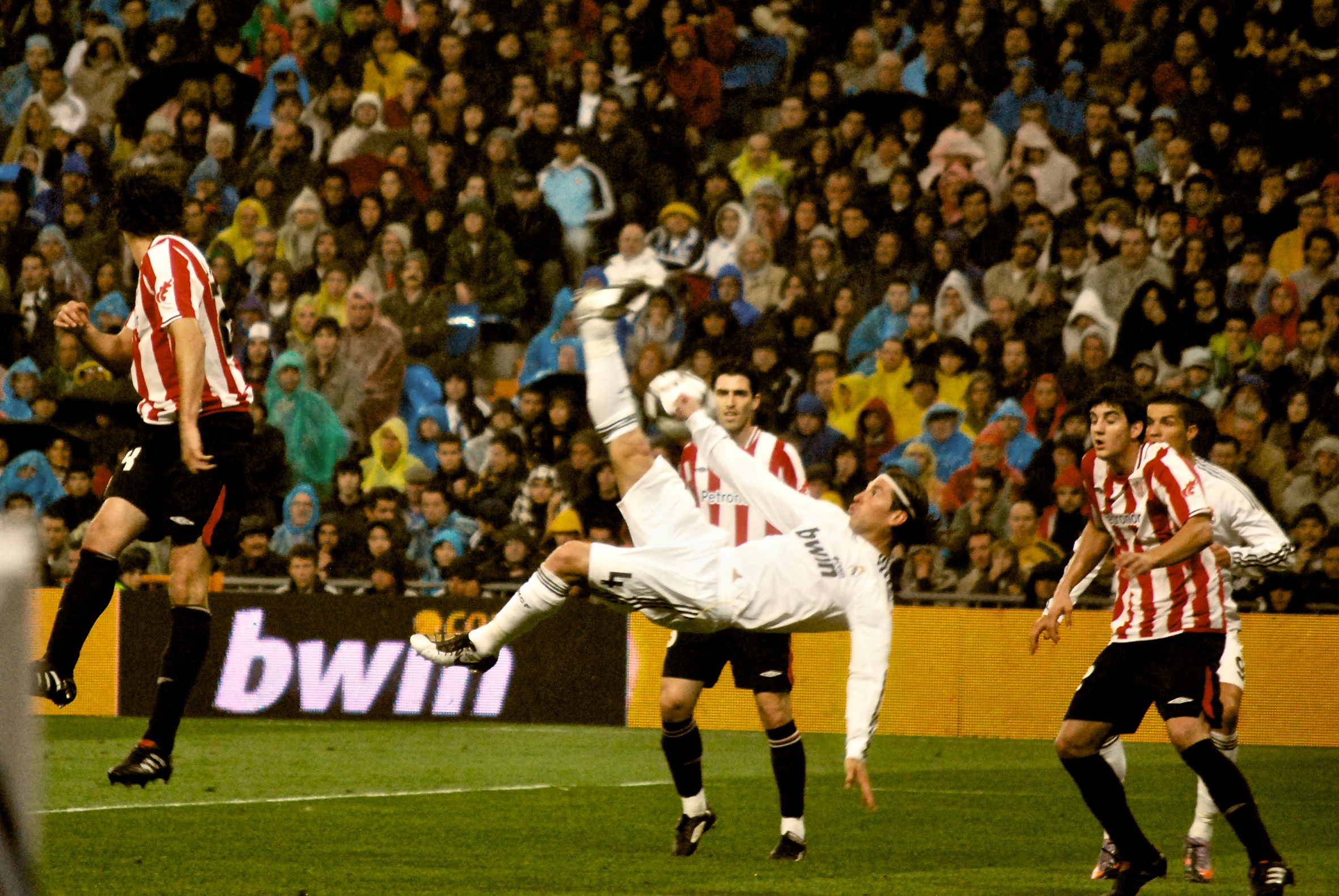
                                         Sergio Ramos performing a bicycle kick 

                                  (credit: Alejandro Ramos, via Wikimedia Commons)


If a competitor is playing a sport and acting all the while within the rules, and she/he is able to demonstrate a greater degree of mastery over things than that being shown by her/his opponents, by scoring more goals or cleanly landed blows or triple axels or whatever is the object of the sport, then she/he will receive the applause of fellow players and fans. Often, a great deal of applause.


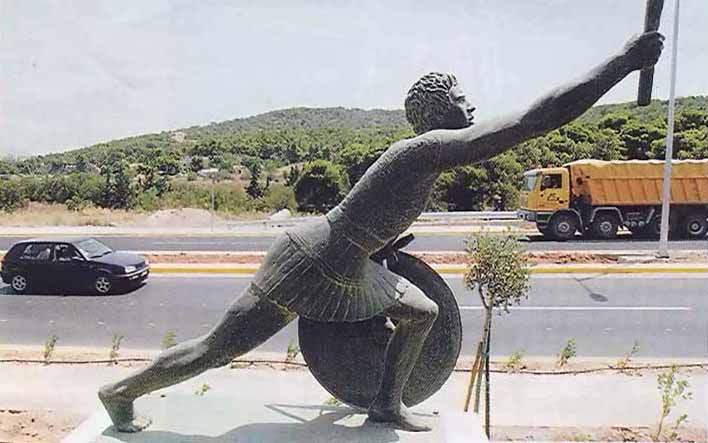
   Statue of Pheidippides along the Marathon Road.jpg

                            statue of Pheidippides, purported runner who carried news 
                                 of Athenian victory on Marathon plain back to Athens 

                              (credit: Hammer of the Gods27, via Wikimedia Commons)


In fact, very proficient athletes have been raised to hero status since ancient times. Thousands of years ago, winners of Olympic competitions in ancient Greece were welcomed as they returned to their home cities with parades and cheering crowds. Sometimes, a section of the city wall was even knocked down so they could stride in through the gap like conquerors. (Is sport a substitute for war? What does the evidence say?)

In addition, it is worth noting here that athletes who show, by word and action, respect for other players, coaches, fans, and the customs, morés, and traditions of the game bring further praise to themselves. This praise – if an athlete exhibits a personal style that is “sportsmanlike” – will come from her or his teammates and fans, but also from opposing fans and even opposing players. Thus, even boxers who knock an opponent unconscious for several seconds or minutes, can embrace their opponents after the fight. Soccer players, tennis players, baseball players, etc. also gain praise for themselves and their team by showing sportsmanship. The greatest of athlete-heroes draw thousands of fans to the venues where they compete and, from the money gained by ticket sales, are paid annual salaries ten, twenty, fifty, even a hundred times the salary of the average fan attending the games. Clearly, people all over the world love this idea of physical competition within a set of rules. Sport.  


                                18 yr. old Canadian soccer star Alphonso Davies 
                (whose playing rights have been sold for $29 million to Bayern Munich) 

                                            (credit: Robyn Beck, via the Globe and Mail) 


And all these monies are paid so that fans may watch for an hour or so as humans perform what is essentially a frivolous activity. At the end of the game, no food has been planted or harvested by the athletes, no clothes sewn, no shelters built, no diseases cured, no injuries healed. In fact, athletes regularly come out of contests injured far more than they were when the contest began.

And still fans applaud. Why? Because they are entertained by a demonstration, under a set of rules, of mastery over things. Seeing mind dominating matter is exhilarating to watch.  

Now, what does sport tell us about our moral values?

First, let’s repeat some points made in earlier posts. They can bear repetition. 

All sports assume the truth of some profound philosophical claims, the first of these being that the reality we see is mostly as we see it. Thus, how humans play sports reveals our ontology, our philosophy of what reality is. The ball is real. My body is real. The two can interact in the real, physical world. That object coming toward me is not an illusion induced by my own wishes or fears.   

Secondly, sport assumes that humans have free will. An athlete can control her body and can, for example, strike a ball with her foot in such a way that she impels the ball to fly rapidly toward the opposing team’s goal. So rapidly, in fact, that the opposing team’s goalkeeper cannot reach out in time to stop the ball from flying into the goal. Sports let us demonstrate our free will.
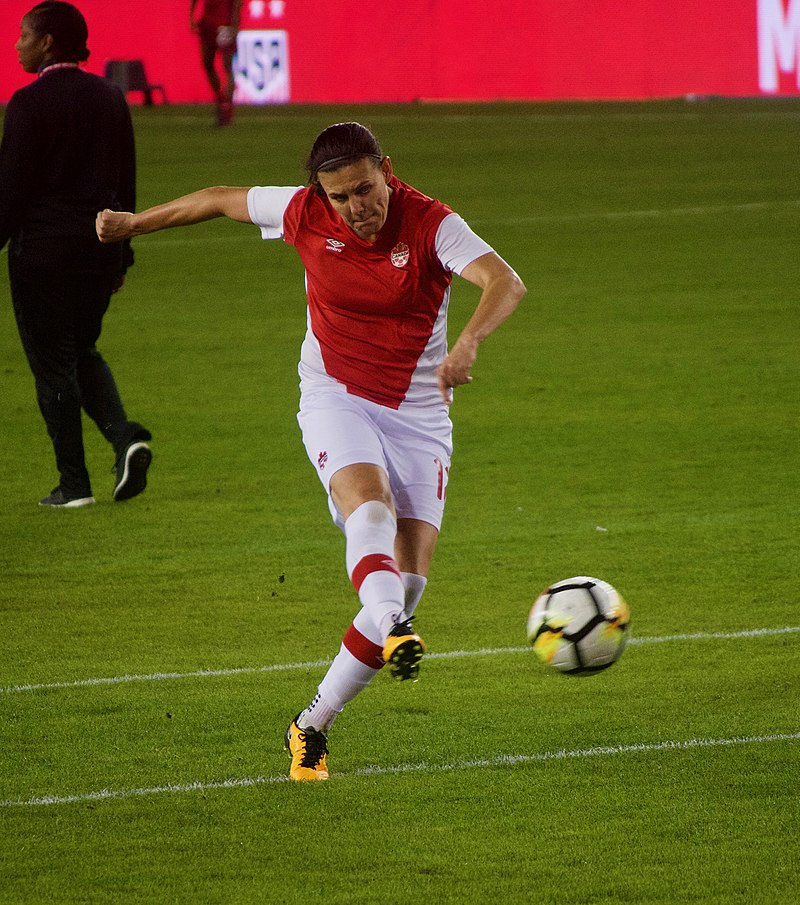


            Sinclair warms up before an international friendly in November 2017

                                     Canadian soccer star, Christine Sinclair 

                                    (credit: Noah Salzman, via Wikimedia Commons)


Every person watching believes in human free will. Every viewer believes that the mind inside that human controlled her foot and, via her foot, the soccer ball. The ball did not fly into the netting because of the background physical forces in the universe. The goal was not scored by entropy or quantum probability. She did it. The 'she' that is most truly herself. She is responsible. And good for her. Hooray for our team!!

In the third place, we now arrive at the moral insight of sport. If we can see a mind at work in a great play, which we can, then we can also see a mind in any action that willfully causes injury to another player. We can judge – and more especially, trained officials can judge – when a player intended to injure another. We admit we can’t tell perfectly. Dirty players can make an elbow hitting an opponent’s nose look accidental. Sometimes. But the majority of the time, because we know so well how human bodies move, we know when we see a dirty tackle.

In other words, we can tell when someone is responsible for an entertaining, graceful action, and when she is responsible for a mean, vicious action, and we can then mete out praise or blame, reward or punishment, appropriately. Reward skill, cooperation, and respect. Punish cheating and viciousness, which are demonstrated in attempts to surreptitiously violate the rules or to injure or both.

This is moral philosophy in action.

Thus, we see that sports reveal our implicit belief in human free will, and also that attached inescapably to free will comes responsibility for our actions. Freedom and responsibility are two sides of the same coin, and both are assumed in sports.

Actions in sport that demonstrate physical skill combined with keen, winning attitude all balanced with respect for the rules of the game and sportsmanlike play – these are the actions we praise most highly. These are the actions that inspire us to cheer so loudly. Humans demonstrating mastery over stuff while still respecting the rights and dignity of other humans.  


  Mehdi Benatia brings down Sergio Aguero to concede a penalty in Manchester City's win over Bayern Munich

                                Benatio tripping Aguera in Munich vs. Man City game 

                          (credit: Landov/Press Association Images, via the Daily Mail) 


Thus, in sports, actions have consequences. Particularly sportsmanlike players are paid huge salaries, but also given praise and trophies for the character shown in their play. 

“Fifty goals in fifty games this hockey season. And the fewest penalty minutes of any player active in the past year. He doubly deserves all this credit and praise. He has demonstrated for us all, that, for a while, to an exciting degree, a human mind, via the body it is attached to, can control ‘things’.”

And that’s the fascination of sport. For a little while, through our sports heroes, we rise up and defy gravity, space, matter, energy, time … and even death.

When we play the game hard, fight a clean fight, give our all for the whole hour, we celebrate and exult in our sometime mastery over things. And we do it while cooperating with fellow humans, some from races, creeds, sexual orientations, and so on, very different from our own. That is moral philosophy in action. Sports reveal that humans really do have this capacity. We can live together and interact and still get along.

Sports so closely mirror the human condition that they can even evolve. Coaching philosophies, skills, styles of play, sometimes even rules – all of these change as morés and technologies change. For example, soccer balls today are better made and are much lighter than they were fifty years ago. Why would the governing bodies that control how the sport is played ever allow these new kinds of balls to come into the game? Where was their respect for the traditions of soccer?

The new balls were taken up by the governing body of the game simply because they made the playing of the game more exciting. The degree of mastery over ‘things’ that players can show with the lighter ball is very gratifying for fans to watch. FIFA officials could see that, so they chose to make the change. And it worked. Today, soccer is far and away the world’s most popular sport.  

Finally, then to sum up, I will repeat that I find it entirely reasonable to believe that humans have free will, that they can be held responsible for their actions, that it is feasible for other humans to hold them accountable for those actions, and reward and praise them for skilful and moral actions and punish them for immoral ones. And then mete out the reward or blame appropriately nearly every time. Why do I believe these claims? Because evidence from sport supports them.

The ‘realness’ of the reality we see. Our high degree of control over that reality, at least at our level of resolution. Our resulting capacity to be held responsible for our actions in the real world. The idea that observed details can reveal to an outside observer whether an action is moral or immoral. All of these beliefs are affirmed every time the players take the field.

Sports don’t prove beyond all possible logical challenge that any of these philosophical claims are true. But in sports, all these claims are assumed, provisionally, every day. Then, those who assume them act on the assumptions. 

And they work.

What makes 'right'? Playing by the rules that you agreed to play by before the contest began. Accepting the outcome, win or lose, gracefully, then moving on. 

What makes 'wrong'? Violating the rules by trying to cheat, trying to win by kinds of action that the rules forbid, especially when the violation shows to the large majority of neutral observers that an intent to injure another person, in ways that the rules forbid, was guiding that action. 
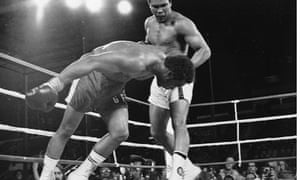

  muhammad ali

                            Ali knocking out Foreman in Zaire, Oct. 30, 1974 

                                   (credit: Associated Press, via the Guardian) 


Even boxers, intent on knocking each other senseless, striking each other with all the force they can muster, fight under a set of rules. 

And that is what makes 'good'. 

In the shadow of the mushroom cloud, nevertheless, enjoy the game.  

Wednesday, 18 July 2018


                          fans of Japan and Senegal mingle, World Cup 2018

                           (credit: By Wild Child, via Wikimedia Commons)


Political Insights In Sport


In the past few posts, we’ve discussed ways in which sports and the assumptions that underlie them can inform our thinking on questions like whether what we see is real, or just illusion, and whether human beings have free will. The whole worldview that is implicit in sport affirms that, yes, what our senses show us of the world is a fairly reliable representation of what is really there, and yes, we humans do have fairly impressive powers to shape events that are happening around us and events that are yet to happen. Reality is mostly as we see, hear, and touch it, and we are, to a fair degree, free to affect how reality is changing over time. I am confident that the ball is real and that I can kick it and catch it.

But there are more interesting philosophical insights to be gained from a close analysis of sports. For example, the actions we humans take to organize into larger groups like bands, tribes, and nations, are called “political activities”. Sports can give us useful insights into how humans organize into groups.


  File:Melbourne AFLW huddle.jpg

                                        huddle of AFLW Melbourne players 

                                      (credit: Flickerd, via Wikimedia Commons)


To begin with, the whole idea of sport has a democratic tone to it. Players who are forced to play a sport – perhaps because they show an aptitude for the sport, even if they don’t really like it – will never play as well as players who choose to pursue the sport, develop their skills, train hard, pay attention to coaches, etc. All of these are better done by people who choose to play the particular sport in question. 

An athlete may show great aptitude for figure skating, but if she wants to play hockey and she is forced into figure skating, in the long haul, she simply will not match the figure skaters who really want to do double axels. Pressures from her family or nation can’t make up for her personal reluctance. 

Personal autonomy is profoundly important in sport. Personal autonomy is also a key assumption of pluralistic democracy. It is not thought of as an inalienable human right in totalitarian, oligarchic, or theocratic states. 

Real experience of being a member of a successful team also provides evidence that supports the democratic model of human organization in other ways. Once a player has been asked to play for a team, and has accepted the invitation, the coaches of that team immediately begin to plan where and how the player will fit into their overall strategy. 


                            starting 11, French national team, World Cup 2018

                       (credit: Кирилл Венедиктов, via Wikimedia Commons)


No team that asks the same kinds of skills and assigns the same responsibilities to every player is going to be a winning team. Player A may be a natural scorer who can hit the corners of the goal from long range, but he may not have the natural shadowing instincts of a good defender. Player B may be just the opposite: not a great shooter, but skillful at checking other players who are shooters, repeatedly blocking their best shots. And there are the players who head the soccer ball well, and the natural goalkeepers who have lighting quick reflexes, and so on. A winning team almost always is going to have on it a variety of players with a variety of skills filling a variety of roles. Diverse talents and roles are cleverly assigned by the smart coaches so that they complement each other. Then they are keenly pursued by players who have freely chosen to be on this team. This smart coaching is what makes success in sport. In short, pluralistic democracy works in the sporting world.

And yes, there are compromises. No individual, no matter how talented, gets to dictate to others on a winning team. Players frequently must choose to contribute positively to their team by foregoing their own glory and even letting go of their own sport philosophies in order to fit into the team’s overall game plan.

But such is life. Adults know there are always compromises that must be made when one joins a group. The general principles that make participating in a democratic team acceptable to strongly independent individuals include, first, the one that enables individuals to choose to be in the group, and to leave if they see fit. This first principle is balanced with an implicit second principle that allows for each member of the team to have at least some input into how the team will approach each game and season - training, game plans, and so on. Dictator types of coaches are things of the past in most regions of the world where sports are played today. They offend players and fans, but most of all, they also lose. 


  Mount Mercy head men's volleyball coach Mary Kay Van Oort talks to her players before the second set of their match against Culver-Stockton Wildcats in Cedar Rapids Wednesday night. (Jim Slosiarek/The Gazette)

              Mount Mercy University men's volleyball coach, Mary Kay van Oort

                            (credit: Jim Slosiarek, The Gazette, MMU, Feb. 8, 2018)


A player is still expected to respect the coach, but coaches also are expected to listen to, and show respect for, the opinions of the players. And experience has shown that dictator coaches just aren’t as likely to be winners. Thus, fans and owners of a team tend to favor the more democratic coach in our times. The wrangling on a team, like that in a nation, can become tedious, but in democracy, negotiation and compromise are just life. 

The profound thing to see here is that the democratic model works. It gets results. In sport, it produces winning teams.  

These same democratic principles make a strong nation. Why? Because both teams and nations must deal with the unpredictable, probability-driven real world. The best strategy if one wants to succeed in a stochastic world is to join or create a carefully designed team that maximizes its human resources. For team or nation, the strategy is the same: a number of different players with varied skills, each performing the actions for which she/he is best suited as parts of a well-designed group/community/team that functions smoothly as a unit.

The Americans are fond of saying, “There is no ‘I’ in ‘team’.” What they mean is that to make a successful team, players must learn to put aside their love of personal glory and replace it with a willingness to perform well in the role to which they have been assigned by the team’s coach. It sounds collectivist, not democratic, but the key thing to keep in mind is what was said above: on the best teams, the players choose to be there, and agree freely from their first day with the team that they will respect other team members and especially coaches and will cooperate for the common good of the team.

The element of personal choice is still primary, but personal glory can be consciously set aside by rational people for the good of the larger group, if and when reason dictates that it should be. 

There is always a collective in sport (even athletes in individual sports like boxing or tennis have coaches behind them), but successful athletes and teams preserve that element of individual choice. It pervades all that occurs in democratic sport all the time.

And now the political insights we obtain from sport get even more fascinating.

I love to notice in every sport how there is an unspoken agreement between players on a given team, between members of different teams, between officials, and even between fans that there are rules for this game, we all know them, we agree to abide by them, and anyone – player, ref, fan, coach – who willfully violates those rules, even in principle, is ostracized by all, sometimes even from the sport entirely, anywhere it is played in organized, sanctioned matches.

This understood agreement that everyone involved with the sport will abide by and respect the rules, customs, and traditions of the sport is a kind of social contract. Its ultimate aim is to keep contests played under the auspices of this sport from ever turning into acts of unrestrained violence. Even in the roughest of sports, there are always some acts of violence from which one is expected to refrain. Even in rugby, one does not head butt opponents, or tackle them by surprise when they don’t have the ball. And so on. 


                            New Zealand All Blacks rugby team doing haka, 2006

      (credit: Sonya & Jason Hills from London, UK, via Wikimedia Commons)


What is being revealed here is that sports are ritualized forms of war. Sporting contests are not real wars. Winners go home elated, losers leave the field or court dejected, but all live to compete another day. Sports allow humans to release their competitive urges without any competitors using deadly force.

Even the gentler sports like baseball, for example, in which players can play a whole game and never touch an opposing player, have roles in the larger political picture. Most sports drill young people for combat. Japanese soldiers in the South Pacific during World War Two found one aspect of fighting Americans extremely scary. The Japanese soldiers were very frightened by how accurately Americans could throw a grenade. Baseball.

German soldiers in WWI found Canadian soldiers’ skill with the bayonet frightening. The game of hockey, played everywhere by nearly all Canadian boys, leaps to my mind. The connection seems obvious.

Rugby and football train people for hand to hand combat and for throwing grenades. Tennis builds skills and muscles used in handling swords. 

Do other species engage in ritualized forms of combat that establish territorial and breeding rights? Absolutely. In fact, most intraspecies violence is limited so that it rarely if ever results in crippling or deadly damage to one or both combatants. That would be a foolish waste of the herd, pack, pod, or flock’s resources. So the bull elk fence and push with their antlers, but they do not kill each other. 


  File:Bull-elk-rut-fighting-antlers - West Virginia - ForestWander.jpg

                                                                        bull elk duelling 

                  (credit: http://www.ForestWander.com, via Wikimedia Commons)


There is even a term in Biology for this dominance-setting, controlled aggression. It is called “agonistic” and it is common in the animal world, from insects and shrimp to elephants, but it rarely if ever involves the use of deadly force. Sport is just the human form of the elks' fencing and pushing.

This thought brings us to some related observations. It was George Orwell in an essay called “The Sporting Spirit” who noted that sporting competitions are closely connected to feelings of nationalism, which by the way, is quite a recent political phenomenon in most parts of the world. 

For centuries, people loved their families, then maybe their tribes. But love of ones' country is a recent political invention. It has become a global phenomenon just in the last century or so. As countries rose in importance in people’s lives, and mass media gave governments more power to influence the thoughts of their citizens, feelings of nationalism began to get stoked. 

All of this Orwell noted decades ago.

The fact that we can get so worked up here in Canada over our national hockey team’s games against the Russian or American national squads, and the British can invest so much emotion in their national soccer team’s games, the Iranians in wrestling meets, the Thais in kickboxing, and so on for many other nations, indicates again that there is something deep going on here. The deep emotions stirred by sport have a connection to the larger, political picture: sports are substitutes for war.

Contrary to Orwell, I find the nationalistic hysteria that sometimes surrounds a sporting match to be mostly a hopeful sign for our species. Why? Because even when a contest is called “dirty” and “unfair” by millions of fans, even when officials seem obviously biased, everyone goes home after the match in tired but healthy condition and sleeps in her/his bed. Contrast that picture with the ones we have seen too often of what a battlefield looks like after the battle, and perhaps you will begin to share my affection for sports.

Finally, I shall close with one more philosophical insight: the truth of all of the observations I have presented above also indicates things much deeper and more hopeful for our species.

If we can agree that we will try to put a round ball into our opponents’ goal, a goal that is the exact same size as the one at our end of the field, with any part of the body except our arms, that we will pursue the ball and not the opposing players, and that we will all treat each other and the officials with respect, then it seems obvious to me that we could learn a new moral code.

All of us.

Learning a code under which we all could live together and get along would be hard, but not impossible. Like learning a new sport. How many millions of people around the world have moved to a new place for work-related reasons, or to retire, and discovered that actually, yes, they have begun to really enjoy watching soccer or hockey, or playing tennis, or badminton, or whatever, when they had previously had no experience in their newfound sporting love?


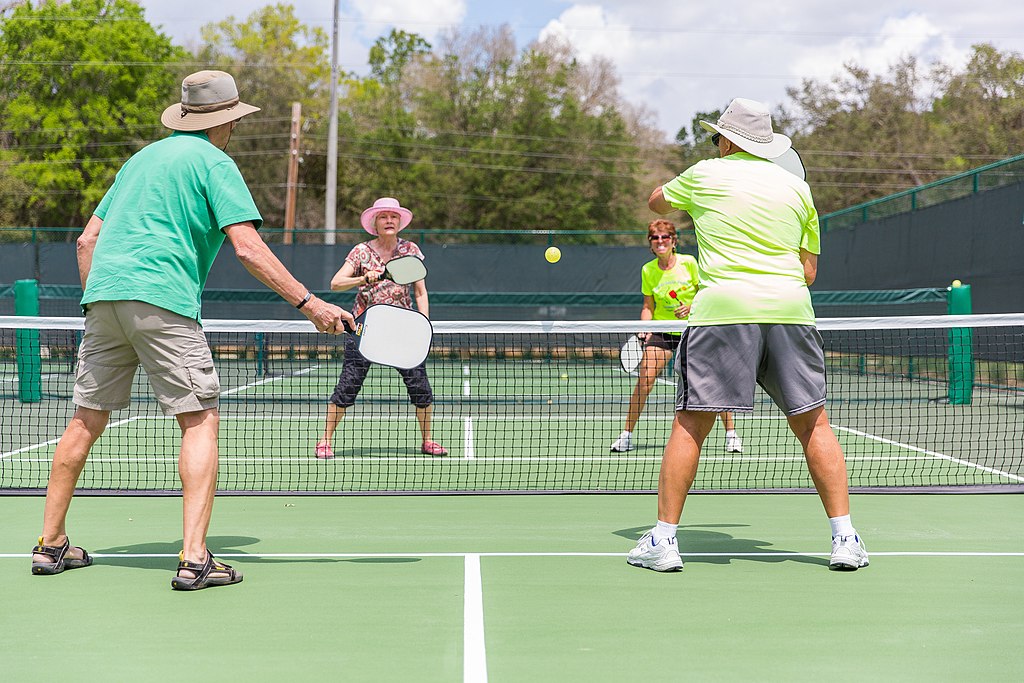
  A doubles game of pickleball at the Villages in Florida.

                                           seniors playing pickleball, Florida, 2017

                               (credit: The Villages FL , via Wikimedia Commons)


Writing the rules for this new global game is going to be the hard part. If we can get that code down in a form that the big majority of us can agree on, we can then begin to teach it to, even program it into, the children. Hard, but not impossible. And so much better than the alternative of going on with warring. 

Sport is pointing the way. We only need to choose to practice that same spirit of competition under an agreement to play fair, and we’ll have it.

Business. Political campaigning. Sport. The Arts. Science. Every arena of human activity. And an end to war.

In the shadow of the mushroom cloud, still, have a hope-filled, sporting day.