Monday, 19 October 2020


         Thompson's gazelle (credit: Wikipedia)


Democracies and Their Ways

A key term in our understanding all living things is the term “ecosystem”.  It is our word for any entity made of millions of living things that are sometimes competing, sometimes cooperating, but nevertheless, in the scientific view of them, forming a single thing that has an existence of its own, greater than that of any of its parts. Any part in an ecosystem is expendable; any one of the parts can die, cease to exist, break up into dead pieces, while the larger entity, the ecosystem, goes on.

The whole system is constantly in a state of vigorous interactions, all balancing and counter-balancing each other. It appears to stay roughly the same, but internally, it is always changing. In fact, some parts dying so that others can take over their protoplasm, i.e. eat them, is sad for the individual living thing, but good for the ecosystem. Gazelles eat grass; lions eat gazelles. Please note that the lions tend – most often – to kill the gazelles that are hurt, sick, slow, or stupid. A fawn that prances just out of a lion’s reach is likely going to die young. The lion seems sleepy, but he is only seeming so. The lioness is hiding in the grass 5 meters away. “Dance a bit closer, little fool. My cubs are hungry.”


                                                     Lioness (credit: Wikipedia) 


Thus, the weak, slow, and stupid are cut off from reproducing. The stronger, faster, more prudent have more grass to eat so they live to pass on the genes for strength, speed, and prudence to more fawns. The lions benefit the gazelle herd and the whole system over the long term. Internal pressures inside dynamic balances are what make an ecosystem.

Over millennia, all species that survive, reproduce, and evolve into new forms of themselves are members of ecosystems. No individual and no one species ever exists in isolation. They interact and, mostly are made stronger over the long haul, by living in complex relationships with others, especially other species.

In our larger understanding of our world and ourselves, these ideas of balance and ecosystem are vital.

Another area our understanding of our world in which the ecosystem idea is useful is in our study of ourselves.

People’s daily decisions, habits, and values are mostly shaped by the ways in which they are programmed by elders of their cultures when they are young. These too evolve for whole variety of reasons. Men’s hair has been fashionable long, short, shaved off, dyed, etc., all in my lifetime. And now? Any of the above. 

What we need to see next is that a human society is a kind of ecosystem. A tribe or nation contains many different kinds of people, all performing different roles within the overall community. Farmers, ranchers, and fishers provide the basic nourishment that the tribe must have in order to live. Lumberjacks and factory workers provide the materials for building shelters, which any tribe that seeks to grow its numbers must have to keep its people from the elements. Tradesmen use the textiles and lumber to make and maintain the food, clothes, and shelters that enable the tribe to grow and spread. Teachers don’t make physical things, but human ones: citizens that seek to work together to solve their disputes via the rule of the nation’s laws. All of these trade services, and the roles, get much subtler.

A human nation is not an ecosystem if we demand of anything labeled with that term that it contain individual organisms killing and eating each other all the time. Nations – or more accurately, democracies – are designed to avoid routine destruction of some of their components. In truth, to prevent such killing. 

But a nation is an ecosystem in the sense that it contains a lot of very different members who interact and sometimes compete with, and sometimes support, each other’s functions. Workers work for owners of the means of production in order to get things that the workers want. Owners hire workers and agree in advance to pay them in specific terms. Owners seek to hire workers because the owners own large enough factories or tracts of land that they know they can’t do all the work themselves. Even early in our natural history, the spear-maker trading with the hunter and her medicine woman allowed for individuals to get more skillful at their crafts until they were medicine women or spear-makers full time. By sharing labor, and trade, tribes became larger and more efficient.

The point is that a society or nation can be seen as an ecosystem. The ecosystem view of society yields many useful insights into how we humans work.

We can even draw further analogies between natural ecosystems and human ones. In a natural ecosystem, we see the real actors in the drama as being not the material plants, animals, and micro-organisms. Not even species. The action is being guided by the genetic codes behind these species. These change as the soils and climates around them change. Shift the climate toward less rain in an area, and trees die out; grasses spread; grazers flourish; some tree dwellers adapt by gradually updating their gene codes, and some die out. Ancestors of humans had to move out of life in trees or die out. Some tribes survived by changing their ways of life. Found different foods. Learned to dig for edible roots. Some did not.

Once in a while, a very drastic climate change can even cause a whole family of living things to go extinct. Dinosaurs, millions of them in thousands of species, did not have the complexity and depth of programming to cope with the meteor that hit the earth 66 million years ago. They all died.


Giant meteor striking Earth (credit: Frederik, via Wikipedia) 


Now, what is the point of this post today?

The codes that ultimately guide and run human societies are the sets of memes - ideas, beliefs, values - that the society is founded on. Teach kids at home and in school to value and practice 'will' and 'power', and you'll create an oppressive nation. Teach them to value and practice compassion and wisdom, and you will live in a cooperative, respectful one. And ...if these two clash, in the long haul, the society of mutual respect will win. Why? Because it will contain more members, and more varied, resourceful ones within its population as well. 

The design of democracy is the most glaring example we have of the ecosystem idea being put into practice in real human societies. Autocratic societies attempt to rid themselves of variety in their populations and fix their society’s vision on creating one acceptable kind of citizen. Uniformity. It’s reassuring in the short term, but my prediction is that in real history and politics, such a society will never be as dynamic or vigorous as its rival that promotes individual liberty.

The founders of the American nation especially clearly had the ecosystem idea in mind when they purposely created a nation in which English, Dutch, Spanish, and French, Protestants and Catholics, etc. all lived together, worked at their own crafts as they wished to, and got along. All of these groups had hated and killed each other in the centuries leading up to 1776.

The U.S. Constitution is designed to push people to live together under the rule of law, trade, resolve disputes in courts, and generally get along.

African and native people were being left out to start with, but evolution is always messy. There is no moment and no one fossil that shows us exactly when eohippus became mesohippus. But, the change is very clearly discernible over the long haul.

And the basic idea of a social ecosystem, under a democratic rule of law, works. In fact, it is so visionary that we marvel to this day at the way those framers of the constitution designed it. It even provides, in its legislative branches, for the updating of laws that are clearly not working anymore. Jefferson knew that slavery was wrong. He just also believed that it wasn’t going to get righted in his lifetime by the few who thought as he did. John and Abigail Adams never accepted that position and died still speaking out against it. One human being can’t – ethically – own another. Period. No deals, no exceptions. And the branch in charge of social evolution, i.e. changing the laws, is updating that code and has been for centuries. It’s far from righted, but change is gradually occurring.

Churchill in his less-than-perfect democracy summed the matter up by saying: “Democracy is the worst form of government …except for all the others.”  


                                                   Churchill (credit: Wikipedia) 


So I want to encourage readers facing upcoming elections in several parts of the world and especially in the U.S. to calm down and reason coolly. The U.S. democracy is still vigorous. The framers of the U.S. constitution may not have been able to explain what an ecosystem in a pond does, but they obviously had an understanding of how systems work informing the design that they ended up with as they wrote that famous document: many different entities at many levels of the government, all intended to create balance. The legislative, judicial, and executive bodies are all still in place and functioning vigorously. Legal lines separating areas of governance in which states’ rights take precedence over federal ones, and when the reverse is the case, are still being, by most, respected. The whole giant struggle is largely still being fought within the rules.

Best of all, it is very important for us to keep our eyes firmly fixed on the ideals that inform all democracies: rule of law, not of individuals or cliques; provision for updating antiquated laws by peaceful means, not by violence.

If violence in the streets becomes commonplace and widespread, martial law restricts citizens to their homes at most hours of their week, courts, legislatures are shut down, and dissenters start to disappear, then we can start to panic.

But that hasn’t happened yet.

So? We go back to rational dialogue, evidence-based reasoning, persuasion of our opponents that some of their views are wrong. Because that’s what democracy was designed to do in the first place. Give as many citizens as possible decent, respect-filled lives, and allow them to seek redress of grievances and changes of the law by dialogue rather than fighting.

The rule of law matters most when it is hardest to maintain. And us? We’re still okay. Read what Lincoln had to endure. We aren’t nearly that stressed yet.

In the shadow of the mushroom cloud, still have a reasonable day.  

Saturday, 3 October 2020


U.S. President Donald Trump (credit: Sheila Craighead, via Wikipedia)


Schadenfreude

Some days a topic which invites comment and posting just leaps out at us. In the milieu of the last two days, the word “schadenfreude” has elicited that in me. Schadenfreude is a German word that means “the pleasure one derives from seeing an enemy suffer”.

I never liked it. The feeling may be very human, in the sense that it seems to come naturally to all human beings. However, to me, it seems very clear that being a responsible, adult citizen of a democracy requires that I don’t indulge in every impulse that passes through me, even if it is very human to do so, and even if I see that many others do give in to it.

Let me explain a little.

I loved a girl back when I was a teenager of 19 and she was 16. We were crazy in love for a year or so, and yes, we did all the things that lovers do, including horizontal, heavy breathing exercises. For reasons that I don’t need to go into, her parents hated me. Reasons involving religious differences and their general, conformist natures. What the neighbors thought did matter to them. I was a wild, long-haired, rock musician in a band that played live gigs. The situation set up like a fated tragedy, and it ended in one.

For a lot of reasons, she committed suicide when she was 17. Tried once and did not succeed, mainly because I knew she was home alone, and when I found the place dark, I broke in and found her. Near death. Fill in the details yourself. They were that bad, at least.

A few weeks later, when the row had died down, she succeeded. I was working out of town at the time. Trying to act "normal". The work had been long planned. I was trusting that her parents would see that she got good, professional help. They got her a psychic.

My rage was infinite for the first few minutes when I learned the news. But I suddenly knew, even at 20, that I did not wish for her folks to suffer one moment longer than they already had. Blame is a myth made up by Pride.

I have had an aching empathy for the families of any suicide, and the victims too, of course, but especially in the case of the suicide of a child, since that time. And then, it gradually grew into empathy for all suffering. I don’t care how much you hate your enemies, it is wrong to wish them real suffering. The world contains enough of that without any of us secretly wishing to augment it.

That hard experience changed me.


Bernie Madoff (credit: The Guardian) 


By the time 2010 came around, I had known a number of moments of rage at the Wasters of Wall Street. And the very worst example of investment industry greed, I thought then, and still think now, was Bernie Madoff.

He had built an investment company which had about $55,000,000,000 US in assets. Other people’s money. And the crash of 2008 had put pressures on it that had finally caused it to break wide open. It was all a Ponzi scheme.

His duped victims included Stephen Spielberg, Kevin Bacon, Zsa Zsa Gabor, John Malkovich, and many others. Most, however, were smaller investors and many of them had risked everything they had with Madoff. Many lost their whole savings. Their hopes of retirement. And for many of these, the losses could not be shrugged off as they could for the wealthy, multi-millionaires. Millions of small investors were left flat broke. 

But then, shortly after Madoff was arrested, his son, Mark, committed suicide. And Mark was no teenager. But apparently he could not live with what he had been a major part of: the fraud his father had perpetrated.

I shrank inside when I heard that news. And examined myself very hard inside. But I found that I simply had not wished such misery on Madoff. No matter what he had done, mostly to fairly ordinary people like me (though not to me personally, thank Heaven) he did not deserve the internal torment I knew he was going to go through. A long prison term, yes. His son’s suicide. Never.

And I knew, somewhere over the long years, I had sunk it in. In the life-sized view of ourselves, schadenfreude is just sick. It’s wrong. It may come naturally out of our atavistic impulses, but so do rape and murder. We can train them out of ourselves. We really can. In fact, that’s what being a civilized human being means. Unlike the Romans, we today do not go to a sporting contest hoping to see some excellent killings. Times change. People change. Slowly, but …sometimes, even for the better.


                                                   (credit: historycollection.com) 


What does all of this have to do with the last two days?

I know inside the deepest parts of my own conscience, I do not want to see the current president of the U.S. sicken and die of Covid 19. I want him to run in a free and fair, democratic election. I want him and his party to lose so badly that they are all but wiped out as a political party by the voters. For a decade. Then, I want to see him face arrest, trial, and prosecution. He has broken the law. He deserves that kind of punishment. But not death by Covid. Death will come soon enough. 

Schadenfreude, when it gets what it thinks it wants, solves nothing. Helps nothing. In fact, that feeling, if it gets what it thinks it wants, ends in making circumstances worse than they were before the event that called that feeling up in the first place.

In the shadow of the mushroom cloud, nevertheless, have a decent day.

Thursday, 10 September 2020


                           Daniel Defoe (author of "A Journal of the Plague Year")

                                   (about the Black Death in London in the 1660s) 

                                 (https://www.goodreads.com/work/quotes/12755437)                                     


The System

I worked with a colleague years ago who used to tell me, every week or so: “Dwight, always be sincere, whether you mean it or not.” He was trying to use irony to get me to lighten my tone. In those days, and today, I too often slip into strident intensity, and that only puts readers or listeners off.

This is true for many others besides myself and true more now than it was 30 plus years ago when I was working with the friend I just mentioned. Right now, in the Western nations, we desperately need to return to rational discourse: reasoning based on observable evidence, presented in a calm, clear way. Facts that all can see – then what we think the facts mean and why.

So let’s have a frank, calm discussion about what is going on in our currently strident, frantic world. And, in that spirit, let’s begin with basic concepts. Like the crucial concept of an ecosystem.

An ecosystem contains many parts that are all interacting all of the time, now competing, now cooperating. But these interactions enable the whole system to adapt to shocks from outside and restore its internal balances over and over again. The parts do not exist as separate, unrelated entities. Any one of them getting enhanced or damaged affects all the others.

Now, let’s consider some of the ecosystems of this earth. Like, for example, the ecosystems that surrounded and contained farms in Canada when I was a kid.

When I was a kid in the early 1950s, DDT was often hailed as a miracle remedy for the insect pests that plagued us. DDT killed insects that transmitted diseases from human to human and insects that destroyed food crops. It was a modern miracle.


                       File:Imago of Colorado potato beetle on leaf with eggs.jpg

                                      Colorado Beetle (one of the pests killed by DDT) 

                                                         (Wikimedia Commons) 


But by 1972, it was being banned in almost all countries of the developed world. Why? Because long term, in-depth studies had shown that its overall effects on whole ecosystems were catastrophic. And that’s not strident talk; it’s simple fact. DDT put chemicals into the food chains of all kinds of environments at the dead insect level. The dead bugs didn’t just disappear. Amphibians, lizards, birds, etc. ate them. Then birds of prey ate the bug eaters. The chemicals concentrated as they went up the food chain, and soon hawks and owls in the affected areas were laying unusable eggs. The DDT residues absorbed into the bodies of the birds caused them to lay eggs with shells so thin that they crushed under the weight of the bird trying to sit on them in the nest. The hawks and owls died off and then, way down the ecosystem, the rodent populations went crazy. There were no owls to kill the gophers. It turned out that farmers who used DDT on their crops, in the long run, were harming their own operations. On farms in British Columbia, for example, gophers multiplied till they ate so many tree roots in some orchards that, in a season, they sometimes killed every tree.


                       File:Great Gray Owl (Strix nebulosa) (6182442647).jpg

                                                       Gray Owl (Wikimedia Commons) 


Similar things happened with phosphate-containing detergents being used for a while by householders just trying to get their clothes clean. Phosphates get clothes clean and are “biodegradable”. Which is good, right? No. In fact, they feed living things in river systems that receive the effluents from towns and cities. In fact, phosphates are much too friendly to algae. The algae in many river systems bloomed out of control, used up all the oxygen in the water, and left suffocated fish floating belly up.

But, hooray for Science. Scientists figured these puzzles out and showed us how to solve them. Today, we have some pesticides still, but they are nothing like as toxic as DDT was and are much better targeted. (Herbicides, on the other hand, are another discussion entirely.) Today’s pesticides often aim to kill only one insect species and only in ways that will not cause harm further down the food chain. And getting clothes clean can be done without phosphate detergents.

In all these situations and many others, the concept of an ecosystem is crucial to our understanding of what went wrong and how to fix it. All of the parts are connected and in balance; any shock to one part of the system affects them all.  

What is my point? My point is that once we fully grasp the idea of an ecosystem, we see that a society is an ecosystem. As Robert Palmer said back in the 70s, “it takes every kind of people to make what life’s about.” A society is an ecosystem.

We need farmers and fishers. They get from the larger ecosystem, the food that the rest of us have to have. We need scientists to show them how to do that efficiently and not get sick or hurt themselves in the process. We need medical people to heal them when they do get sick or hurt in their interactions with their environmental ecosystem. We need entrepreneurs to devise new projects. Then, by picking the best of the new products that the entrepreneurs create, a society can change and evolve, which it always must do. Life can’t stand still, not even the life in a very large ecosystem with thousands of species and millions of individual living things in it. The system must grow and adapt as conditions in its environment change, which they always do. 

We need teachers to teach all of the above the knowledge and skills that they need to fill their roles well. And yes, we need bankers and brokers to steer the surpluses society produces into those new enterprises that are the most likely to create even more surpluses and cause the whole system to produce generous quantities of goods and services that real folk can use to stay happy, healthy, and productive. Bankers, if they do their work well, ought to cause capital to flow, in a timely way, to the places in which it can do the most good.

Please also note here that it’s open markets for all goods and services that make this bounty happen. When a state brings in centralized planning to manage the nation’s economy, the result is that the planned economy is not as efficient as a market-based system. Citizens when they step into their consumer roles are merciless. In the market, companies must sell or go broke. Sell at least some of their wares to a public that freely chooses to buy them, for a price that will pay for the costs of their production, plus a little, or go broke.

And no, the banks won’t lend you any more money. If they did, then they’d go broke. People who save their money in a bank don’t want to see their savings get smaller. A bank is not a charity.   Cruel as it can be for a small business just starting up, the market system works for the millions. It yields more goods more efficiently than its centrally planned rivals can. And we have lots of evidence to support this view. East and West Germany. North and South Korea. And many other smaller-scale experiments.

But to say all these things about market-based economies is only to repeat that a society is an ecosystem. 

However, in spite of all the above, the whole ecosystem can go under. If, for example, the economy drastically slows down for some reason, and thousands or even millions lose their jobs, the nation’s leaders can’t ignore the sufferings of workers. If workers and their kids are truly suffering, they will grow increasingly angry, and they will begin to destroy the means of production – the farms and factories where they were working just a few weeks before. And if this trend is not remedied, the whole system will dissolve into chaos. Then, workers will come for the incompetent leaders and they will come with murder in their hearts. My starving kids trump your law and order. Thus, if leaders really are wise and insightful, they set out the manage the whole social ecosystem -- not just the workers, not just the owners, not just the bankers -- and keep it in balance

So let me reiterate. Bankers, business people, owners – none of these exist in a way that is somehow independent of the others. Society is an ecosystem. All of the parts connect to, and depend on, all of the others.

A real ecosystem contains thousands of species, all interacting in subtle complex ways. A scientist can give her or his whole life to understanding just one small part of it. A spoonful of healthy soil contains up to 50,000 species of living things and up to 7,000,000,000 individual organisms. Its ecosystems are enormously complex. The same is true of a modern, complex society. And like an ecosystem, a whole society has to always grow or die out. Evolve or go extinct. Life does not tarry with yesterday.

In the largest view, at this point we see that good leaders of society need to be unselfish and wise enough to write and update laws that make the system work smoothly, so that the diligent and sensible rise and the lazy and quarrelsome are granted enough to get by, while the few who simply try to take from others, by force or trickery, what they have not earned, are apprehended and locked up. 

A really effective leader has to understand the concept of an ecosystem. All of this seems obvious and platitudinous to most people today. But it’s not.

The larger point is that real life – in the natural world for a solitary individual, and even more in the social world for a typical citizen in a complex society – means ceaseless labor and vigilance. Watching behind oneself and to left and right, and ahead, above, and below all the time. Deciding when to ignore events, when to defend against them, and when to cooperate with them. Understanding that we live in ecosystems means seeing not only that life is complex and hard, but also why it is so. The ecosystem concept, once grasped, gives us that, and that is no minor insight. For young people, we can say: “Yes, life is harder than it looks, but here’s why.”

The overall worldview held by a person who understands what an ecosystem is and how such systems work, and who relates every human action to the larger social system, is going to be a much more reliable guide for its holder than the worldview held by the person who does not understand ecosystems.

Business people, academics, workers on farms and in factories, even military people, have to learn to work together within the system. Otherwise, in not that long really, no one is going to work at anything. All will be fighting, day by day and even hour by hour, for their lives.

Thus, in all things, we are going to have to accept in our complex world today that Science must rule Economics. The ecosystem concept that we get from Science shows past all doubt that our social ecosystem, when it is working well, can get very powerful and can create decent lives for billions, but it still, always, runs inside the natural world. An economy is not a living planet. The economy has to respect the planet’s larger ecosystems, or that economy, and all who are unable to think outside of it, will die.  

The most frightening aspect of our current situation in 2020 is that some current world leaders, including the current U.S. president, do not grasp that. Some problems can’t be fixed by a “deal maker”.

The latest instance of a natural shock to our economic system is Covid 19. But this virus is not a surprise suddenly dropped into our society. Epidemiologists knew we were going to get a virus like this one at least as far back as 2015. New viruses emerge regularly out of the normal churning processes of the earth’s ecosystem. Unfortunately for Donald Trump and his supporters, a virus does not know or care about "the market". Nor for Science, for that matter. It just is. It does what it does, and if we don’t respect and accommodate it, it will simply kill more and more of us until we do.

The bottom line for these times is that the American leader who didn’t do his job of protecting the long-term health of the nation, using knowledge based in scientific facts, not quarterly balance sheets, should be removed from office.

But it is worth noting here that Donald Trump is not what one can properly call “evil”. He is not “wrong” in the sense of being against justice and compassion for others. That he lives by the economic view is the deep meaning revealed by his much quoted remark about the virus, “It is what it is”. Losing some human lives is like having some bad employees who steal from your warehouse. It is one of the costs of doing business. He really thinks that he has to ignore the virus if it threatens the country’s economy because unbridled capitalism is the kindest way to go for the long term health of the whole nation.

He is not evil. But he is “wrong” in the more important sense of being mistaken. If he ignores the realities of the natural world, he soon won't have a nation to serve. Compared to thieving employees, a virus is a whole other kind of threat. It threatens the nation's very existence. And that is not just strident talk. 


                                          Covid 19 patients in Brooklyn hospital 

                                                        (credit: New York Times) 


The fourth horseman of the apocalypse is pestilence. Covid 19 is just one more pestilence. The ecosystem of the earth keeps turning out new ones all the time. Pandemics come around every few years as surely as summer turns to fall. Unfortunately, this latest one has become, in the minds of too many of the anti-science sector of our population, a personal attack on them. Which does not matter to the virus. And it gets the final word.

Thus, the response to Trump and his ilk is not venom or rage. It is explanations of models and facts based on sound science. Told calmly, but firmly, over and over. Told even when the telling seems to be unheard and to stir no response. 

Will we change his mind? That is so unlikely as to be considered, for all normal purposes, impossible. But the likelihood that we can change the minds of some people who are staying quiet and, so far, just watching and listening, is real and substantial. If they are to be swayed, it won’t be by strident intensity. It will be by calm, consistent, evidence-based reasoning.

Most of all, no matter what may occur on November 3, even if I can’t make my opponents think like me, by standing my ground and making the rational case, I can sustain my own courage, clarity, and compassion.

I speak the truth, first and foremost, not to get my opponents to become more like me, but to keep me from becoming like them.

In the shadow of the mushroom cloud, nevertheless, have a thoughtful day.

Thursday, 27 August 2020


                      Mike Cernovich (credit: Gage Skidmore, Wikimedia Commons) 


Where the Delusional Get Their Delusions

Our values are getting a lot of hard scrutiny these days. We’re in the middle of both a global pandemic and an American election campaign, one that even four years ago seemed unimaginable to the big majority of people all over the world. The leading democracy of the world for at least 75 years is immersed in a desperate struggle between courage and cowardice, wisdom and ignorance, tolerance and intolerance, and love and hate. The lines of demarcation between these ideals get blurred in real life -- for years sometimes. But 4 or even 10 years are manageable parts of an individual’s life and are even more manageable parts in the life of a nation. Large enough to leave room for a policy or program to have real effect, small enough to be comprehended and tackled by real politicians dealing in real time. And over the past 4 years, the goals of the Right and their ways of getting to their goals have become clear.

The people of the U.S. are now facing a choice between a man on one side who, by his actions, has shown he values profit over compassion, ignorance over understanding, and hate over love. On the other side is a man who is pretty much the opposite. He understands a good deal about the world and he cares about real people. He also has the sense to consult experts about Covid 19 or the Middle East or any other subject when he knows he is over his head. Not try to bluff his way through every situation, even when secretly, he is woefully ignorant about it. New York real estate isn’t the world.  

“The Art of the Deal” is the key to all, Trump boasts. But …how does one get a “good deal” with, a virus? Intimidation? Ass-kissing? Bluff?

How did it come to this? The world’s leading nation in almost every field turned into a stumbling, punchy version of its former champion self in under 4 years.

The heart of the matter is postmodernism. Yes, it’s a big word and most people don’t know much about it or understand it. But it’s not that complex.

All observing and thinking is heavily shaped by what the individual observer or thinker took in during her/his childhood and youth. You tend to grow up thinking in the ways that the people around you think. But outside your country, people’s ways can be radically different from the ways of people in your culture. People in different lands notice different details in the events around them and react to those details sometimes in very different ways. A Mohawk man walking in the bush, before any Europeans had contacted his culture, saw cougar tracks, if he passed them, as automatically as he breathed. A Polynesian man of 600 years ago knew what different colors in the evening sky meant about tomorrow’s weather. 

Europeans who became farmers when they first came to North America, learned quickly what the different kinds of winds meant, and they could “feel rain in the air”. By contrast, people today too often keep glancing at the latest figures from the markets or even the latest comments on Twitter.  

And, postmodernists tell us, no one can say with evidence to back him up that one culture is obviously superior to the others. In the various parts of the world and various eras in recorded history, so many different cultures have had their spell as top dogs that making generalizations about what an ideal human culture should believe in, and act like, is impossible. Many had their versions of “law”, “science”, and “economics” in their times. They all rose – and fell – nonetheless.

So? We conclude that there is no such thing as “right” or “good”. At least, that’s what the postmodernists say. We’re all stuck in our little pigeon holes, kidding ourselves that we see the world for what it is and are the best at handling it.

We are all equally deluded. There is no way any one person or culture can get a long-term, reliable grip on what works in life and what doesn’t. Get over it. Get over yourself.

These are the things postmodernism tells us.

How then are we supposed to function as a whole society today if many different kinds of people from different cultures and sub-cultures keep bumping against one another, getting angrier by the day? Postmodernism basically says it has no answers to such questions. You figure it out. One event, one day, at a time. And good luck with that. In short, they offer no guidelines for living life decently at all. They only tell you why all – repeat all – of your ideas about every subject are deluded. Then, they sneak away.

Now, how does postmodernism connect to the current U.S. election?

Thousands of Trump’s supporters are not interested in what the facts say. About Covid 19, the continuing struggle of the Palestinians, the manipulations of American social media by Russia, the worsening inequities of the wealth in the West, the continuing strife between too many white people and the rest, or anything else. “Tell me the alternative facts, the ones that allow me to go on believing what I want to believe. Without one moment of discomfort about any of it. There are no ‘facts’ anyway. Tell me what I like to hear or leave me alone.”

In short, the most maddening beliefs, attitudes, and techniques of argument used by Republicans in the U.S. and the devotees of the political right all over the world are beliefs, attitudes, and techniques of argument that they learned from the Democrats, and more generally, from the elite intellectuals of the Left. Sartre. Derrida. Foucault. 

One example of a particularly offensive misogynist who has an education and is no dummy is Mike Cernovich. A few minutes researching his name online will lead you to all kinds of interesting stuff. He’s only one man, but he can serve, for now, as a paradigm of his kind.

In an article by Alan Levinovitz (“It’s Not All Relative”, The Journal of Higher Education, Mar. 5, 2017), Cernovich is quoted espousing the following:


"Look, I read postmodernist theory in college. If everything is a narrative,  then we need alternatives to the dominant narrative. I don’t seem like a guy who reads Lacan, do I?"


Just one example, but a clear and revealing one, I think. And remember, this man studied Philosophy and Law at the graduate level. These maddening monks of Murdochland learned their best moves -- in the endless shouting that passes for debate in modern American political life -- from the Left.

In the shadow of the mushroom cloud, nevertheless, have a good day, folks.          


Sunday, 16 August 2020


That’s Not Cricket!


                                          (credit: Peter Woodward, via Wikimedia Commons) 


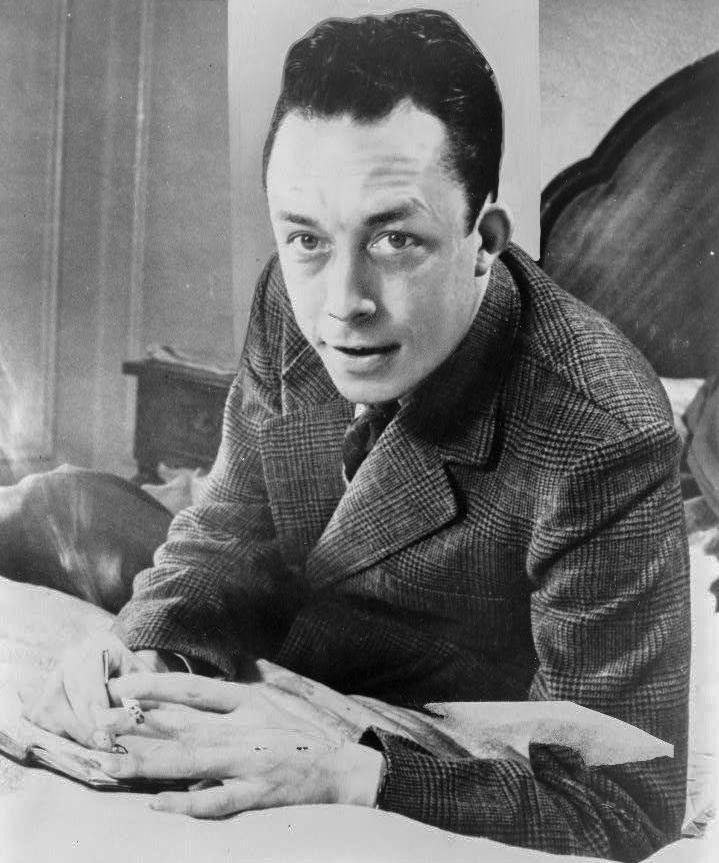
The French Existentialist philosopher, Albert Camus, said that everything he knew about morality, he learned from soccer. From sports, in other words.

Now, for those cerebral people who simply don’t “get” sports, or find the very thought of sweat distasteful, this quote may be an excuse for them to write off Camus and his whole philosophy. Which would be overly hasty in any case. The fact that a person likes beer and not wine, for a parallel example, should have nothing to do with our estimation of that person as a thinker and writer.


                                            (credit: UPI, via Wikimedia Commons) 


On the other hand, I like Camus. I have since I first went to university, which is a long time ago. Over 50 years. I became familiar with a few of his books even back then because friends were raving about him. I think he's onto something here . 

So what about his view of sports and what they teach us? Can that view be defended adequately? I think it can.

The big thing that has come to me in the last few weeks about sport is that the bottom line, most of the time, in most sports, is very simple: you must act under the rules that you promised to act under, while the game is on and you’re playing. In short, live up to your promises.

In soccer, you do not pick up an opposing player bodily and slam him onto the turf. But in rugby, that’s exactly what you do. That is part of the game, a main part, and everyone who plays the game knows it.


   File:Rugby Ontario athlete - Toronto Rugby Union.jpg

                          (credit: Rugby Ontario 1959, via Wikimedia Commons) 


A very American saying, sometimes attributed to Mark Twain, is that figures don’t lie, but liars can sure figure. What the saying means is that manipulators of the truth can be very skillful in deceiving others, especially others who are in positions of authority, even when those manipulators don’t technically tell a lie. And this is not right in any universe. It is judged to be wrong in sport.

Sport also has immoral situations that are generally recognized as immoral. In most forms of Martial Arts, which are especially violent sports, where all kinds of blows and grappling techniques are intended to injure an opponent or render him/her unconscious, it is illegal to strike to the groin area, eye gouge, or bite. But in rare forms of this sport, like Lethwei, head-butting is allowed. The key feature that keeps at least the idea of the sport moral is that everyone who competes in it knows this. And Lethwei competitors also know that if they choose to cross over to the MMA circuit, then the rules will not allow them to use head butts.


                                           (Lethweimaster; credit: Wikimedia Commons) 


Bottom line: you read the rules and promise to obey them before you get into a competition. Then, you do your best to compete within those rules.

And even then, it can get complicated. Humans are subtle. For example, nearly all soccer fans dislike players who fake injury with the intention of getting an opposing player penalized. And so we come to the heart of the matter.

In the real action of a real contest, what officials are most tested by are those situations in which they must decide whether a player did an action willfully. Intention becomes crucial (as it is for Kant, by the way).

How does one judge, if one is refereeing a boxing match, whether a head to head contact was intentional on one fighter’s part or accidental? How does an umpire decide whether a runner sliding into second base intended to aim his cleats to injure the second baseman? When is hand to ball contact in soccer acceptable and when is it not? Is bodyline bowling in cricket easy to judge and call?

The element of intentionality is the key. And the player in question is unreliable as a source of information on this matter. He or she is at least as likely to say that the foul was an accident as to say it was done on purpose. Still, sometimes, the ref has to make the call.  

It really helps a referee or umpire to have played the game him or herself. Former players of the game know the kinds of moves a human body naturally makes in the game, those made by intention and those not. Which brings us to the bottom line for moral play in sports: play by the rules you agreed to play by, and among those rules is the one that says you will accept the decisions of officials of the game without confrontation or complaint.


                                          (credit: Basil d Soufi, via Creative Commons) 


What does this post have to do with real life? I’ll leave it to the reader to make the connections in between, but I will say this: The United Nations is imperfect, as all things made by humans are. But it’s all we have to bring fairness to relations between nations. Like democracy, it can only be as effective as the people who live under it make it. My secret prayer is that it will one day, before 100 nations are putting nuclear weapons into space, become generally accepted as the final authority – the authority – in our world. That will not happen until we get past Postmodernism. But that is another post.

In the shadow of the mushroom cloud, have a fine, sporting-spirited day, folks.

Saturday, 8 August 2020


Another Covid 19 Thought


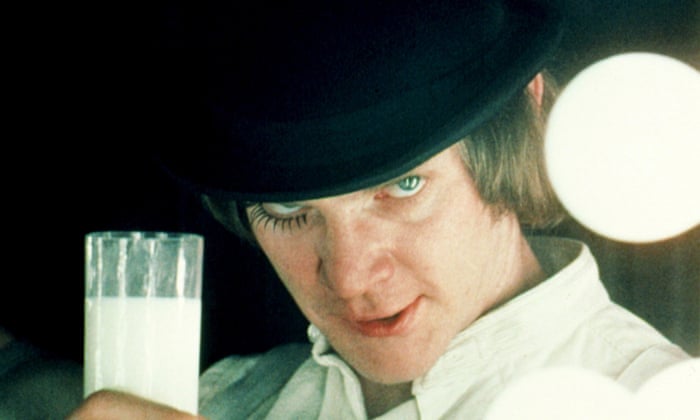
                                        Malcolm MacDowell in "A Clockwork Orange" 
                                                   (credit: the Guardian) 


   File:Fahrenheit 451 Julie Christie.jpg - Wikipedia
   

                                                          Julie Christie in "Fahrenheit 451" 
                                                            (credit: Wikimedia Commons) 


One of the ideas that the Covid 19 pandemic has given us to consider, especially in the developed nations, is the lesson that we also get in many of our dystopian novels and movies. In several of those futuristic works, many people in society have little or no work to do.

As technology advances and more and more goods and services are produced by fewer and fewer workers, in every sector of the economy, more and more people are going to end up unemployed. The problem for society then becomes how to distribute the wealth downward. We’ll still be making the goods, but with what funds will consumers buy them? The wealth isn’t going to “trickle down” if there is no trickle.

In many dystopian writers’ visions, the government just gives people money. The giving is done under many different programs, but most folk get their money and spend it, and the wealth circulates in a viable way.

Where all this government money is ultimately coming from is unclear in many novels, but I think the implication is that the corporations are willing to pay higher taxes as long as they can stay in business. And the business leaders have come to see that paying those taxes is their only way to stay in business at all. Otherwise, the masses of poor folk for whom there is no work will get fed up and revolt, and chaos will take over. In such a vision, society takes the only way out that looks like it should work.

But there are still problems. Most of the people in these novels for whom work is not available do not take up one of the arts or a sport or some other avocation from which they can get a sense of meaning. They deteriorate into society’s typical bad habits and are in constant need of therapy of one kind or another. Men, in particular, who have been conditioned by society to be breadwinners, are often pictured as floundering. They wonder what they are supposed to do. Masses of people turn to alcohol, drugs, gambling, and violence, etc..

The really perplexing element in such a view of society is the children of the government housing projects. They really have no work to prepare for. They see school as a joke. A glaring hypocrisy. So they do drugs and chase thrills. For example, the narrator of “A Clockwork Orange” gets his best thrills raping and beating innocent people for the sheer fun of it. "A bi' uv the old uhltra violence." 

In our present pandemic, we have been shown that the basics needs of life could be produced by far fewer workers than we were trying to keep employed just a few short months ago. For me, anyway, that is the biggest lesson of the last six months. We could fully robotize most of the mines, farms, and factories. The technology needed has been available for decades. Then, governments could pay millions of citizens a guaranteed annual income. Let folks buy whatever they like. Stay in business.


However …however. One is driven to wonder what will become of the masses who really don’t need to work anymore. Ever. Will they handle it?

Long after we have found a vaccine for Covid 19, will people even want to go back to work? Will we be able to stand the consequences of our own success?