Friday, 7 July 2017


                                              (credit: Yinan Chen, via Wikimedia Commons)


This digression on the sociocultural model of human evolution and the examples of familiar morés that we can imagine being revised is intended to emphasize the fact that our morés and values are programmable. We can rewrite them by rational discussion and processes that are based on reasoning, evidence, and compromise.  For the betterment of the whole of human society. We can remake us. Difficult, yes, but infinitely preferable to the blind, inefficient, painful mode of social change that we have been using for centuries.

It is time for reason to take over. The hazards of continuing the old ways of prejudice, revolution, and war are too large. We have to find another way, one that rights gender, racial, and class injustices without resorting to the horror of war. The goal of this book is to show that we can find a way to base our values on our best models of physical reality, ones we can all see the sense of. Then, this transformation of the nations of the world into one nation can be accomplished. Reasoning and evidence – Science – will tame the ugly brute in our species.

Now let’s return to our main argument, in spite of digressions that beckon.

Human behaviors and values almost all originate in the programming that the individual is given by his or her society. In addition, values become established in a society when they direct that society’s citizens toward patterns of behavior that enable the citizens to survive, reproduce, and spread in the real world.

Therefore, the deepest principles that must underlie and guide our values—in big choices for the tribe and small ones for individuals—must be designed in ways that enable us to respond well to the largest general principles of the physical universe itself. That universe is the one in which survival happens or does not happen. Value systems must have designs underlying them that complement the designs inherent in matter, space, and time.

What are these principles? For impatient readers, I can only say that I am coming to them—by small steps and gradual degrees. But we have to thoroughly discuss the network of ideas at the base of the new moral system before we try to build the middle and upper levels. My proceeding with care will maximize the chances of my readers seeing that a universal moral code is possible for us to devise—and that this code of decency and sense, if we can implement it, offers the only path into the future on which our species might survive.


Notes

1.  http://www.bbc.com/culture/story/20151012-feral-the-children-raised-by-wolves.

2. “Enculturation,” Wikipedia, the Free Encyclopedia. Accessed April 20, 2015. http://en.wikipedia.org/wiki/Enculturation.

3. “Sociocultural evolution,” Wikipedia, the Free Encyclopedia. Accessed April 20, 2015. http://en.wikipedia.org/wiki/Sociocultural_evolution#Contemporary_discourse_about_sociocultural_evolution.

4. Pearson Higher Education, “Anthropology and the Study of Culture,” Chapter 1, p. 17. 
http://www.pearsonhighered.com/assets/hip/us/hip_us_pearsonhighered/samplechapter/0205949509.pdf.

5. Alice Dreger, “When Taking Multiple Husbands Makes Sense,” The Atlantic, February 1, 2013. http://www.theatlantic.com/health/archive/2013/02/when-taking-multiple-husbands-makes-sense/272726/.

6. “Piaget’s theory of cognitive development,” Wikipedia, the Free Encyclopedia. Accessed April 20, 2015. http://en.wikipedia.org/wiki/Piaget’s_theory_of_cognitive_development.

7. Plato, Crito, Perseus Digital Library. Accessed April 20, 2015. http://www.perseus.tufts.edu/hopper/text?doc=Perseus%3Atext%3A1999.01.0170%3Atext%3DCrito%3Apage%3D50

8. Mark J. Perry, “U.S. Male-Female SAT Math Scores: What Accounts for the Gap?” Encyclopedia Britannica blog, July 1, 2009. http://www.britannica.com/blogs/2009/07/more-on-the-male-female-sat-math-test-gap/


9. Jenny Hope, “Women Doctors Will Soon Outnumber Men after Numbers in Medical School Go up Tenfold,” Daily Mail online, November 30, 2011. http://www.dailymail.co.uk/health/article-2067887/Women-doctors-soon-outnumber-men-numbers-medical-school-fold.html.

Thursday, 6 July 2017

In post-industrial societies, there is no survival-oriented reason for women not to be afforded as large and varied a range of career and lifestyle choices as those previously open exclusively to men. There is no survival-driven reason for any person not receiving pay commensurate with the value of his or her contribution to the nation’s ongoing life and development.

                                       
   File:Programmer writing code with Unit Tests.jpg

                           Computer programmer    (credit: Joonspoon, via Wikimedia Commons)


In fact, what appears to be true is that any limitations placed unduly or unequally on the opportunities of any citizens in the community on the basis of gender, sexual orientation, or race are only reducing the community’s capacity to grow and flourish. Computer technology and the oral contraceptive have made a higher degree of gender-neutral justice possible. If we wish to maximize our human resources, become as dynamic a society as possible, and compete ever more successfully in the environments of our planet and perhaps beyond, we must make education and careers of the highest quality open to all citizens. If we are to maximize our human resources, then access to education and careers should be based on merit alone. At least, such is the conclusion we must draw from the reasoning and evidence we have before us today.

Furthermore, the authorities of society, if only for efficiency’s sake, will probably have to find ways of ensuring that quality nurturing of children receives pay and benefits matching the pay and benefits given to all other kinds of jobs in a society traditionally driven by these incentives. Having kids will have to be a reasonable option if we are to maintain a stable base population for our society in this new century.

Driving women back into a domestic zone would be counterproductive, like locking our bulldozers in sheds and digging ditches by hand in order to create jobs. For women and men who choose it, nurturing children must be given real respect and pay if we are to continue on the path of knowledge-driven evolution that we have chosen.


Whether this expanding of gender roles and child-rearing practices will endure is still unclear. Will women be, finally, equal partners with men? Moves toward gender equity, in work and citizenship, and real change in the everyday life experiences of women and men, have been suggested and tried (to varying degrees) before …and have faded away before. But the trends in the West, especially at the start of the twenty-first century, look widespread and strong. The question will be whether societies that contain a high degree of gender equity will outperform those that do not. The answer will only emerge gradually over the next generation or so.

Wednesday, 5 July 2017

Note also that male arousal and orgasm are necessary to procreation; female orgasm is not. Therefore, societies teaching males to be dominant and females to be submissive thrived, while competing societies that didn’t teach such values did not. The logical upshot was that nearly all societies that reproduced at a rate that enabled them to grow taught their girls to be sexually faithful and generally submissive to their husbands. Hunter-gatherer societies, agricultural societies, and industrial societies all grew steadily stronger under patriarchy.

In addition, these societies evolved toward augmenting their belief in female submissiveness with supporting values and morés that, in most matters, gave the community’s approval to male dominance. Other less patriarchal societies stagnated or were assimilated by expanding, land-seizing, patriarchal ones. Whatever increased male commitment to child nurture raised the tribe’s odds of going on. Again, note that little of the history of these societies was shaped by a race-and-gender-neutral concept of justice.

In today’s post-industrial societies with computer technologies (and the changes they have brought to our concepts of work and home), women can now contribute children and work other than child nurturing to most areas of their culture’s ongoing development and life. The imperatives of the past that dictated girls had to adopt submissive roles to ensure the survival of their tribe and its culture are evolutionarily obsolete. Advances in birth control technologies (e.g. oral contraceptives) and in child-rearing and nurturing technology (e.g., artificial insemination, infant-feeding mixtures) have made the chores and joys of child rearing possible for men, and for single women, who in earlier eras had little choice but to forego the joys and trials of parenting or else condemn themselves and their children to society’s stigmatization.


                      Dad with infant daughter (credit: Kiefer Wolfowitz, via Wikimedia Commons) 

Tuesday, 4 July 2017

Further examples of morés that illustrate this generalization are easy to find. The fact that so many of the world’s cultures are patriarchal in design, for instance, is worth pondering.

Female humans appear, in general, to be slightly less capable than males in some areas such as large muscle strength and coordination, and in spatial and numerical reasoning ability.8 

However, these differences are slight compared with the differences among members of the same gender, and compared with the differences between males and females in other species. In addition, they are differences that exist between mythical beings called the “average man” and the “average woman.” Real individuals, male and female, vary considerably from the mean. Some women are bodybuilders and some are mathematical geniuses, while some men are weak and moronic.


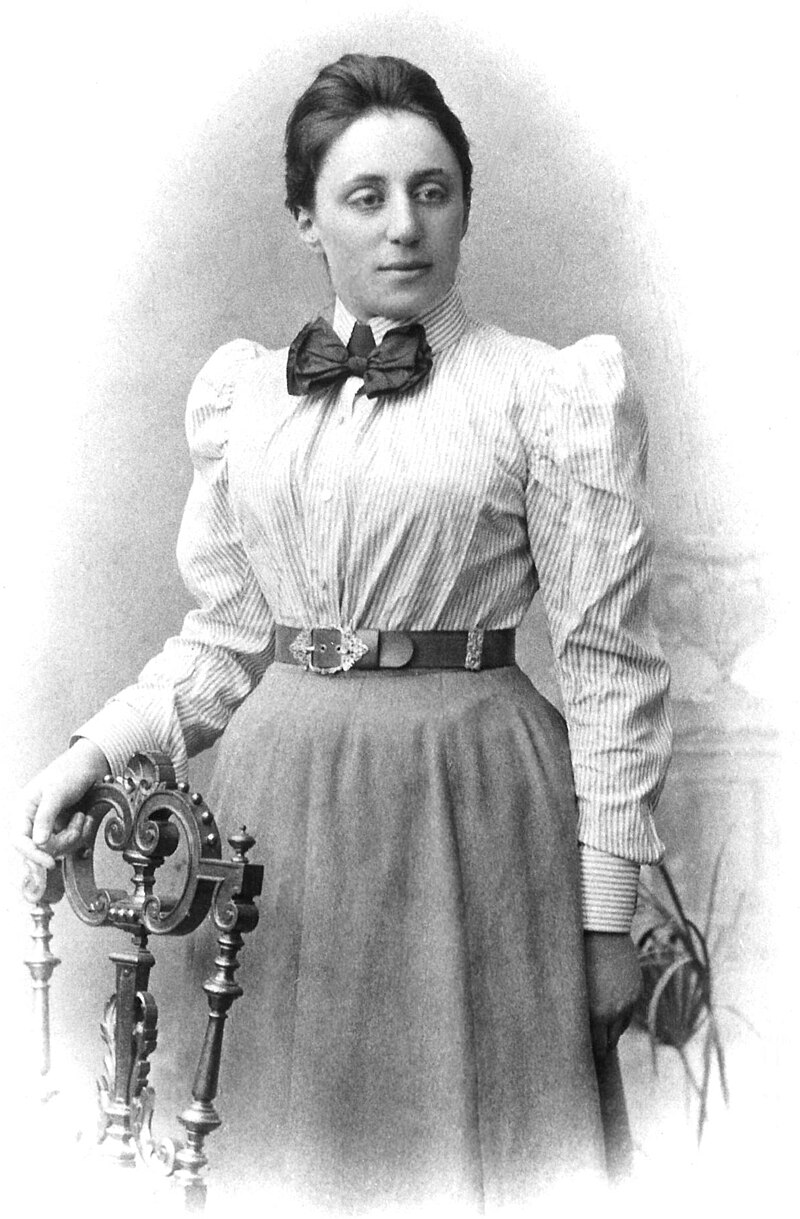
                                           Noether.jpg

         Math genius Emmy Noether (credit: unknown photographer via Wikimedia Commons)      

             
Furthermore, objective, scientific analysis reveals that, on average, females are superior to males in other ways, such as in coordination of the muscles of the hands and in verbal reasoning skills. That they have not become the majority of surgeons, lawyers, and political leaders in most of the world’s societies, jobs for which they seem better suited, is puzzling to say the least. (Women are finally beginning to achieve parity in medicine, for example, which has been long overdue.9)

Why have females been relegated to positions of lower status and pay in nearly all the world’s societies? This seems not only unfair but illogical and inefficient. Aren’t such tribes wasting human resources? Unfortunately, logic and fairness have not been the determining factors. Cultural efficiency, it turns out, is subtler.

Actually, logic and fairness are just values themselves. In other words, like all values, they’re tentative. They must serve a society’s survival in order to become entrenched in the value code of that society. If they work counter to the needs of a society’s survival in certain areas, they will be superseded by what the society will come to call a “higher” value. In the case of women, for centuries, motherhood was a higher value.

Women bear the young, and a society’s children are its future in the starkest, most final sense. Women become pregnant due to anatomy and hormones. We are programmed by our genetics to find sex pleasurable. We seek it without needing instruction. The biological drive toward sex is often harnessed and redirected by society’s programming to serve several of society’s needs at the same time, but these do not have to concern us for now. Our line of reasoning has to continue to follow the developing child—society’s future—in the female’s womb.


Human females, like almost all mammalian females, are not as capable of running, hiding, gathering, and fighting when in advanced pregnancy as when they are not pregnant. After delivery, the child, to whom the mother usually bonds deeply, requires years of care and nurturing before maturing, becoming able to fend for itself, and making adult contributions to society. In short, for thousands of years, if a society was to survive, its males had to protect its females and to assist/support the work required to nurture children. A male was simply more likely to provide assistance and protection when he believed that the children were his. 

Individual males who loved all children were not numerous enough to make a difference to the long-term odds. Those odds were improved significantly when most of the men knew (or thought they knew) which kids were biologically theirs. Let me say again that this cultural design wasn’t fair. But it was effective. It made population and, thus, power. 

"Made." Past tense. Today, in post-industrial society, patriarchy is one of the cultural designs that has become obsolete. It therefore should be allowed to simply go extinct. We will discuss this point more in coming chapters.                                                 

Monday, 3 July 2017

Cities and their ways proved fitter for economic progress than decentralized farm communities or nomadic tribes. More citizens working in increasingly specialized skilled tasks meant more and better goods and services available and thus, over time, helped to increase the population. 

Values shifted toward making all citizens content to live in densely populated neighbourhoods, causing the rise of behaviours that encouraged citizens to respect their neighbours’ property. Don’t bear false witness against your neighbour and don’t covet the things he has in his yard next door. The Bible, for example, contains an ancient moral code and it told citizens not to covet their neighbours’ goods. Today we can see why: envy, especially in a crowded urban setting, raises the odds of citizens slipping into friction and then violence.

The commandments may please God; we don't know for sure. But for sure we know that these commandments make it easier for people to live together and get along. 

The early city’s laws expanded the farmer’s guidelines for living in thinly populated farming communities of familiar faces. These laws prescribed more precisely what kinds of behaviours were acceptable in nearly all activities of city life. Urban crowding requires more civility. Even the word law came to be associated with reverent feelings (e.g. for Socrates7).

Most of all, the city had at its immediate beck and call large numbers who could fight off an enemy attack. Successful cities even progressed to the point where they could afford to keep, feed, arm, and train full-time soldiers, professionals who were capable of outfighting almost any swarm of invading amateurs. The farmers remaining in the hinterland moved closer to the city because life was safer there. 

One generation of life in or near the city taught citizens to be patriotic to their new state. The cultural programming that survived made loyalty to one’s city-state automatic; patriotism is conducive to a city-state’s survival. In short, patriotism is a program that perpetuates itself. Away from their city and its morés and values, people came to feel that they could not have a fully human life. To be fully human meant being Theban or Uran or whatever was the term that people of your culture used to brag about their home town.


                                             Ancient Egyptian image of carpenter working 
(credit: Maler der Grabkammer der Bildhauer Nebamun und Ipuki, via Wikimedia Commons)


Literacy, metals, machines, factories, and computers all brought values shifts to the nations in which they first arose. When the ways of life they fostered proved more vigorous than those of nearby competing societies, the values, morés, and behavior patterns that rose up with the new technologies were adopted by, or forced on, those other societies (usually with accompanying revolutions, nonviolent or violent). Societies that persevered in resisting these shifts in values and behaviors had to create alternate behaviour-generating programs within their own cultures – programs that were equally effective in the cultural-evolution game – or they got overrun.

Sunday, 2 July 2017

                           File:Tomb of Nakht (2).jpg

                                      Planting and harvesting grain; ancient Egyptian hieroglyphs 
                      (credit: Norman de Garis Davies and Nina Davies, via Wikimedia Commons)

Agricultural societies succeeded hunter-gatherer ones, and values such as patience, foresight, diligence, and perseverance quadrupled in importance. These values, which farming requires, would not replace the hunter-gatherers’ values totally and immediately, but the farmers’ values and their way of life grew until they, in their multiplying societies, had largely made the old values obsolete. The new agricultural way of life was just better at making more humans over more time. Population is the way to production and then to armies and power.


   Ur-Nassiriyah.jpg

                                             Ruins of Ur, ancient Mesopotamian city 
                                           (credit: M.Lubinski, via Wikimedia Commons)


When hard grains that could be stored indefinitely were domesticated, towns were formed as an efficient ways to store the community’s food wealth in a central, defensible site. Of course, the progress from stage to stage had many recursions. Nomadic tribes with little food and plenty of aggression to spare were lurking, and the most aggressive tribes might for a time subjugate and exploit the city dwellers. Two ways of life tested themselves against each other. But in the end, the city dwellers won. They had more people, more goods, weapons, and soldiers.

Inside the new cities, governing bodies with administrative offices became necessary to ensure fair distribution of the tribe’s food and to organize the tribe’s members in ways that brought domestic order and protection from invaders. Following them came craftsmen and merchants who found a protected, central site with a large population more conducive to the practice of their arts than their old rural settings.


                                                                        A potter in action at a potter’s wheel 
                                                        (credit:  © Yann Forget, via Wikimedia Commons ) 

Saturday, 1 July 2017

   File:Somali boy receives a polio vaccination.jpg

             Handling reality: vaccination (credit: Andrew McGalliard, via Wikimedia Commons) 


Some ways of thinking enhance our chances of finding health and survival. Tribes are always seeking those ways. The ways of thinking that seem to work most effectively over generations are the ones we keep and teach to our kids. Conversely, people who live by principles and values that don’t work in reality don’t survive and, therefore, don’t have children. In short, principles and values can be understood as proven techniques for sorting sense data and responding to real life. Values help us to organize our sense data and our memories of sense data. Over generations, they help tribe members, individually and jointly, to formulate effective plans of action in timely ways. In modern terms, values "inform" our thinking. Since reality is always changing, our values must evolve also, though as I said above, it is sometimes only by the pain of famine, plague, or war that we make values changes. 

So let’s consider the ways in which early humans probably formed and used early principles. Early hunting and gathering tribes, for example, taught their young people methods of killing elk, fish, birds, mammoths, and so on. Crush or sever the spine, right where it enters the skull. Or pierce the heart. Or cut the throat. Study the tracks and droppings. If the tracks are in new snow, or the droppings are still steaming, the animal is close by. There were many species to hunt and many ways to stalk and kill each of them. Over time, the thoughtful - "thought full" - tribes thrived best and multiplied.

A hunter needed far too many behaviors in his repertoire for those behaviors to be learned or called up one at a time, so hunting principles were invented. In nearly all cases, hunters found it useful to recall general rules about what they’d seen and been taught about their target/prey animal’s habits. Using these more general principles, the hunters would try to anticipate what the animal would do in the upcoming encounter, on this particular day and in this terrain. The hunters would then prepare psychologically for violent, team-coordinated, physical action—if the hunt was to be a successful one.


The exact process by which each kill would be made could not be known in advance, but the hunters knew that they would need to act with intelligence (in the planning stage), then skill and courage (in the doing stage). At the most general level, successful hunting tribes needed to teach the values that we call courage and wisdom to their young in order for their young to have better chances of surviving, reproducing, and passing the same values on to their children. Again, it is worth noting that the mechanism of human evolution discussed here is not a genetic one but a sociocultural, behavioral one, and it requires conceptual thinking.


                            drawings in Magura cave, Bulgaria (credit: Nk, via Wikimedia Commons)