Friday, 3 March 2017

But these are just pleasant musings. The main implication of the theistic way of thinking is more general and profound, so let’s now to return to it.

The universe is coherent, aware, and compassionate. Belief in each of these qualities of reality is a choice, a separate, free choice in each case. Modern atheists have long insisted that more evidence and weight of argument by far exists for the first than for the second or third. My contention is that this is no longer so. Once we see how values connect us to reality, the choice, though it still remains a choice, becomes an existential one. It defines who we are.

Therefore, belief in God emerges out of an epistemological choice, the same kind of choice we make when we choose to believe that the laws of the universe obtain. Choosing to believe, first, in the laws of science, second, in the findings of the various branches of science, notably the self-aware universe implied by quantum theory, and third, in the realness of the moral values that enable democratic living (and science itself) entails a further belief in a steadfast, aware, and compassionate universal consciousness.
                        
Belief in God follows logically from my choosing a specific way of viewing this universe and my integral role in it: the scientific way.

The problem for stubborn atheists who refuse to make this choice is that they, like every other human being, have to choose to believe in something. Each of us has to have to have a set of foundational beliefs in place in order to function effectively enough to just move through the day and stay sane. The Bayesian model rules all that I claim to know. I have to gamble on some general set of axiomatic assumptions in order to move through life. The only real question is: “What shall I gamble on?” Reason points to the theistic gamble as being not the only choice, but the wisest, of the epistemological choices before us.


The best gamble, in this gambling life, is theism. Reaching that conclusion grows out of analyzing the evidence. Following this realization up with the building of a personal relationship with God, one that makes sense to you as it also makes you a good, eternal friend—that, dear reader, is up to you.

Thursday, 2 March 2017

God spans fifteen billion light years across the known part of the universe. Googuls of particles. About 1079 instances of electrons alone, never mind quarks or strings. Consistent, aware, and compassionate, all over, all at once, all the time. And these claims describe only the pieces of evidence that we know of. What might exist before and after, in smaller or larger forms, or even in the dimensions that some physicists, in their cutting-edge theories, have postulated?
                                 
Every idea about matter or space that I can describe with numbers is a naïve children’s story compared with what is meant by the word infinite. Every idea I can talk about in terms that name bits of what we call time has to be set aside when I use the word eternal. For many of us in the West today, formulas and graphs, for far too long, have obscured these points, even though most scientists freely admit there is so much that they don’t know. Newton said, “I seem to have been only a boy playing on the seashore, and diverting myself in now and then finding a smoother pebble or a prettier shell than ordinary, whilst the great ocean of truth lay all undiscovered before me.”9


                                                                  (credit: Wikimedia Commons) 

The belief is no longer trivial in more personal ways as well. If I truly believe in the axiom on which my model of Science rests—that is, the constancy of natural laws—and also in the relevant models of reality that Science has led me to—that is, the “aware” nature of the universe and the values-driven, cultural model of human evolution—then to maintain my claim to being rational, in my own eyes, I must live my life in a moral way. I must choose to act in a way that views my own actions as rational, not as the mere wanderings of a deluded, self-aware, absurd animal. That absurd world view, truly believed and lived, would inevitably lead to madness or suicide. But we don’t have to accept it. There is an option that is just as rational and far more hopeful.

And the theistic view, when it is widely accepted in society, has large implications for the activity called “Science”. A general adherence in society to the theistic way of thinking is what makes sub-communities of scientists doing science possible. Consciously and individually, every scientist should value wisdom and freedom, for reasons that are uplifting, but even more because they are logical. Or rather, to be more exact, inspiring and rational, properly understood, are the same thing. Scientists know that figuring out how the events in reality work is personally gratifying. But much more importantly, each scientist should see that this work is done most effectively in a free, interacting community of scientists functioning as one more integral species in a larger social ecosystem.

Most of us in the West have become emotionally attached to our belief in Science. We feel that attachment because we’ve been programmed to feel it. Tribally, we have learned that our modern wise men—our scientists—doing research and sharing findings with one another are vital to the continuing survival of the human race.

Of all of the subcultures within democracy that we might point to, none is more dependent on the basic values of democracy than is Science. Scientists have to have courage. Courage to think in unorthodox ways, to outlast derision and neglect, to work, sometimes for decades, with levels of determination and dedication that people in most walks of life would find difficult to believe. 

Scientists need the sincerest form of wisdom. Wisdom that counsels them to listen to analysis and criticism from their peers without allowing egos to become involved, and to sift through what is said for insights that may be used to refine their methods and try again. 

Scientists require freedom. Freedom to pursue truth where she leads, no matter whether the truths discovered are startling, unpopular, or threatening to the status quo. 

Finally, scientists must practice love. Yes, love. Love that causes them to treat every human being as an individual whose experience and thought may prove valuable to their own.

Scientists recognize implicitly that no single human mind can hold more than a tiny fraction of all there is to know. They have to share and peer-review ideas, research, and data in order to grow, individually and collectively.


Scientists do their best work in a community of thinkers who value and respect one another, who love one another, so much as a matter of course that they cease to notice another person’s race, religion, sexual orientation, or gender. Under the values-driven, cultural model of human evolution, one can even argue that creating a social environment in which Science can arise and flourish is the goal toward which democracy has always been striving.

Wednesday, 1 March 2017


                        Murray Gell-Mann, Nobel Prize–winning physicist (credit: Wikipedia) 

But according to the science-minded atheists, all these ideas about how the universe stays consistent and how it seems to have a kind of awareness, even taken together, add up to little more than a trivial belief. Nobel Prize–winning physicist Murray Gell-Mann went so far as to derisively call this whole way of thinking “quantum flapdoodle.”7

In other words, we may have deep feelings of wonder when we see how huge and amazing the universe is—far more amazing, by the way, than any religion of past societies made it seem. Our intuition may even suggest that for information to go instantaneously from one particle in one part of the universe to another particle in another vastly separated part, a controlling consciousness of some kind must be joining the two. But these feelings, the atheists say, don’t change anything. The God that theists describe and claim to believe in, according to all the evidence, doesn’t answer prayer, doesn’t give us some other existence after we die, doesn’t perform miracles, and doesn’t care a hoot about us or how we behave.


                                          Pierre-Simon de Laplace (credit: Wikimedia Commons) 

In the atheistic scientistic view, believing in such a God is simply excess baggage. It is a belief that we might enjoy clinging to as children, but it is extra, unjustified weight that only encumbers the active thinking and living we need to practice to keep increasing our knowledge and living in society as responsible adults. Theism, atheists say, pointlessly hobbles both science and common sense. Or as Laplace famously told Napoleon, “Monsieur, I have no need of that hypothesis.”


           William of Occam, English philosopher and theologian (credit: Wikimedia Commons) 

Centuries earlier, William of Occam said the explanation that best suffices for any phenomenon is the simplest one. Newton reiterated the point: “We are to admit no more causes of natural things than such as are both true and sufficient to explain their appearances.”8 The method of science tells us that if we can explain a phenomenon by using two basic concepts instead of three or four, the two-pronged tool should be the one we choose.

According to atheists, belief in God—or at least in a God that might or might not permeate this consistent, entangled, self-aware, material universe—is a piece of unneeded, dead weight. In our time, under the worldview of modern science, the idea has no content. It can and should be dropped. Or as the sternest atheists put it, it is time that humanity grew up.

Acquiring the cultural model of human evolution changes all this. Under it, values are real, humanity is going somewhere, and whether we behave morally or immorally really does matter, not just to us in our limited frames of reference, but to that consciousness that underlies the universe. That presence, over millennia, helps the good to thrive by maintaining a reality in which there are lots of free choices and chances to learn, but also a small, long-term advantage to those who choose to be venturesome, brave, wise, and loving.

This is the third big idea in my overall case for theism: moral realism. Seeing values as being connected to the material universe in a tangible way.

This model, which shows the role of morals in the human mode of living, shakes everything else atheists claim to know. Under this model, there is no doubt about one thing: the programs that maximize the probability of our survival—that is, our moral values—are our guides for finding safer paths, as a species, through the hazardous patterns in the movements of matter and energy in the physical universe itself.

Therefore, belief in the realness of moral values is not trivial in the same way as belief in the consistency of the universe is not trivial. Both beliefs have an effect, via the patterns of behaviour they foster, on the odds of our surviving as a species in the real world. People who carry them out-survive the competition, and these people and their ideas spread.

In short, the presence that fills the universe doesn’t just maintain and feel. It also favours those living entities who follow the ways we think of as “good.”

It cares.


In my own intellectual, moral, and spiritual journey, I was a long time admitting even to myself that by this point I was gradually coming to believe in a kind of universal consciousness. God.

Tuesday, 28 February 2017

As we think about how Science and its methods work, we realize, as Nicholas Maxwell has stressed many times, that it contains one more implicit assumption. This second assumption is that human minds can figure out the laws of this difficult, confusing place; that is, that we’re not kidding ourselves about how smart we are. All the evidence of the history of Science, and of humanity more generally, suggests that we can figure those laws out. 

Therefore, I choose to gamble again, this time on the power of human minds, sometimes alone and sometimes in cooperation with other minds, to see through the layers of irrelevant, trivial events and to spot the patterns that underlie their larger movements. Then we can test and revise and gradually arrive at models and natural law statements that really do explain the world, and so we gradually come to master the knowledge that empowers us to design—and engage in—focused, strategic actions that get survival-favouring results.

Again, the majority of the citizens of the West see this choice-gamble as the only rational one to take. The alternative to believing in the power of human minds, individually or in cooperating groups, to figure out the laws underlying reality is to abandon reason in favour of beliefs founded on something other than observable, replicable, material facts. 

Once again, we have the evidence of centuries of human history to look back on. All the evidence we have about what life was like for the superstitious, cowed tribes of the past suggests that their lives were—as Hobbes puts it—nasty, brutish, and short. People who were willing to think, analyze, experiment, and learn made this society that we enjoy today; even the majority of Luddite cynics who claim to despise modernity don’t like to go two days without a shower.

My first point or conscious realization on the road to the theistic view, then, is that these beliefs in the consistency of the laws of the universe and in the power of the human mind to figure them out, when added together, amount to a kind of faith. To atheists and skeptics, this belief system can’t properly be called a “faith” at all. It certainly doesn’t lead them to a belief in God. It simply enables atheists and theists alike to keep doing science and to share ideas about their branch of Science with anyone else who is interested. It does not entail more than that, the atheists say.

But now let’s add some other powerful ideas.

If we truly believe in Science, then we are committed to integrating into our thinking all well-supported theories in any of the branches of Science. In the twenty-first century, what that means is that we must now try to integrate uncertainty, quantum and non-quantum, into our world view. Earlier we saw that extrapolating from the quantum model led us to conclude that the values we call freedom and love are real, that is, that our believing in these values and living under their worldview leads to survival-oriented, real-world, positive consequences.


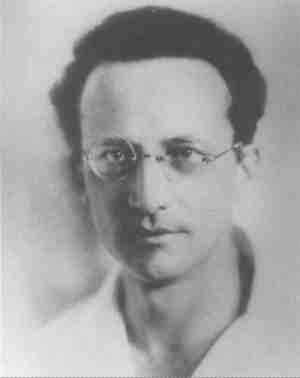
                                             Erwin Schrodinger (credit: Wikimedia Commons) 


However, quantum theory, once it’s accepted, also comes with some other startling corollaries and experimental findings. Quantum entanglement implies that the universe feels itself, all over, all at once. The universe is not, as pre-quantum Science pictured it, cool, local, and aloof. It is capable of what Einstein called “spooky action at a distance,” and in fact, it functions that way all the time.5 Our best twenty-first century model of the universe is telling us that all the parts of the universe are in touch, instantly, with all the other parts, all the time. Schrodinger put it this way: “There seems to be no way of stopping [entanglement] until the whole universe is part of a stupendous entanglement state.”6

If distant parts of an entity are in touch with one another (in the case of the physical universe, instantly), it is entirely reasonable to postulate that there must be a controller of some kind connecting the stimulus of a spin of one particle and the reverse-spin response of another particle in some distant location.


This way of seeing the universe as having a kind of awareness is my second big idea. It is well known to scientists, theist and atheist alike. They admit it is a way to move a bit closer to saying that a possibility exists of a sort of a God.

Monday, 27 February 2017


                                                Albert Michelson (credit: Wikimedia Commons) 


                                                          Edward Morley (credit: Wikimedia Commons) 


Clearly, Science is still open to making mistakes. For scientists themselves, a shocking example of such a mistake was the mistake in Physics. Newton’s models of how gravity and acceleration work were excellent, but they weren’t telling the full story of what goes on in the universe. 

After two centuries of taking Newton’s models and equations as gospel, physicists were stunned by the experiment done by Albert Michelson and Edward Morley in 1887. In essence, it showed that Newton’s laws were not adequate to explain all of what was really going on. Einstein’s thinking on these new data led him to the Theory of Relativity. But first came Michelson and Morley’s experiment, which showed that the scientific method, and Newton, were not infallible.

Newton was not proved totally wrong, of course, but his laws were shown to be mere approximations, accurate only for smaller masses and at slower speeds. As the masses and speeds tested become larger, Newton’s laws become less useful for predicting what is going to happen next.

Nevertheless, it was a scientist, Einstein, doing science, who found the limitations of the laws and models specified by an earlier scientist. Newton was not amended by a reading from an ancient text or by a clergyman's pronouncements. Thus, from the personal standpoint, I have always believed, I still believe, and I’m confident I always will believe that the universe is consistent, that it runs by laws that will be the same in 2525 as they are now, even though we don’t understand all of them very well yet. Relativity theory describes how the stars moved in the year 1,000,000 BC exactly as accurately as it describes the stars’ movements now. In that era, living things reproduced and changed by the process that we call evolution just as reliably as living things do now. I believe that, for living things, genetic variation and natural selection are constants.

But I can’t prove beyond any doubt that the universe runs by one consistent set of laws; I can only choose to take a Bayesian kind of gamble on the foundational belief that this is so. I prefer this belief as a starting point over any alternative beliefs that portray the universe as being run under laws that are capricious and unpredictable. Science has had so many successes that, even if I can’t be certain that its findings and theories are infallible, I choose to heed what scientists have to say. That choice, for me, is just a smart Bayesian gamble, preferable to any of the superstitious alternatives. Or as Robert Frost said: “Two roads diverged in a yellow wood, and I …I took the one less traveled by, and that has made all the difference.”


                       I took the one less traveled by,
And that has made all the difference.
Two roads diverged in a wood, and I—
I took the one less traveled by,
And that has made all the difference.
There is even evidence that tribes of the past knew of the inductive method and gained knowledge by it.2,3,4 More and more as millennia passed, they turned to their gods only when they couldn’t figure out on their own how some natural process worked. One of the big effects of Science has been to steadily dispel superstitions as better insights into the workings of physical reality are acquired. In fact, most people today, at least in the West, concede almost automatically that superstitions need to be dispelled. Plagues aren’t caused by evil spirits or God’s punishment, and they don’t go away if we burn incense or chant for days at a time. But if we control rats, we can control bubonic plague. If we selectively breed our livestock, then our chickens, cows, sheep, and pigs keep giving more eggs, milk, wool, and pork. In short, all humans and all human societies keep gradually becoming more rational because survival demands it.


My model of cultural evolution also showed me why some superstitious beliefs hang on for generations before they are dispelled. But in the end, as old thinkers are replaced by more enlightened ones, the method of human learning, whether it is individual or tribal, is an inductive one. We get ideas about the material world and we test them. We sometimes test world views or moral systems over generations, and what we learn is absorbed by the tribe over generations rather than cognized by any one individual. But our knowledge keeps growing, as it must if we are to survive. We are the only concept-driven species that we have encountered so far. The knowledge-accumulating, social way of surviving is the human way. Our genetically-acquired assets (speed, strength, etc.) are trivial by comparison. We live by learning or we die.

Sunday, 26 February 2017

Chapter 17 – The Theistic Bottom Line

The three large principles summed up in the previous chapter are enough. Having established them, we have enough to conclude that a higher power or consciousness exists in our material universe. Or rather, as was promised in the introduction, we have enough to conclude that belief in God is a rational choice for a thinking, informed, modern human being to make.

And that is the point. Belief in God is a choice. It is simply a more rational choice than its alternatives.

It is also worth reiterating three other points here: first, we must have a moral program in our heads to function at all; second, the one we’ve inherited from the past is dangerously out-of-date; and third, whatever new one we devise, it will have to be turned from a cerebral code into a personal one. A moral code must be felt and lived as personal or else it isn’t really a moral code at all. It will not guide us when a moral crisis comes.

This final chapter gives a more informal explanation and interpretation of the pieces assembled so far and adds some other, better-known pieces whose significance in this discussion will now be explained as we go along. It will also try to answer some of the most likely reactions to the ideas in this book. My promise was that by the end of this book, we would be able to assemble a strong case for theism—that is, belief in God. We’re almost there. We shall begin this last chapter by revisiting, in a more personal way, a vexing problem in Philosophy mentioned in Chapter 4, a problem that is three hundred years old. The solution to this problem drives home our first main point on the final stretch of the thinking process that leads to theism.


                       Movie actor playing a “mad” scientist (credit: Wikimedia Commons) 


Many scientists claim that their branch of human knowledge, unlike all of the ones that came before the rise of Science, does not have any basic assumptions at its foundation and that it is instead built from the ground up on merely observing reality, hypothesizing, designing and doing research, checking the results against one’s hypothesis, and then doing more hypothesizing, research, and so on. Under this view, science has no need of foundational assumptions in the way that, say, philosophy or Euclidean geometry do. Science is founded only on hard fact, they claim. But in this claim, as has been pointed out by thinkers like Nicholas Maxwell, those scientists are wrong.1

Over the last four centuries, the scientific way of thinking, Bacon’s “new instrument,” has made possible the amazing progress in human knowledge and technology that today we associate with Science. But in the meantime, at least for philosophers, it has come in for some tougher analysis.


                               Cover of early copy of Novum Organum (credit: Wikimedia Commons) 


The heart of the matter, then, is the inductive method normally associated with science. The way in which scientists can come upon a phenomenon they cannot explain with any of their current models, devise a new theory that tries to explain the phenomenon, test the theory by doing experiments in the material world, and keep going back and forth from theory to experiment, adjusting and refining—this is the way of gaining knowledge called the scientific method. It has led us to so many powerful new insights and technologies. It really was an amazing breakthrough when Francis Bacon—whether we credit him with originating it or merely expressing what many in his era were already thinking—saw and explained what he called his “new instrument” (novum organum).


But as David Hume famously proved, the logic this method is built on is not perfect. Any natural law that we try to state as a way of describing our observations of reality is a gamble, one that may seem to summarize and bring order to entire files of experiences, but a gamble nonetheless. A natural law is a scientist’s claim about what he thinks is going to happen in specific future circumstances. But every natural law proposed is taking for granted a deep first assumption about the real world. That assumption is that events in the future will continue to steadily follow the patterns we have been able to spot in the flows of events in the past. But we simply can’t ever know whether this assumption is true. At any time, we may come on new data that stymie our best theories.

Friday, 24 February 2017

The third big idea in this analysis of our background assumptions is one that this book has laboured long to establish. It is the assumption that says there is a kind of moral order in this universe, a moral order that is “real” in the sense that scientists mean—observably, empirically real.
The universe runs by laws that produce patterns in the flows of events, and our culturally acquired moral values guide us, as tribes, to navigate through those patterns. These values were learned through trial and error by millions of people over thousands of years. People learned that certain general ideas called values—large ideas like courage, wisdom, freedom, and love—work. In theory, many varied cultures can evolve that incorporate these values into a viable way of life. But across all of these cultures, large general patterns are discernible. If we go, as whole societies, in the direction toward which our most basic values point, we get useful results. The people who live by these values survive. Those who don’t, don’t.
Values have physically observable effects as real as gravity and magnetism. Gravity and magnetism are seen by how they affect the movements of clusters of particles. Values are seen by how they affect the movements of tribes of people.
Again we can ask about our third idea in this line of thinking: “As opposed to what?” The usual opposing idea to moral realism in modern times is moral relativism, under which moral values are mere tastes, and right and wrong depend on where you are. What was right in Rome in the first century of the modern era is not morally right today, relativists say; what is right in Africa is not right in Western Europe. Under the moral relativists’ thinking, there is no peaceful way to resolve disputes between different cultures because there is no common ground on which to even begin the negotiations.
There are lots of forms of moral relativism being espoused in the twenty-first century. Some even claim, in convoluted arguments, that they do offer us ways to establish common definitions of “good” and to resolve disputes peacefully. But for the purposes of this book, moral relativism as just defined will suffice. In the end, moral relativism takes the position that moral values can’t be grounded in any specifiable, physically observable phenomena.7 I claim that we won’t survive thinking like that, and we don’t have to think like that.
The view of moral realism I offer in this book says of the relativists’ position that nothing could be further from the truth. Material reality is the common ground, and if we grasp what our species’ history is telling us about values, we can infer that values are based on reality, then debate how to interpret that reality, and then test our various models against the evidence of history. Finally, we are driven logically to conclude that all of our disputes can be settled peacefully. The things stopping us from creating and maintaining world peace are the anti-morals: cowardice, cupidity, laziness, and bigotry.
So let us now close in on our long-anticipated main point.
If, as a modern human being in touch with the basics of Science in all its forms, I believe the universe is one coherent thing—even if all its laws are not yet understood—and I further believe it is conscious—even if its consciousness is so vast that it can’t yet be comprehended by humans—and I further believe it is morally responsive—even if its moral quality is only discernible in the flows of millions of people over thousands of years—if I believe these three claims, then in my personal way I do believe in God.
What? That’s it?
Yes, my patient reader. That’s it. I do still believe in God. My view is a pretty lean one, but every instinct in me tells me that such is life. Adults have to get by on leaner fare than children who seek a bearded man in the sky. The best consolation of adult life is the firm belief that the patterns that we see in the flows of events in world – even patterns that only show in the evidence of centuries of human actions – are real. Your deep intuition that “good” and “right” are real is not naïve or crazy. It’s the sanest belief you have.  
And now, in a personal response to the logic presented so far, let me try to show that this case is enough to maintain my theism. And personal is the most honest way to describe my final chapter. It has to be so. Or, to be exact, it has to make the personal universal and the universal personal, as we shall see.

Notes
1. Dennis Overbye, “Laws of Nature, Source Unknown,” New York Times, December 18, 2007. http://www.nytimes.com/2007/12/18/science/18law.html? pagewanted=all&_r=0.
2. Homer, The Illiad (c. 800–725 BC; Project Gutenberg), p. 91. https://www.gutenberg.org/files/6130/6130-h/6130-h.html#fig120.
3. Nicholas Maxwell, From Knowledge to Wisdom: A Revolution for Science and the Humanities (London, UK: Pentire Press, 1984), pp. 107–109.
4. http://www.wired.com/2013/12/secret-language-of-plants/
5. Joshua Roebke, “The Reality Tests,” Seed magazine, June 4, 2008. http://seedmagazine.com/content/article/the_reality_tests/P1/.
6. Ibid.
7. Chris Gowans, “Moral Relativism,” Stanford Encyclopedia of Philosophy, 2015. http://plato.stanford.edu/entries/moral-relativism/.