Friday, 24 April 2020

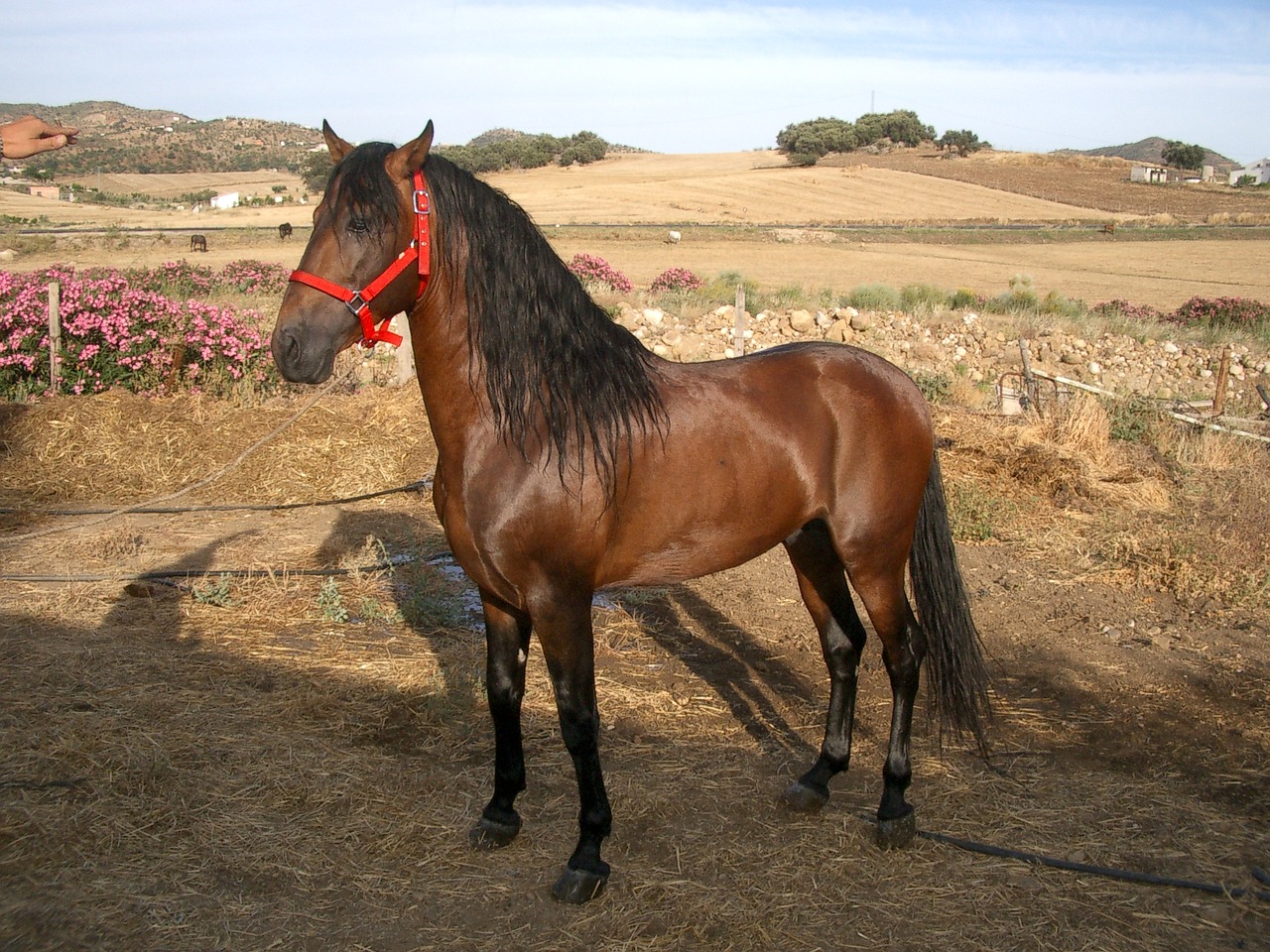
horse horse riding field free photo

                                                      (credit: needpix.com) 


   File:Double rein one hand.jpg

                                (credit: I, Trebaxus, via Wikimedia Commons)


                                      (credit: Dergayuza, via Wikipedia) 


Bucephalus Among The Houyhnhnms  


Freedom was calling me,
Through the fresh morning air,
Calling insistently,
"Come away! Come away!"

I, the old warhorse, was
Strange to the polo field,
Played without riders, much
Faster and harder.

“Team!” I neigh, whinnying
Startling the other studs,
Four across, staring up.
"Who or what's calling us?"

I, the determined one, 
Handle the polo ball,
Wait for the opening, 

As skilled as parade.

Under a sun in a
Blue of incredible,
Thund’ring the turf with its
Chalky fresh lines.

Roar from the sporting herd,
Wild in the moment. 

Dust, sweat, and blood, 
And the fillies are screaming:
“Do it! Oh, do it! 
He's making his move.”


Make a move! make a move!
Look at them! Half awake!

Battlefields don't forgive! 

Hup!


Disciplined quickness,
(I loved Alexander!),
Never surrenders. 
It dodges defenders.
It joys in the splendors, 
Then, dekes for the op’ning, and
Drives the sphere home.


                                         (credit: Roger Schulz, via Wikimedia)


Sunday, 19 April 2020


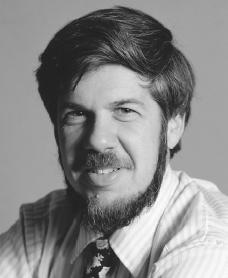
                                        Scientist and thinker, Stephen Jay Gould 
                            (credit: Wally McNamee, Wikipedia.org) 


Moral Values, Science, And Faith

There are many who call themselves “atheists” who find my claim to believing in both Science and God absurd. The two are incommensurable, they say.

American writer Stephen Jay Gould who wrote on the problem of reconciling the two domains -- Science and Moral Philosophy -- called them “non-overlapping magisteria”. Two entirely separate “domains of teaching authority”.                
                   
His position has been widely accepted as the best that human thinkers can make of the puzzle. We are driven by arguments from one domain in some situations, to the other domain at other times. We need to keep learning how the universe works, which is what Science tells us, but then we also need guidelines which tell us whether we should use the powers that Science gives us and, if we should, then for what purposes.

For example, why do the vast majority of parents in the world today get their children vaccinated against diseases such as measles, polio, diphtheria, etc.? The parents make this decision because long experience has shown that vaccines work. Children who get vaccinated generally go on in greater numbers to more fulfilling lives than do unvaccinated children. This is a science-based decision. Parents who get their kids vaccinated don’t know that those kids will go on to more complete lives. But they do know they are improving the odds for their kids by getting them vaccinated. Similarly, to get my car repaired or my computer cleaned of malware, I don’t seek out a fortune-teller.  

On the other hand, many of us are making decisions every day about the “rightness” of actions we could take, like whether or not we should give money to homeless people or pay more taxes to build housing for them.

Whatever their stories, even in housing built by the taxes of their fellow citizens, many of these people will die in a few years. They have higher rates of cancer, heart-disease, diabetes, etc. than average citizens do. They also use drugs and alcohol more excessively. Why don’t we just let them die and, as Scrooge says in A Christmas Carol, get rid of the excess population and save some money?

But our moral reasoning tells us Scrooge’s policy is cruel and inhumane. If we can give them a few more years in relative comfort, then we should do so. All the world’s major religions exhort us to practice compassion for our fellow human beings. The principles underlying compassion are moral, not scientific. Or so the science-based atheists claim. They belong to the other magisterium, as Gould calls it. Science can show us more things we could do every year, but it can’t tell us whether we should do them. At least not yet. Our morals do that.

The problems arise when we are in situations in which we can’t decide whether to consult the moral domain or the scientific one when we need to make a decision. We often get very confused and anxious in these exact situations.

Should Alfred Nobel have given his newly-discovered technology to the world? Late in his life, he was deeply upset at the thought that he might be remembered as the merchant of death (his term). His invention, dynamite, was being used by hundreds of factories to make mines, shells, etc. that were far more destructive than any that had existed prior to his time. But his invention was already out there in the public domain, being used by arms manufacturers all over the world. All he could do, in the end, was leave most of his fortune to fund the Nobel Prizes. A small attempt to mitigate the destruction that his invention was causing. Should he have thought the matter through more carefully? Should he have kept the formula for dynamite to himself?

Heroin was invented in Germany in the 1870’s and it was soon being marketed to doctors to prescribe to their patients as a safe, non-addictive substitute for morphine. Morphine (and cocaine) were legal for sale in the U.S. until 1920. It took that long for the U.S. Congress to realize that heroin was not a safe drug. By then, there were an estimated 200,000 heroin addicts in the U.S.. Families of addicts today can’t be blamed if they wonder whether much real research had been done when heroin was first approved. By the time heroin had been on the market a year to two, conscientious research would have shown it was anything but a safe drug. Surely. But profits beckoned for the drug companies even then. Were they greedy? Negligent? Such judgements are moral ones, not scientific ones. Still today, drug representatives whose jobs depend on selling lots of drugs find rationalizations that exonerate drug companies and criticize anyone who would find the companies culpable for anything. “Let buyers beware!” they say.

Do investment counsellors, as they call themselves these days, coax, cajole, and badger clients into buying stocks, derivatives, or other “instruments” (whatever that means) that are far riskier than the client has ever been told? It seems that the answer must be “yes”. Financial crashes have been happening since stock markets were first formed. Is the real fault in the clients who are greedy enough to keep wanting something for nothing? Or in the brokers whom investors are supposed to respect and trust?

When all is running smoothly, and all clients and brokers are making money, every person working for the system claims to be responsible for guiding his clients to building small fortunes on which they may retire in comfort. When a crash comes, no one accepts responsiblity for anything. “No one could have foreseen what just happened in the markets,” the brokers and CEO’s claim. There is a hypocrisy in this picture that stuns the mind. And yet they cry out to authorities for more legal latitude, greater degrees of risk allowed, as they sell and buy. When people’s pension funds, savings, and lives are ruined, is this due to an “act of God” – like an earthquake? Or is someone culpable in this picture? The answer to this question requires a moral judgement, not a scientific one.

Moral judgments are being made by most adults even in ordinary matters every day. Do I have a right to a gourmet coffee when my kids are all going to need new shoes in three months or less? Should I let the driver on my right slip into the traffic in front of me? She seems anxious to. Should I hire this man who has a record of petty theft? Should I call that customer back and tell her she forgot her change? We depend on moral values to guide us in such decisions. They are not scientific.

When I put these judgments to my atheist friends, most have little trouble in saying that parents should get their kids vaccinated, and financiers and brokers should have to pay out of their own fortunes to at least partly compensate investors that the financial advisors have “advised” into financial disasters. Nobel’s case is harder, but we’ll leave it as a problem for readers to ponder.

My point today is that when atheists are questioned closely on why they make the moral judgements that they do, their answers are very vague and evasive. 

“Empathy is my guide” is no answer at all. We don’t give in to everyone who looks like she/he needs our “empathy”. We don’t let our children have all the foods they want even when they act like they’re really suffering from a lack of candy. We don’t give convicts their freedom simply because they hate being locked up. We don’t even let ourselves off the hook when we start to feel tired during a run or a gym workout. Empathy, by itself, is no guide to anything.

A complete analysis of all the reasoning for all the moral systems that have ever been presented to the world is much beyond one blogpost. Whole libraries have been written on the subject.

But I can confront my atheist, and often postmodernist, friends on the matter much more quickly than that.   

If you are sure it’s wrong to ignore the homeless, if you think the rest of us should be doing more to ease their lives – even if some of those lives will end before they are thirty – then you should be able to say why you think so.

On the other hand, while we’re waiting, the people who become very evasive at this point, who can’t really give an answer for why they believe some actions are just “right”, deserve some further explanation from me.  

I believe in compassion, honesty, and accountability. Why I believe as I do again takes more explanation than could ever be put into one post. But it’s in my book (posts from April 8 to September 13 of 2017) for those who are interested. It’s really a matter of doing real things to improve the odds of a vigorous, healthy future for our descendants. That is why we try to be “good”. And we have the values and morĂ©s we do mostly because our cultures have programmed them into us. Thus, cultural codes must be updated. They fall out of touch with the facts of our evolving reality every couple of generations. What we must do in this century is learn to update our cultures without war.

But these claims are not the point of today’s post. I have made these claims about cultural codes and probabilities, and defended them, many times.

My point in today’s post lies in an analysis of my atheist friends’ answer to this simple question: why do you believe in being empathetic and responsible? 

I think this policy of being honest, compassionate, and so on reveals something embedded very deep in the thinking of my atheist friends, something they may not care for my revealing. But here it is.

Atheists, if you try to live by a set of moral principles similar to the ones I have just described, what this reveals about you is that (much as you hate the word) you have a kind of faith. A belief in things not seen.

You believe that when most citizens do their best to live basically decent lives, this will lead to better results for all the citizens of your community in years to come.

But you have not visited those years to come. And you can’t. Not even in your dreams.

Nevertheless, you gamble on the better effects that you think will come from you and your neighbors practicing empathy, responsibility, and honesty.

This faith in being good and in the healthful effects that your policy will produce – by simple, unemotional logic – must be somewhere in you. Otherwise, your policy and your principles would be irrational. Your actions would be no more than the twitchings of a dying animal. What sort of rational creature would strive to live up to these standards you are setting for yourself if she/he believed that the principles, and the behaviors they fostered, would never make any real difference whatsoever. That belief is the main ingredient in the mental state called “despair”.

And many people today are suffering from depression. But many more are not. 

They keep trying to be decent and hoping for the best. In short, somewhere deep inside their thinking, they have a kind of faith. The universe works in a way that generally gives slightly better odds to the good. All may yet be well. What is at the core of a belief in the general decency and sense of the universe itself? If that is not a kind of “theism”, then what term would you prefer?  

And by the way, I believe passionately that, yes, all may yet be well. We just have to keep working hard and being decent …and one more thing.

We now must learn how values work, how they make us behave in some ways and refrain from behaving in others, and how whole codes of values, which are the key parts in what are usually called our “cultures” – how these codes evolve. Then we may get control – all or nearly all of us – by consensus, by democratic means – of our own cultural evolution.

And end war. Maybe, even go on to glory.   

Hard, but not impossible. In this twenty-first century, getting easier by the day.

To start, first, we must have a kind of faith. A belief that life is not made of meaningless trivia. Rather, to go on, we must come to believe personally, the vast majority of us, that we are a team. Each of us has a role in that team. All seven billion of us. And we are meant for the stars.

And Gould is wrong. These two realms of thought are not “non-overlapping” at all. We survive by using them both. We strive to figure out how our world works and how we can act to get us and our children and nations through its hazards. 

Both scientific thinking and moral thinking, interacting all the time, are needed if we are to strive our way, over and over, to success. Success that is both logical, i.e. scientific, and moral, i.e. good. A successful moon landing, a polio vaccine, a way to make and program silicon chips. The two “magesteria” Gould speaks of are, in the end, integral parts of a larger whole thing. You. Me. Our nation. Our species. Our planet’s biosphere.

You say you have no “faith”, my atheist friends? Yes, you do. You couldn’t read these very lines right now if you didn’t. So …have a good day. We may disagree now and then, loudly even sometimes. But I like you anyway.

In the shadow of the mushroom cloud, nevertheless, have a hopeful day.  


                                                                   Earthrise 

             (credit: NASA Scientific Visualization Studio, 
                                                  via Wikimedia Commons) 
Friday, 10 April 2020


                               Triple star sunset 
               (credit: SnoopY, via Wikimedia Commons)


A Failed Experiment

Grief, wonder, fear, rage, ecstasy I'd known
Then, humans gave me loathing - new, but rank.
They came, they spread, refining all the modes
Of bully, whine, and glut to subtlety,
Mad-gorged on every decent thing they met,
Things that they'd neither earned, nor won, nor made,
And then gorged on each other, nauseous.
Excreting, spewing acid-ruined heaps,
They mewled pretentious grievances to me,
Who by devoted care had justice fused
Into each, every single minute quark.


At last, the swollen vileness burst.
I wrenched away and thus reversed


Time.


The forests shrunk and screaming fauna youthed,
Leapt into wailing mothers, youthing still.
The rivers ran clean, purer, on uphill
To sparkling streamlets, till each tiny rill
Was finely sponged by thirsting sod and earth.


Green-shadowed turf then trembled, shook, and shot
The waves of crystal bullet rain to skies.
Clouds blackly swirled down slopes of thinning air
To shred above a heaving sea of froth.


Mass ocean shimmered light thus back in sheets,
Up t'ward a roaring, pulsing blue-white sun.


The starry avalanche geometrized,
And suddenly Kind Sol is swallowing
Earth, Neptune, Icarus, the moons, the rest....


So sun to sun to arced Andromeda,
Successions of unknown sensations reel,
Undoing meaning, drawing toward The Word.


I groan and wring the last exertion forth,
And draw all into Singularity,
Then sink ... dull ... comatose ... nay, all but dead.


All this -- Yea! All! -- tomorrow morn was done
That Love might grant-be-granted one last run.


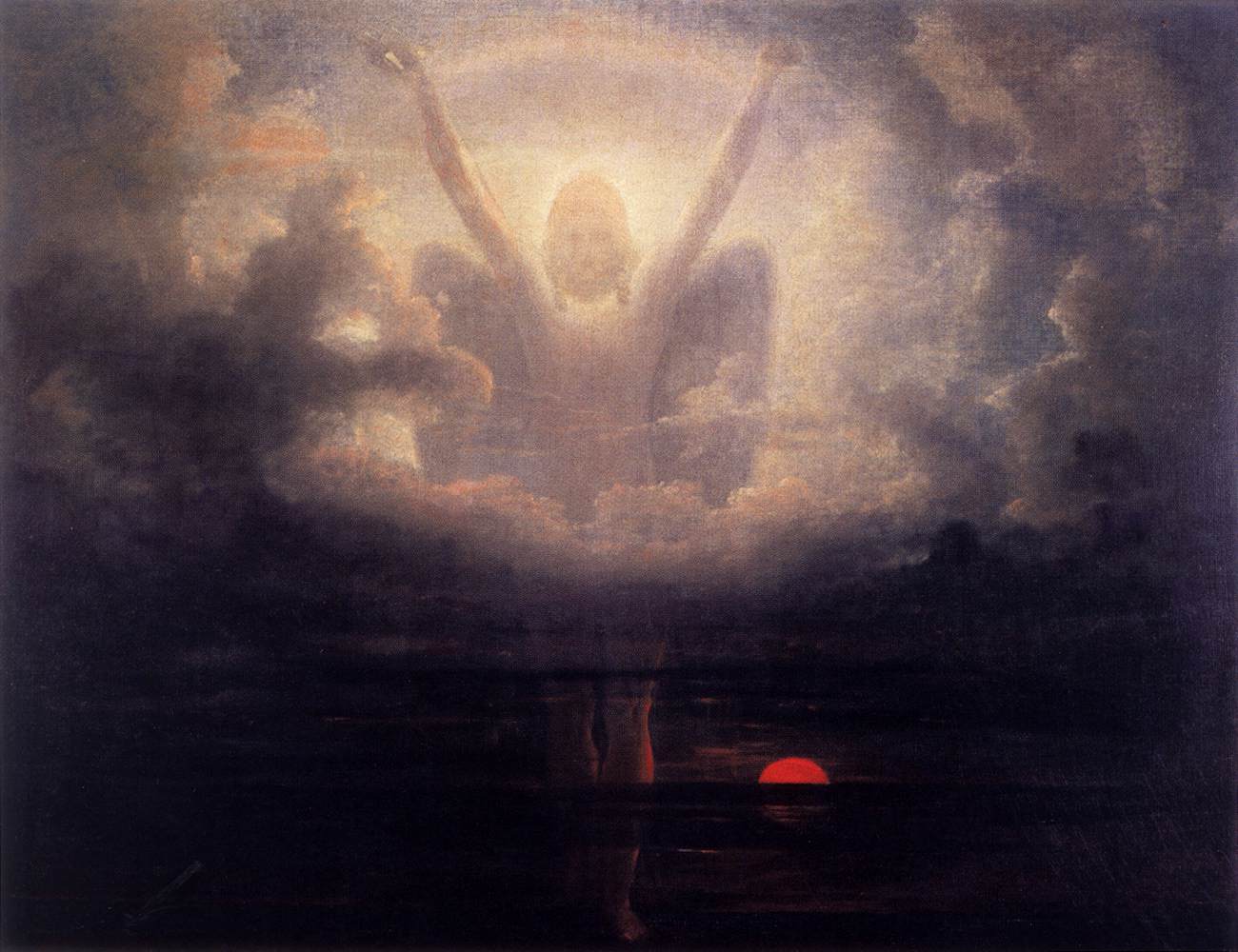
                                                  Scene From The Apocalypse 
                   (credit: Francis Danby, via Wikimedia Commons)

Friday, 3 April 2020

Andrew Scheer - Wikipedia

Canadian Conservative leader, Andrew Scheer
(credit: Wikipedia)


I channel surf. I confess. (Oh, the shame of it!)
But this habit meant that I surfed from an international news channel to a Canadian news channel in the space of about two minutes this morning.
I caught a world news channel covering Secretary General of the UN Gutteres begging warring factions in several areas of the world to lay down their arms - for the time being - and cooperate to fight Covid 19 in their area.

A minute later I caught Canadian Conservative leader Andrew Scheer saying that the opposition's role in parliament now is to scrutinize and criticize all of the government's policies and moves - even in these difficult pandemic times.
Well, there it is. In a democracy, even when we disagree bitterly, we still agree to thrash out our differences with words, votes, and elections - not bullets, bombs, and bayonets. And we accept the decisions arrived at by this democratic process.
So I don't say this lightly, but ...today a conservative leader made some good sense. So, good on you for this much at least, Andrew Scheer.
He's still on record saying that global warming is a myth and the earth was created about 6000 years ago. Maybe, he is jumping on the science bandwagon because it is politically useful to do so right now. Right now, I don't care. That does not detract from the fact that he did make a statement that fully supports our democracy.
For today, I'll take it.
We are nothing like facing the flu pandemic of 1919, folks, or anything like an equivalent crisis. If you're feeling annoyed with all these measures, you'd better give your head a shake. In a month - or if not this time, then next time - we may very well meet up with a virus that kicks our asses over the horizon. Then, we will need to hang together - as a democratic nation, not a bunch of bullet-brained, warring factions - or we shall certainly hang separately.
I'm feeling that smug in our democracy - for today, anyway - that I think I'll just stay home and watch t.v.. (Oh, the shame of it!)

Sunday, 29 March 2020


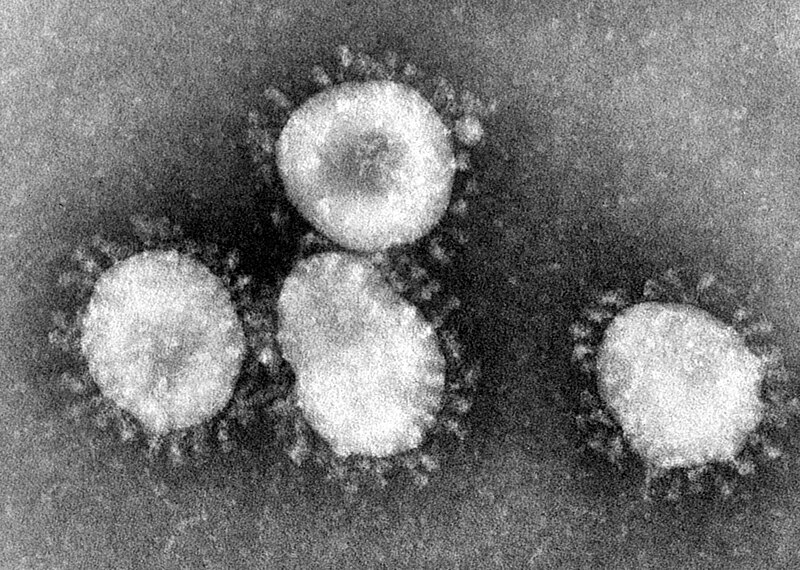
   File:Coronaviruses 004 lores.jpg

                   corona viruses (credit: Dr. Fred Murphy, via Wikimedia Commons) 


Heavy Thoughts For Heavy Times


Science cares about what can be observed. By any observer, regardless of what biases she/he may bring to the situation. Anyone would have to admit, “Well, okay, it happened.” 

In Psychology, for example, the branch of that science followed by more than half of the Ph. D.s in the field is called “Behaviorism”. The founders of Behaviorism said, a long time ago, that what matters is what can be observed by any observer. Whatever you say your private thoughts or feelings were in any situation you may want to analyze …the Behaviorists don’t care. What did you actually say and do? That’s observable. That is what any social science – if it deserves to be called a “science” at all – should be looking at. And that’s all. 

The point of social science is to come out with some general rules about human behavior that will allow scientists to predict what people will do in upcoming tests, which is just like what is done in all sciences. For the Behaviorists, and most other scientists, in social science and all branches of all sciences, now we’re talking. Now they’re listening.

What’s my point? Trust me. I’ll come back to this bit on what makes an attempt at science into a true “science”.

In our current global pandemic, we are being reminded daily of the crucial importance of balance. A society is an ecosystem. It contains a lot of different species, and non-living elements too, that must be kept in mind when we are working to keep that society healthy. 

Bacteria in the soil make the production of nitrogen there possible. Then, the grasses can grow, the herbivores graze, the predators hunt, and even scavengers do their jobs. Kill the soil bacteria and all of these checks and balances die. The scene will be a wasteland in one decade or less.

Similarly, in our society, as we’re seeing every day, we need grocery store clerks and truck drivers. We need doctors and nurses. And so on. We are all parts of a much larger system that has to stay in a balance – even if that balance is being stressed right now – if the system is to survive in the long haul.

We need police and firemen, pharmacists and cleaners, old folk with knowledge and young people with energy, men and women, every race and gender. There are valuable traits that support the larger system in every sub-group in society you might name. The virus hits some in every group. But there are valuable bits of knowledge and skill in every group too. Or, as the old saying goes, we must hang together or we are surely going to hang separately.

Balance asks of us respect for everyone by everyone else.

What produces the kind of behavior that contains this abstract quality I’m calling “respect”? Teaching it to the kids. All the kids. No exceptions. I don’t want to hear any more of how group A has every right to hate group B, based on …blah, blah. Period. Such talk is counter productive. It is not helping.

And respect is a value. An abstract principle that plays out in real life situations in unpredictable ways. In fact, it is the unpredictableness of real life and real life instances of our principles, when we see them in action, that makes them so moving and beautiful.

You need cleaners. Not so your building will just be a little more pleasing to your senses when you come in the front door. You need them, trained in sterile techniques, doing their best to keep your place safe, or you could die.

You need medical personnel and, in the long haul, researchers too, so we can find a vaccine for this ugly killer and stop it. Smart people, “eggheads”, do that.

You need cops to keep order. Thugs and thieves love to jump in when society is under stress. They have over and over for centuries. In that respect, there is nothing new in these present times.

I could go on and on, but I think by now you’re getting my point.

And let’s be utterly frank. We are going to need financiers and brokers who have expertise and vision. Ones who can pick winners, businesses that will go on and return to vigorous operations after this is over. Our very limited available capital should go to those firms. Our economies are going to have to be repaired and re-built after this crisis has passed. 

We can’t just print money when we want to. It has to represent real wealth - goods and services people can use - or our currencies and nations will collapse. In the end, money is just paper. We can’t eat it, make pants out of it, or build homes with it. It has to represent real wealth.

Right now, the money the government is giving out is being borrowed from our grandchildren. They are the ones who are going to have to work extra long and hard to pay off this debt. I have always said this. I just think the financiers and investors should have to pay their share of society’s expenses the same as the rest of us. In the last few decades, in my view, they haven’t been doing so. That free ride has to end. But I don’t consider these people evil. I have no desire to see them eradicated. That’s been tried. It doesn’t work.

The bottom line? In the most general of senses, the highest levels at which we are able to think, we need principles. Courage to hang in there and keep trying to maintain decency and sense. In every branch of our society. We must not give in to the selfishness of taking care only of ourselves and maybe a few loved ones. We must hang together as a nation, or we are surely going to hang separately.

We need wisdom – knowledge, judgement, “smarts”. To keep us on the efficient path toward recovery from the virus, for the time being, and to steer us toward recovery as a society six months or a year from now.

We need freedom. Every person has to take responsibility for restricting her or his own actions, choosing the smart course day by day. Personal responsibility. If that begins to break down, there aren’t enough police in the universe to keep us from living “The Road”. Catastrophe on a global scale. 

And freedom also to run down one’s own good ideas. Check them out online. A cure just might come from a teenager in Kenya. Or Albany, N.Y.. Or Spruce Grove, Canada. Or Alice Springs. Or Bangkok. Wherever that kid is, s/he could be the saving of us all. Genius shows no preferences when she bestows her gifts. 

And finally, of course, we need to love each other. Respect each other, then, if the word “love” is too scary for you. Take care of each other. You can’t know now how your small act of duty or kindness where it was applied today will play out in the long run. You can only know that as a giant policy, kindness is the right thing to do. It tilts the odds back in our favor.

Balance. Of several different virtues/principles and many kinds of people. This society is an ecosystem. 

So as a kind of side-note, I’ll end by telling my atheist friends, “If you believe in a balance of courage, knowledge, freedom, and respect – and you live them, patiently, in your daily actions and words, not so much because they are nice, but because you believe they will get us through the real challenges of these times – because these virtues fit the way reality works on the cosmic scale – then I have zero desire to convince you of even one single other point. Believe in God? Hey, man …hey, lady …by all the observable evidence …you already do.”

In the shadow of the mushroom cloud, love each other. Why? Not because it’s nice, brothers and sisters, but because it works.  

Saturday, 14 March 2020


                                            (Callan McAuliffe) 
                 (credit: Eva Rinaldi, via Wikimedia Commons)


                      File: Knight-in-Shining-Armor.jpg
                                     
                 (credit: Saffron Blaze, via Wikimedia Commons) 


   outdoors, portrait, people, beautiful, young, woman, female, dreamy, coffee, staring, face, person, caucasian, peaceful, headshot, one person, holding, young adult, close-up, lifestyles, focus on foreground, real people, leisure activity, looking, adult, day, women, young women, cup, teenager, food and drink, contemplation, drinking, adolescence, human face, 2K, CC0, public domain, royalty free

                              (credit: piqsels.com) 


   woman in maroon and white bindali dress standing

                               (credit: pikpik.com)


                               Inside

He is really written inside for a hero
So he seeks a star-eyed princess he can save;
He's commanding, sensitive, and noble-passioned,
And he's brave.

She is secretly the one born Queen of Beauty
Standing regal, speaking music, smiling kind;
Waiting tragic, idealistic, for love perfect
She may not find.

Just hold on! Yes, you. Your paths will meet in sunlight.
Oh, it's Someday! Yes, it's One Day, just ahead!
She will guard the purest secret;
He'll ride home to her a hero;
Crash! You're dead!


Thursday, 5 March 2020


                                                (credit: Jbarreirol, via Wikimedia Commons)    


File:White-tailed deer doe & fawn, southcentral South Dakota (19132492351).jpg

                                        (credit: Marshal Hedin, via Wikimedia Commons) 


                        Non Nomination


 Do not name it.

Hear you?                   

HEAR ME!

Do                   not                   name                     it


Names are shackles

What the trembling aspens murmur
Seas eternal faintly whisper
Deep within the Earth a shudder
As the stars shrug off their armor

Suddenly, you're in the timber

See the steaming tracks ahead ... there

Stalk the scent in desperate hunger

Poise predation's ancient silence

Rustling grasses, trickling sunlight

Scent the blood; you are the deer, and then

You are the cat.


   File:P13 & Kittens (13959967628).jpg

                                              (credit: National Park Service, USA)