Sunday, 8 November 2015

Bayesianism can coherently express what minds do, if first we accept that such things as minds exist. Bayesianism can’t pin down in an infallible definition what a mind is. In the rough Bayesian view, the mind is a program capable of data processing, manipulation, and storage, running on a constantly active, probability-calculating platform system, deciding second by second which applications to use and which files to open, always aimed at prime objectives of self and species perpetuation. It manifests itself in the material world, specifically in the chemistry of my brain, whenever I physically see, hear, feel, smell, or taste a bunch of sense data and then spot a pattern in them. Sometimes, in events around me, I even see a new pattern and experience what is usually called a causal connection. This brain chemistry change is experienced subjectively as an “Aha! moment.” It is a trait of life, and most especially, of human life. No computer program, so far, can imitate it.

However, Bayesianism does not pretend to say in any more precise detail what a mind is.
The human mind is ultimately its own greatest mystery. Or rather, as nearly as minds can make out, the mind is one of the most successful manifestations of that greater mystery, life itself. It is an entity whose precursors are built into the human genome. Once the basic neurological structure is built, once the baby is born, the brain is stocked with cultural programming authored by the ancestors of that human’s society. The being that results is driven by its very nature to seek a healthy direction, from the molecular level on up to cells, organs, the individual, her family, her society, and her species, to learn and grow. Why? We don’t know. Life’s love of itself is an unanalyzable given.


A miracle, by definition, is an event that seems incorrigibly to defy all rational and empirical explanation. For us today, old-style miracles likely are over. But the most amazing phenomenon that a modern human mind will ever encounter, but never truly know, is itself. You are your own greatest wonder.


In furthering our goal of constructing a moral code that is founded on our best understanding of reality, these last three chapters have served only one purpose. They have left us with a model of the mind—and what it does as it thinks and “knows”—called Bayesianism.

The most paralyzing confusion in my mind about how to best realize my prime directive occurs when I am trying to decide between the preservation of myself and that of others outside myself. Even deeper than our minds is the basic programming of sex and reproduction. We’re built to love our kids, and since we want them to survive so much, we learn to be motivated about the survival of our tribe. Gradually, as we mature, we learn to expand this circle of moral consideration to our nation. Our most interesting literature dramatizes situations that portray heroes trying to sort through choices between their own survival and that of their friends, families, or nations. We find them challenging and fascinating. In such literature, we are seeking models to guide us through possible future situations in which we may have to choose between saving ourselves and saving our children, our nation, or our species. I, like all my fellow humans, want to live. But I want my kids and my country and its way of life to survive too. 

Bayesian decision processes get confused in such dilemmas. We feel this confusion as what we call “anxiety”.  
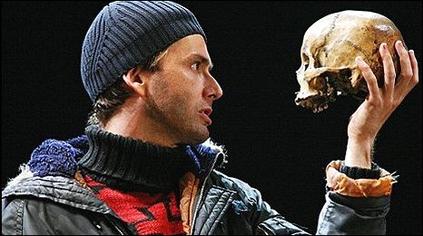


Shakespeare’s Hamlet still holds the stage for exactly this reason. Hamlet can’t see any point in this life of treachery in which the bad succeed by being bad. But in the end, he realizes he is willing to die for the restoring of order in his beloved country, Denmark. The rest he will leave for God to sort out.

There are, of course, no neat, simple answers to such questions, no unfailingly reliable guides. Reality is uncertain, subtle, complex, and frightening. No sets of programs we can devise will ever enable us to live in reality without running into anxious challenges and rude surprises. 

Still, the bottom line is that reality is where we must live. Therefore, in our universe, it is sad but true that a moderate but constant anxiety is the natural human condition. Anxiety is the downside for us of surviving in the probabilistic real world. The upside is freedom. If we are brave enough, we learn to relish life as challenge.

As far as this book is concerned, the important point to be made about Bayesianism is that the Bayesian model of the human mind is the one on which this book is founded. For each of the further points I argue in this book, I will try to show that they currently appear to have the best odds of working in the future, not that any one of them is irrefutably logical. To aim for logically irrefutable conclusions is to violate the spirit of Bayesianism—and to waste one’s time. In this life, any search for perfect confidence in any belief is either deluded or doomed to cycle after cycle of circularity, frustration, and failure.


Therefore, we must aim to adopt beliefs that, when they are used to construct arguments, make our conclusions look increasingly probable the more we check those conclusions against wider observations of physical evidence. Higher levels of probability are what we want, probabilities that appear to keep climbing the more of the real world we explore and successfully cognize.

Saturday, 7 November 2015

There is a reality; I am confident of that claim at the 99.99 percent level. But it is too fluid and dynamic for our minds ever to get a 100 percent reliable handle on any aspect of it. Individuals, families, philosophers, businesspeople, and politicians, in varying ways, all appear to get handles on reality for a while, but they all prove inadequate over the long haul. Things, especially humanly made systems of ideas, fall apart.

On the other hand, life holds together. All throughout the natural world, living things adapt. Species evolve, including humans. Children raised in the Hitler Youth or raised to be Stalin’s socialist beings, incapable of viewing themselves in any way except as parts of a collective, can grow out of their early brainwashing.

Men raised to see women as victims to be used and abused can learn not to do the same things to their wives as their fathers did to their mothers. With medications and counselling, even some pedophiles can learn to redirect their tendencies into socially acceptable channels. Humans can learn and adapt; we can reprogram. Not perfectly, but functionally, which in the end is what matters to the individual, the community, and our species’ survival. The children will do better because they will have to.

A mind is a program whose prime function is to calculate the usefulness of other programs for enhancing and perpetuating conditions that will produce more minds.

I am constantly calculating, usually as an unconscious activity, the odds that each of my familiar ways of organizing my thoughts, processing sense data, and formulating action plans is still working and is still adequate for interpreting and reacting to the physical situation that I am in at any given time. Once in a while, I calculate the odds that a different way of thinking, one that I am only considering using, will obtain good results—that is, happiness and health—for me, my children, and my nation over the long haul. The majority of the time, I check my sensory impressions against my expectations and reaffirm the beliefs and models of reality that have got me this far.

If I conclude that a new way of thinking about reality is an accurate one and that it will enable me to foresee pain and avoid that pain, or to find more pleasure, health, and vigour, then I tend to move aside some of my old mental gear and move the new ideas in. This is true of almost all the programs that my mind now contains. I become anxious and reluctant when some event or argument challenges my deepest and most general programs—my values. Those I will replace only in dire circumstances or after years of reprogramming. Once in a while, if I’m very stubborn in refusing to learn life’s latest lessons, I—or my family or even my tribe—will be discarded from the human community of the planet by evolution itself as some new, more efficient, and current society replaces us.

That picture, I believe, is the correct picture I have of myself. (See also Hofstadter’s I Am a Strange Loop for a computer scientist’s interesting take on consciousness. A most enjoyable read.1)


Bayesianism says of itself that as a model of how humans think, it is probably the best model. The odds that we should accept it as the best model of the human mind keep increasing the more that we use it, then handle reality well because we are using it. That is to say, the more we handle reality, individually and as communities, the better off we are compared with other humans using less flexible, less effective, less resourceful, less nimble models.


However, this description has an important caveat attached. If I’m honest, I‘m must admit that sometimes I am not capable of making my odds-weighing judgments astutely, especially when the judgments are about some of the mental gear that is most central in me. This gear includes the moral beliefs most widely connected to all the other systems in my mind.

I am very reluctant to change these central operating systems, which in plainer language are programs I use as I am deciding, second by second, item by item, for each possible reaction, “Good or not? React or not?” Those are the systems people are most reluctant to change. 

Because of cultural programming, deep emotions are associated with our values. Rather than change their moral values, many people prefer to die fighting to preserve those values, and in fact they sometimes do.

War is the harshest mechanism by which the values pool of the human race evolves—wars among nations, rather than rational persuasion among individuals. This is a mechanism that used to serve a purpose—it cut out of the culture pool what no longer worked. But today, it is mental baggage we can no longer afford to carry. What it used to accomplish for our species we must learn to accomplish in other ways, if we are to survive. Our bombs have become too big.

The human mind is therefore left, in the first place, with a cheerful pragmatism. Like the cartoon centipede, I can’t say which foot comes first. I simply move. I have to. And the human mode of survival is called “intelligent” because the human brain contains sense-data-processing systems that enable us to categorize and manipulate sense-data memories and categories of memories (concepts), then devise action plans that get us good results when they are put into practice. Our thinking systems enable us to plan and execute survival-oriented behaviours at least two levels more prescient than those seen in any other species, even though these systems are all arbitrary and tentative.
 They are arbitrary in the sense that they do not, as Plato would say, “cut nature at the joints.”2 They do not divide the data we get from reality at the places where it actually falls into categories of things. Under a modern scientific view of reality, nature has no joints. There are no universals. There aren’t even any terms that reliably name individual entities. Even I am not the I that I was ten years ago. Not even ten minutes ago.

However, the human styles of evolving new concepts and behaviour patterns by constant mental and cultural reprogramming are very much not arbitrary in a deeper sense. We cannot function without concepts by which to organize our sense data and respond to them. If a vital program is to be retired, that can happen only when a replacement is ready to be put in. 

Hazards and predators are everywhere. We humans are slow and weak. Yet we dominate our planet to a degree unparalleled by any other species in the history of earth. Using our minds filled with concepts, we have devised practical skills, technologies, production teams, communities, and cultures, and we flourish. This is how I conceive of and explain our concepts about concepts.


In the second place, the mind is left with a picture of itself that amounts to a kind of realistic humility. If reality is that slippery and hard to grasp, I have to accept that, in it, I can never become smug about my way of thinking. It may prove inadequate at any time, no matter how carefully I have worked it out, and no matter how vigilant I am. I may have to revise at any time. An honest, modern thinker has to gamble on gambling as being the best gamble. I may be tough, smart, and versatile, but I will still have to grow and change in this world until the end of my days, and so will everyone I know. I accept that. It is a way of conceiving of my existence that makes life look frightening and unnerving—and challenging and exciting.

Friday, 6 November 2015


But sanity is a construct, and like any construct it can be deconstructed. Actually, the whole worldview called “deconstruction” is an idea that deserves a bit of digression here.

If the basic operating system of a human mind, that is, its sanity, is deconstructed, as sometimes happens when a person’s perceptions are rendered incoherent by drugs or sensory deprivation or mental illness, his interactions with real-world events begin to go beyond his ability to sort and respond. Then he has a “nervous breakdown.”

Real deconstruction of a human’s mindset—that is, the set of programs that a person uses to organize his perceptions of reality— is a phenomenon that can happen, but it is not much like the deconstructionists’ way of analyzing human thinking and interpreting works of literature, art or culture. Deconstruction is at its most abstract, unintelligible heights when a critic is analyzing a work of literature. But it is, in reality, a frivolous activity, an empty word game. 

Deconstructionism as a philosophy is a kind of playing at mental illness. It is correct in asserting that every sane human cognition is part of a “text” and can be deconstructed into its constituent parts, most of which are culturally imprinted and so can be shown to be culturally biased. But complete deconstruction of any “text”—or context, to put it more accurately—would require the deconstructor to deconstruct the constituents and then the constituents of the constituents. What in her whole mindset and her culture's way of socializing her into that mindset has led her to talk and act like this? 

She would have to continue until she had deconstructed her own mind as part of the text being analyzed. In short, she would need to go mad.

Deconstructionists are too cautious to use their method to its logical limit. Mental illness, they well know, is not clever, sophisticated, illuminating, or even merely logical.

But let us set regrets about deconstructionism aside and return to our main line of thought.

The thrust of Bayesianism is this: all of my sensory experiences and memories of experiences would be jumbled, meaningless gibberish without concepts by which I can organize them. Our problem is that these concepts are not built into a supra-real dimension of ideas (rationalism) nor into material reality itself (empiricism). Our minds’ thinking systems are based on concepts that exist only in our minds and only for as long as they are functional, be that for seconds or generations.

All basic concepts are illusions in the sense that they morph constantly into and out of one another. Even trees aren’t all trees; some are giant bamboo, some are bushes grown big, some are former trees in various stages of decay, and some are potential trees (e.g., acorns).

  
                                                        Dingo, a wild dog of Australia.


Dingoes that kill human children are vicious brutes; dingoes being killed by humans are pathetic victims. Nature is beautiful or horrible depending on what point of view it is perceived from. Light is a particle, not a wave; light is a wave, not a particle. Criminals aren’t always criminals; if they wage war on another ethnic group and lose, they are terrorists, the worst of criminals; if they win, they are freedom fighters, the best of heroes.


                                                              Soviet show trials of 1930's 


Justices mete out injustice. Teachers stupefy. Scientists tell lies. Physicians sicken. Not always, of course, not even mostly. But too often for us ever to become smug about our terms. Life is complex and constantly changing. The distinctions we draw to try to justify our versions of reality become subtler and subtler, but they are never subtle enough to be considered complete. Real life keeps cropping up with situations that leave us and our thinking systems stranded in bafflement and ambivalence. Therefore, we learn new ways, we improvise, we evolve.

Wednesday, 4 November 2015

Chapter 8 – What Is Bayesianism Saying?


What is an individual who is really straining for truth to conclude at the end of a careful analysis of the problem of epistemology? The pattern is there; records of centuries of fruitless seeking for a model of “knowing” are there; the conclusion is clear: rationalism and empiricism are both hopeless projects. It appears that whatever else the human mind may successfully cognize and manipulate—in purely symbolic forms such as philosophical theses or in more material-world forms such as computer programs—the mind will never define itself.

A human mind is much richer, larger, and more complex than any of the systems it can devise, including systems of ideas that it assembles to try to explain itself. It makes, and contains, systems of symbols for labelling and organizing its thoughts: the symbol systems cannot, in principle, contain it.


                    Fujitsu “K,” the world’s most powerful computer, 2012


The model of the human mind and how it works called Bayesianism is workable enough to allow us to get on with building the further philosophical structures we will need in order to arrive at a modern moral code for all humans. The Bayesian model of knowing contains some difficult parts, but it does not stumble and crash in the way that rationalism and empiricism do. Bayesianism will do what we need it to do.  It will serve as a base upon which we may construct a universal moral code. But it does require of us that we agree to gamble on our choosing rational gambling as being the best way of getting on with life.

Under this model, even human consciousness is built on arbitrary and temporary foundations. For example, my concepts of red, round, sweet, crisp, and tangy are descriptor-organizers that help me to recognize and react to things in the real, material world, some of them being fruit, some of these being apples. Such descriptors are not built into some other dimension of perfect forms, as is posited by rationalism. They aren’t even built into the physical universe in some permanent way, as is posited by empiricism. We learn them from our parents. We use them because they’re useful—today. Our ways of stating what we think are the laws of the universe are constantly being updated.

Once apples did not exist on this planet. Nor did the organic chemicals that make sweetness. Even round is a constructed concept that exists only in the human mind, only on a provisional basis, and only because it helps humans whose minds contain it to sort data, make decisions, and get things done. The caveman who could count could consider: “Were there five wild apple trees in this valley or six? I know I saw six.” Knowing the difference meant that he fed his kids, and they survived to teach the concepts used in counting to their kids.

At bottom, the shifting nature of reality defies all categories, even here, now, and stuff. (Matter, Einstein showed, is really only a form of energy.) A mind—its consciousness and sanity—is a program built of concepts, some of them acquired from our genetics (babies fear heights and snakes, but grasp basic language concepts), some from cultural conditioning, and some that each of us has built up by spotting patterns in banks of memories gathered from our own experiences.


The deepest form of oneself, of I, is a program that runs on brain tissue and that is constantly reviewing sense data, trying to decide whether they signify hazard or opportunity or are just more familiar, non-threatening, non-promising, background noise. A mind is any program that looks for patterns in data and shows a persistent inclination to do so and then to use that data to navigate itself and its hardware safely through the hazards of physical reality. 

Tuesday, 3 November 2015


It‘s important to point out here that the idea behind H&B is more complex than the equation can capture. This part of the formula should be read: “If I integrate the hypothesis into my whole background concept set.” The formula can only attempt to capture in symbols something that is almost not capturable. This is so because the point of positing a hypothesis, H, is that it does not fit neatly into my background set of beliefs. It is built around a new way of seeing and comprehending reality, and thus it will be integrated into my old background set of concepts and beliefs only if some of those are removed by careful, gradual tinkering and if many other concepts are adjusted.

Similarly, in the term Pr(H/E&B), the E&B is trying to capture something that no math expression can capture. E&B is trying to say: “If I take both the evidence and my set of background beliefs to be 100 percent reliable.” But that way of stating the “E&B” part of the term merely highlights the issue with problematic old evidence. This evidence is problematic because I can’t make it consistent with my set of background concepts and beliefs, no matter how I tinker with them.

Thus, all the whole formula really does is try to capture the general gist of human thinking and learning. It is a useful approximation, but we can’t become complacent about this formula for the Bayesian model of human thinking and learning any more than we can become complacent about any of our concepts. And that thought is consistent with the spirit of Bayesianism. It tells us not to become too blindly attached to any of our concepts; any of them may have to be radically updated and revised at any time.

In short, on closer examination, the criticism of Bayesianism—which says the Bayesian model can’t explain why we find a fit between a hypothesis and some problematic old evidence so reassuring—turns out to be not a fatal criticism, but more of a useful tool, one that we may use to deepen and broaden our understanding of the Bayesian model of human thinking. We can hold onto the Bayesian model if we accept that all the concepts, thought patterns, and patterns of neuron firings in the brain—hypotheses, evidence, and assumed background concepts—are forming, reforming, aligning, realigning, and floating in and out of one another all the time, even concepts as basic as the ones we have about gravity, matter, space, and time.


And what of the spirit of Bayesianism? Bayesian thinking requires us to be willing to float all of our concepts, even our most deeply held ones. Some are more central, and we can stand on them more often and with more confidence. A few we may believe almost, but not quite, absolutely. But in the end, none of our concepts is irreplaceable.

For our species, the mind is our means of surviving. If it has to, it will adapt to almost anything. Most of us choose to gamble most heavily on the concepts we use to organize most of our sense data and memories most of the time.

I use my concepts to organize both the memories already stored in my brain and the new sense data that are flooding into my brain all the time. I keep trying to acquire more concepts, including concepts for organizing other concepts that will enable me to utilize my memories more efficiently to make faster and better decisions and to act increasingly effectively. In this constant, restless, searching mental life of mine, I never trust anything absolutely. If I did, a simple magic show would mesmerize and paralyze me. Or reduce me to catatonia.

When I see elephants disappear, women get sawn in half, and men defy gravity, and all come through their ordeals in fine shape, some of my most basic and trusted concepts are obviously being violated. But I choose to stand by my concepts in almost every such case, not because I am certain they are perfect but because they have been tested and found effective over so many trials and for so long that I’m willing to keep gambling on them. I don’t know whether they are “sure things,” but they do seem like the most promising of the options available to me.


                                        Harry Houdini with his “disappearing” elephant, Jennie


Life is constantly making demands on me to move and keep moving. I have to gamble on some things; I go with my best horses. And sometimes, I change my mind.

This mental flexibility on my part means that the critics of Bayesianism simply haven’t grasped its spirit. Bayesianism is telling us pretty much what Thomas Kuhn said in his influential book The Structure of Scientific Revolutions. We are constantly adjusting our mental constructs to try to make our ways of dealing with reality more effective.

And when a researcher begins to grasp a new hypothesis and the model or theory it is based on, the resulting experience is like a philosophical or religious awakening—profound, all-encompassing, and even life altering. Everything changes when we accept a new model or theory—because we change. In order to “get it,” we have to change. We have to eliminate some of the old beliefs from our familiar background set.

And what of the shifting nature of our view of reality and the gambling spirit that is implicit in the Bayesian model? The general tone of all our experiences tells us that this overall view of our world and ourselves, though it may seem scary or, perhaps for more confident individuals, challenging—it’s just life.

We have now arrived at a point where we can feel confident that Bayesianism gives us a solid base on which to build further reasoning. It can answer its critics decisively—both those who attack it with real-world counterexamples and those who attack it with pure logic.

For now, then, let us be content to summarize our points so far in a new chapter devoted solely to that summing up.


Notes
1. Thomas Kuhn, The Structure of Scientific Revolutions (Chicago: The University of Chicago Press, 3rd ed., 1996).


Monday, 2 November 2015

A human mind experiences much cognitive dissonance when it keeps observing evidence that does not fit any of its mental models. The person attempting to explain observed evidence that is inconsistent with his world view, clinging to his background beliefs and shutting out the new theory his colleagues are discussing, keeps insisting that this evidence can’t be correct. Some systemic error must be leading those other researchers to keep thinking they have observed (E), but they must be wrong. (E) is not what they say it is. “That can’t be right,” he says.

In the meantime, his more subversive colleague down the hall is arguing, even if only in her mind, “I know what I saw. I know how careful I’ve been. (E) is right; thus the probability of (H), at least in my mind, has just grown. And it’s such a relief to see a way out of all the cognitive dissonance I’ve been experiencing for the last few months. I get it now. Wow, does this feel good!” Settling a score with a stubborn bit of old data that refused to fit into any of a scientist’s models of reality is a bit like finally whipping a bully who picked on her in elementary school—not really logical, but still very satisfying.

Normally, testing a new hypothesis involves performing an experiment that will generate new evidence. If the experiment delivers new evidence that was predicted by the hypothesis but not by our background set of concepts, then the hypothesis, as a way of explaining the real world, seems more likely or probable to us. The new evidence confirms the hypothesis.

But I may also decide to try to use a hypothesis and the theory or model it is based on to explain some old, problematic evidence. I will be looking at whether the hypothesis and its predictions did in fact occur in the old-evidence situations. If I find that the hypothesis and the theory it is based on do successfully explain that problematic old evidence, what I’m actually confirming is not just the hypothesis and theory but also the consistency between the evidence, the hypothesis, and my background set of concepts.


And no, it is not obvious that evidence seen with my own eyes is 100 percent reliable, not even if I’ve seen a particular phenomenon repeated many times. Neither my longest-held, most familiar background concepts nor the ordinary sensory data I see in everyday experiences are trusted that much. If they were, then I and anyone who trusts gravity and light and human anatomy would be unable to watch a good magic show without having a nervous breakdown. 


Elephants disappear and women defy gravity or even get sawn in half. By pure logic, if my most basic concepts were believed at the 100 percent level, then either I would have to gouge my eyes out or go mad. But I know it’s all a trick of some kind. And I choose, for just the duration of the show, to suspend my desire to connect all my sense data with my set of background concepts. It is supposed to be a performance of fun and wonder. If I did figure out how the trick was done, I would ruin my grandkids’ fun … and my own.

Sunday, 1 November 2015


Now, all of this may begin to seem intuitive, but once we have a formula set down it also is open to criticism and attack, and the critics of Bayesianism see a flaw in it that they consider fatal. The flaw they point to is usually called “the problem of old evidence.”

One of the ways a new hypothesis gets more respect among experts in the field the hypothesis covers is by its ability to explain old evidence that no other theories in the field have been able to explain. For example, physicists all over the world felt that the probability they assigned to Einstein’s theory of relativity took a huge jump upward when Einstein used the theory to account for the changes in the orbit of the planet Mercury—changes that were familiar to physicists but that had long defied explanation by the old familiar Newtonian model.


                                             Representation of the inner solar system


The constant, gradual shift in that planets’ orbit had baffled astronomers for decades since they had first acquired instruments that enabled them to detect that shift. This shift could not be explained by any pre-relativity models. But relativity theory could describe this gradual shift and make predictions about it that were extremely accurate. In other branches of science, instances of hypotheses that worked to explain old, anomalous phenomena could easily be listed. Kuhn, in his book, gives many of them.1

What is wrong with Bayesianism, then, according to its critics, is that it cannot explain why we give more credence to a theory when we realize it can be used to explain pieces of old, anomalous evidence that had long defied explanation by the established theories in the field. When the formula given above is applied to this situation, critics say Pr(E/B) has to be considered equal to 100 percent, or absolute certainty, since the evidence (E) has been accepted as having been accurately observed for a long time.

For the same reasons, Pr(E/H&B) has to be thought of as equal to 100 percent because the evidence has been reliably observed and recorded many times since long before we ever had this new theory to consider adding to our stock of usable ideas. When these two quantities are put into the equation, according to the critics, it looks like this:

Pr(H/E&B) = Pr(H/B)


This new version of the formula emerges because Pr(E/B) and Pr(E/H&B) are now both equal to 100 percent, or a probability of 1.0, and thus they can be cancelled out of the equation. But that means that when I realize this new theory that I’m considering adding to my mental programming can be used to explain some old, nagging problems in my field, my overall confidence in the new theory is not raised at all. Or to put the matter another way, after seeing the new theory explain some troubling old evidence, I trust the theory not one jot more than I did before I realized it might explain that old evidence.

This is simply not what happens in real life. When we suddenly realize that a new theory or model can be used to solve some old problems that were previously not solvable, we are impressed and definitely more inclined to believe that this new theory or model of reality is a true one.

This indifferent reaction to a new theory’s handling of troubling old evidence is simply not what happens in real life. When we suddenly realize that a new theory or model can be used to solve some old problems that were previously not solvable, we are definitely impressed and definitely more inclined to believe that this new theory or model of reality is a true one. When physicists around the world realized that the Theory of Relativity could be used to explain the shift in the orbit of Mercury, their confidence that the theory just might be correct shot up.

Hence the critics suggest that Bayesianism, as a way of describing what goes on in human thinking, is obviously not adequate. It can’t account for some of the ways of thinking that we’re now certain we use. We do indeed test new theories against old, puzzling evidence all the time, and we do feel much more impressed with a new theory if it can fully account for that same evidence when all the old theories can’t.

The response in defense of Bayesianism is complex, but not that complex. What the critics seem not to grasp is the spirit of Bayesianism. In the deeply Bayesian way of seeing reality and our relationship to it, everything in the human mind is metamorphosing and floating. The Bayesian picture of the mind sees us as testing, doubting, reassessing, and restructuring all our mental models of reality all the time.

In the formula above, the term for my degree of confidence in the evidence, taking only my background assumptions as true and without letting the new hypothesis into my thinking—namely, the term Pr(E/B)—is never 100 percent. Not even for very familiar old evidence. Nor is the term for my degree of confidence in the evidence if I include the hypothesis in my set of mental assumptions—that is, the term Pr(E/H&B)—ever equal to 100 percent. I am never perfectly certain of anything, not of my background assumptions and not even any of the evidence I may have seen—sometimes repeatedly—with my own eyes.

To consider this crucial situation in which a hypothesis is used to try to explain old evidence, we need to examine closely the kinds of things that happen in the mind of the researcher in both the situation in which the new hypothesis successfully interprets the old evidence and the one in which it doesn’t.

When the hypothesis does successfully explain some old evidence, what the researcher is really considering and affirming to her satisfaction is that, in the term Pr(E/H&B), the evidence fits the hypothesis, the hypothesis fits the evidence, and the background set of assumptions can be integrated with the hypothesis in a consistent and comprehensive way. She is delighted that if she does commit to this hypothesis, it will mean she can be more confident that the old evidence really happened in the way she and her fellow researchers saw it, that they were observing the evidence in the right way, and that they were not prey to some kind of hallucination or mental lapse that might have caused them to misinterpret the old-evidence situations or even misperceive them altogether. In short, she and her colleagues can feel a bit more confident that they weren’t sloppy in recording the old evidence data, a source of error that scientists know plagues all research.

All of this becomes even more apparent when we consider what the researcher does when she finds that a hypothesis does not successfully account for the old evidence. Rarely in scientific research does a researcher in this situation simply drop the new hypothesis. Instead, she examines the hypothesis, the old evidence, and her background set of assumptions to see whether any or all of them may be adjusted, using new concepts or new calculations involving newly proposed and measured variables or different, closer observations of the old evidence, so that all of the elements in the Bayesian equation may be brought into harmony again.

When the old evidence is examined in light of the new hypothesis, if the hypothesis does successfully explain that old evidence, the scientist’s confidence in the hypothesis and her confidence in that old evidence both go up. Even if her prior confidence in that old evidence was really high, she can now feel more confident that she and her colleagues—even ones in the distant past—did observe that old evidence correctly and did record their observations accurately.

The value of this successful application of the new hypothesis to the old evidence may be small—perhaps it has raised the E value in the term Pr(E/H&B) only a fraction of 1 percent. But that is still a positive increase in the value of the whole term and therefore a kind of proof of the explicative value rather than the predictive value of the hypothesis being considered.


Meanwhile, the scientist’s degree of confidence in this new hypothesis—namely, the value of the term Pr(H/E&B)—as a result of the increase in her confidence in the evidence also goes up another notch. A scientist, like all of us, finds reassurance in the feeling of mental harmony when more of her perceptions, memories, and concepts about the world can be brought into cognitive consonance with each other.