Friday, 14 July 2017

We have to build a far more assertive code than moral relativism offers. Furthermore, such a code will only be considered acceptable in today’s world if it integrates and harmonizes our world view—that is Science, our best model of reality—with the values code itself. Until they are one way of thinking. Even then, many ways of life will be possible, and many of those could be used to equip a human society to flourish. Harmonizing them all—peacefully—is what will be required of us if we are going to survive. The huge task of maximizing our species’ potential by creating a new, radically democratic way of life is daunting. Falling back on traditional ways is so much more comforting. But the depth of our fear of change is just a measure of how free we really are.

We can already see that some values don’t work. In today’s world, with the weapons we now have, both values that encourage militarism and values that create moral inertia are not survival-oriented. We have to find a third way. Not a return to one of the traditional moral codes, but not moral relativism either. Reason is our way out of this dilemma: a carefully put together moral code that all of us can agree on because it is grounded in evidence that all of us can see in physical reality. That is the way of Science, the way of Reason. 

 A universal moral code would not end the diversity of cultures on this planet; it would simply provide a means by which we could settle disputes between cultures without having to go to war. Through art, sport, commerce, intermarriage, and other nonviolent means - international law if all else fails - the integration of cultures could take place. The theory is sound. Gradually, all nations would cease to be adversaries because they would be one culture. We can build a new world —vigorous, evolving, peaceful, and beautiful.


   File:Stanford Torus interior.jpg

                                          Artist’s conception of a park area inside a space station 
                                              (credit: Donald Davis, via Wikimedia Commons)


For now, however, we must return to our main line of thought.

We have arrived at the step in our reasoning showing that all of a society’s morés are implicit in its world view. We have also dealt with the war digression. Now we can move on to explain how some worldviews of the past have shaped the lives of whole peoples and then, at last, to our worldview, the worldview of Science, and what that worldview is implying for us.


Notes

1. Layne Cameron, Nora Lewin, “Social Status Has Impact on Overall Health of Mammals,” Michigan State University Today, March 12, 2015. http://msutoday.msu.edu/news/2015/social-status-has-impact-on-overall-health-of-mammals/?utm_source=weekly-newsletter&utm_medium=email&utm_campaign=standard-promo&utm_content=image.

2. Dr. Stephen J. Cimbala, “War-Fighting Deterrence: Forces and Doctrines in U.S. Policy,” Air & Space Power Journal (May–June, 1983).  http://www.airpower.maxwell.af.mil/airchronicles/aureview/1983/may-jun/cimbala.htm.


3. “Benito Mussolini,” Wikiquote, the Free Quote Compendium. Accessed April 21, 2015. http://en.wikiquote.org/wiki/Benito_Mussolini.

Thursday, 13 July 2017

Before I close this chapter and return to the larger argument of the book, let me make one implicit point explicit: even though all values are tentative for humans, and a bewildering array of values codes have been tested violently against one another in the past, no values or beliefs should be called arbitrary. That word implies that our testing of cultures against one another is terrible but trivial. In truth, wars are not due just to the whims of egotistical leaders. Much deeper matters - namely the worldviews of whole nations - have been, and are still being, tested by war. Thus, discussing our values matters more than anything else we could possibly be talking about. The question for humanity now is: Can we learn to re-write and update our "ways of life" by reasoned, conscious choice instead of by war? If we can, then we can master ourselves and stop making war on each other, but still remain vigorous as the thinking species.   
Our world, including the parts of it that we make, is always changing, so our morés and values must also. However, new values and morés are not arbitrary—that is, they are not all of equal merit, because they do not all lead to the same long-range survival odds for a nation or for the human species. Some new values and the morés they foster work well, some don’t. Some move society in unhealthy directions entirely. Values have huge consequences for those who hold them; they are too crucial to be described by a term as casual-sounding as the word arbitrary. 

For example, if we’re rational, we note and exploit energy supply opportunities and remedy energy supply problems out of choice, not luck. Nations’ energy policies are not arbitrary.

As I noted above, the variety of morés and value systems of our societies has led some social scientists and philosophers to claim that every system of values is correct in its own context, and none is correct in any objective sense. This is a false and dangerous view to take. These people have the best of intentions: they want to encourage us all to feel tolerant toward one another’s cultures and to get along. 

But their moral code is not assertive enough. If it can be said to aim at all, it aims to fill the gap left after they have deconstructed all existing moral codes. That task, like calculating an irrational number, does not repeat and does not terminate. This analogy tells us that modern social science with its view that values are arbitrary leads to moral paralysis. It does not enable action. Therefore, the postmodernist stance is not good enough. It will lead us into war, and that option, we have seen in this chapter, is no longer a rational option. 

Humans need strong, affirmative guidelines to live by. What the moral relativists seem to be aiming to produce is a cynical outlook that is above critique because in the realm of morals, it affirms nothing and therefore cannot be critiqued. But real humans have to make decisions in real life.

We need a global model of what is right, one that has a sense of direction and purpose and that is grounded in something we can all see, namely physical reality. In the analogous situation for scientists themselves, they couldn’t do research without models and theories that guide them to plan their experiments. Without a model to guide her research, a scientist would be a buffoon wandering through rooms full of computers, gauges, and beakers, with no clue as to what she was doing there. With no moral code grounded in reality to guide us, we become the buffoons. 

So let me be blunt: moral relativism leads to a practical consequence of resigning this planet over to the bullies. When the tolerant citizens can say only what they are against and never what they are for, the bullies with their “will to power” (Nietzsche’s term) will sway the masses and get their way—by trickery, promises, threats, pain, and horror. 

The Western Allies in the 1930's did not call themselves moral relativists, but relativist ways of thinking were already loose in the West, and the consequence was that most of the leaders of the nations that might have stopped Hitler and Mussolini had no stomach for such action. In fact, many prominent citizens in the West admired the fascist states and leaders and said so openly. (Even Franklin Roosevelt said early on that he was impressed by what Mussolini was doing in Italy.3) The consequence of these leaders’ confusion and indecision was WWII with the deaths of fifty-five million people. Parallel situations fill the history texts right into our own time.


                                   File:Benito Mussolini colored.jpg

                                  Benito Mussolini (credit: Martianmister, via Wikimedia Commons)


The practical problem for the moral relativists of the West is that, while they may see morals as being relative, other nations’ cultures are programming their citizens to believe their nation is the best one, and thus, they must spread their culture until it encompasses all of humanity. In such states, democracy is seen as a pitiful delusion. 

Aggressive, self-righteous cultures have always existed. Democracies have to be motivated to face them if we are to have a world in which we can discuss our options at all. But in the end, relativism paralyzes all motives. We must do better. 

Wednesday, 12 July 2017

   File:Typical japanese sushi set.jpg

                                 Japanese sushi (credit: Laitr Keiows, via Wikimedia Commons)


Another bit of evidence supporting the hypothesis that maybe reason can be stronger than prejudice is the vigor evident in pluralistic societies, those that have succeeded in synthesizing several cultures. A community formed by merging many ways of life can work. Britain is a good example. Celts, Iberians, Romans, Angles, Saxons, Jutes, Normans, Danes, and more recently people from all countries of Britain’s former colonial empire have blended. People who call themselves Brits these days show genetic features and cultural traits from many different tribes and/or nations.

Furthermore, we can see that after a war, living patterns and values change in major, radical ways not only for the vanquished, but often for the victors as well – ways not anticipated by the planners on either side.

   File:Masskruege.jpg

                                          German beer (credit: Ich, via Wikimedia Commons)


When I was a boy in the 1950s in Edmonton, Alberta, there were two German delicatessens in my city, and sushi and dojo were just words in a novel. By the time I was a young man, German delicatessens and karate dojos could be found all over my town, a town whose men had just won a war against Germany and Japan.

Today, Germany and Japan are two of the strongest economies in the world, and Edmonton schools contain students from almost every culture on earth. In retrospect, it seems so stupid that fifty-five million people had to die so the Japanese could learn to open up to the ways of the gaijin, and I could learn to love and trust people named “Kobayashi”.

We in the West were the victors in that war, yet today we have embraced many of the technologies and morés of the vanquished. This proves that we can integrate. The trick in the future will be to bring about these changes on both sides of every rivalry by planned interactions in commerce, sport, science, art, and intermarriage. By peaceful coexistence and reason instead of bloodshed, in other words. This will be hard, but not impossible. In this age of the Internet and the global village, it is getting easier by the day.


   Image result for hamburgers

                                  American hamburger (credit: Evan-Amos, via Wikimedia Commons)


One way or another, changes keep happening in every human culture, whether the changes originate from within or without. But changes in ways of living aren’t always accompanied by people hurting and killing each other. And given that in the end we all must answer with our cultural codes and morés to the same physical reality, there is reason to hope that peace-loving people, if they can become wise and motivated enough, may prove fitter for long-term survival than are the warmongers. Peace-mongers just have to get very subtle about how they program kids. Learn to see the principles of right and wrong in the events of physical reality itself. Then, learn to be vigorous and respectful. Finally, practice these principles in all your actions every day.  


   File:Pelmeni Russian.jpg


                                    Russian pelmeni (credit: Eugene Kim, via Wikimedia Commons)


The evidence says very clearly that humans are capable of being open-minded, creative, and adaptable. From within ourselves, we can add will. Commitment. Then, there is real hope for peace. For the memes of decency and sense hitting critical mass in our species. For the survival of our world. And us. 


   File:Food Poutine Closeup.JPG

                                          Canadian poutine (credit: Wikimedia Commons) 

Tuesday, 11 July 2017

                       File:Gandhi costume.jpg
                                           Gandhi (South Africa, 1906) (credit: Wikimedia Commons) 

For thousands of years, we have evolved culturally by this ugly means. For centuries, no other species and no change in our environment has been able to shake us. Paradoxically, we save individuals born with genetically transmitted defects that in any other species would be fatal, yet these individuals go on to reproduce. We aren’t evolving genetically anymore; if anything, we’re devolving. But we are evolving in a cultural-behavioral way.

We prey on ourselves, not eating corpses, but killing followers of other cultures in order to cut out parts of our species’ total values/memes pool whose usefulness is fading. This system has worked brutally, but efficiently, for a long time. Evidence that it works lies, for example, in the way that within a generation of being conquered, most of the people subjugated under the Romans were effectively “Romanized.” Rome had a more vigorous and efficient culture than did any of the lands it conquered—a vigorous, efficient culture that swallowed up its neighbors, their territories, peoples, and ways of life. Similar cases fill History. For centuries, war worked.

Today, however, war has made itself obsolete. Our species very likely would not survive another world war. Combining what we know of human history and of our war habit with what we know of our present levels of technology leads us to envision a worldwide bloom of huge mushroom clouds, followed within a decade by images of our once beautiful, blue planet, burned almost bare and wrapped in drifting clouds of smoke and ash.

On the other hand, we have to evolve. If we give up war, will we devolve culturally, grow weak and sickly, then die out, like deer that have no predators because they’re isolated on an island? Experts have flat-out said so. War, they insist, is ugly but necessary. They’re ready to risk nuclear holocaust, even initiate it.2


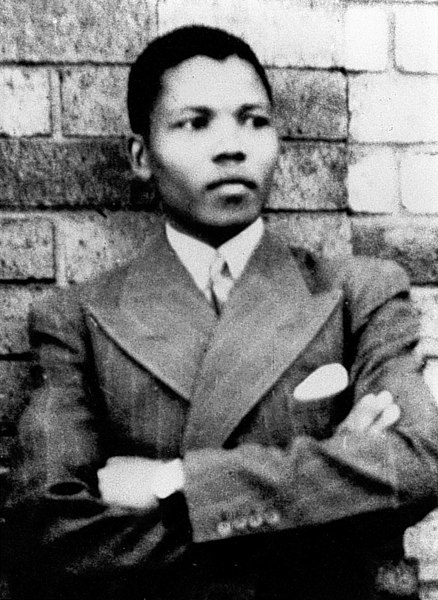
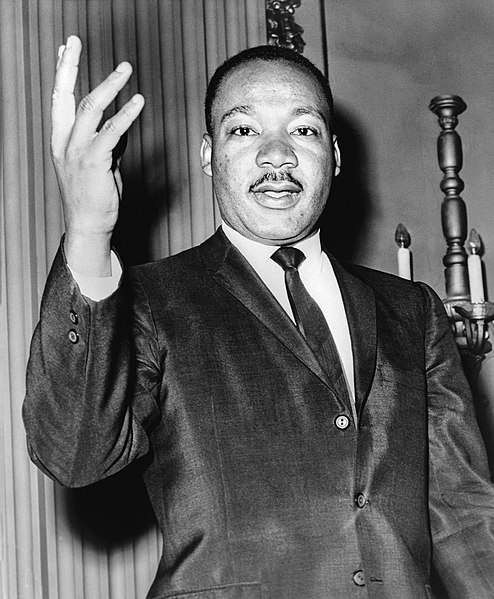
However, there is evidence that supports the belief that humans may learn to live, multiply, and spread—that is, to remain vigorous—without constantly fighting one another. The strongest evidence may lie in how, in every society, there are some people who show a clear inclination toward settling apparently irreconcilable differences by negotiation rather than by violence. Some people can stick to the ways of Reason even when they're attacked personally, physically. 


                            File:Young Mandela.jpg

                      Nelson Mandela (1937) (credit: author unknown, via Wikimedia Commons)


They are acknowledging implicitly that they do not believe any single worldview or set of values (even the ones they learned as children) necessarily leads to the only viable, “right” way of life. From a social sciences viewpoint, we could say the value systems of these more peaceful members of society assign a higher value to the lives of other humans than to reducing the anxieties they experience when they see other humans living in ways that seem strange to them. 


                   File:Martin Luther King Jr NYWTS.jpg

                     Martin Luther King, Jr. (credit: Dick DeMarsico, via Wikimedia Commons) 

Monday, 10 July 2017

So, is war inevitable? Again, the evidence of history seems to answer with a firm “yes”. Wars are fought over these very differences. Following this line of argument, we see what Hitler thought of as his great insight: he accepted that war was an inevitable, periodic test of the cultural and, he said, racial vitality of a people. He held to, and ranted over, his worldview to his last hour. To geneticists, his racial theories are meaningless silliness. Humans are all one species. But when his worldview is extended to an analysis of cultural groupings of humans (e.g. tribes and nations) and the conflicts that arise among them, it becomes more disturbing.


   File:Nuremberg in ruins 1945 HD-SN-99-02987.JPG

                                                           Ruins of Nuremberg, Germany, 1945                                                                                      (credit: Keystone/Second Roberts, via Wikimedia Commons)


The ancient Greeks had two words for humans: Hellenes (themselves) and barbarians (everyone else). Similar in view and vocabulary are the Chinese. To many Chinese in China, I would be gwai lo, an evil alien. The word Masai—a famous African tribe’s name for themselves—means people, as do the words Innu, in Innu, and Cheyenne, in Cheyenne. For hundreds of years, Europeans divided the members of the species homo sapiens into Christians and heathens. The Muslims speak of the faithful and the infidel. All humans for centuries in Japan were either Japanese or gaijin. Jews were proud that they were not Gentiles. Tutsis were not Hutus. In other words, people in all these cultures and most others that have ever existed have believed that they are—or were, in the cases of those now vanished into history—the only fully human humans. Thus, war has always occurred with discouraging regularity.

The evidence mounts on all sides against the hopes of those who love peace. People find it easy, even moral, to attack, subdue, assimilate, and sometimes even exterminate other humans whom they regard as members of an inferior subspecies. By this reasoning, Hitler was only exhorting the Germans to accept the inevitability of war and get to work at being winners.


Under this reasoning, war is the way by which we have – through the sociocultural mode of evolution – become our own predators. We cut out the ineffective parts of our species’ total concepts-values-behaviors pool (its meme pool, rather than its gene pool) by war. Wars primarily kill the young and fit, the prime breeding stock. And modern wars kill much of the healthiest, smartest breeding stock on both sides. Wars don’t serve a genetic mode of evolution anymore, if they ever did. They clearly haven’t since the first technological war—that is, the US Civil War. In modern wars, too many young men die and too much prime breeding stock is lost. But wars do still serve a cultural mode of evolution.

Sunday, 9 July 2017

Another digression is in order here. It is an important digression that has been lingering at the edge of this topic, the connection between culture and survival, for several chapters already, so I will indulge in it for a few pages.

If we strive to be rigorously logical and objective at this point, we can also become very discouraged. Every society has its own world view, its own values, and its own morés (accepted patterns of behavior). The natural trend for human societies seems to be for each to keep moving ahead with its way of life while simultaneously diverging from and becoming ever more alien to all other societies and their ways of life.

Does an analysis of human value systems imply also that we can never arrive at a set of values that would be good and right for all humans? Will the people in the world’s many different societies continue to be loyal to incompatible sets of values? Even worse, will citizens of the world’s societies continue to follow their own values so rigidly that they will tolerate no other way and will feel motivated to kill other folk whose values and behaviors clearly differ from their own? The answer in History, sadly, seems to be “yes”.

Analyzing the background physical reality in which societies evolve adds to our sense of hopelessness. The environment around us is always changing, so our value systems and morés must too. When new conditions arise, different societies’ responses to them may all prove effective, as has happened in the animal world with lions and hyenas.


   File:Hyenas Fight Against Lions Over a Kill HD 1.png

           lions and hyenas fight over a kill (credit: Kruger Sightings, via Wikimedia Commons)


Lions and hyenas occupy the same habitat and hunt the same prey. Their relative competitive advantages and disadvantages interact in complex ways, but they both flourish at the same time in the same habitat.1 In this, they are akin to human societies, whose bases are cultural rather than genetic, but whose competitive situations are analogous to those of lions and hyenas. Lions and hyenas coexist in the same habitats and remain extremely mutually hostile. They exist as hostile neighbours, drive one another away from kills, and regularly fight to the death. 

Examples of human societies in similar circumstances don’t just riddle History; they are what History is about (e.g. the Apache and Pueblo, Huron and Iroquois, Gauls and Germans, Ghiljais and Durranis, Croats and Serbs, Poles and Ukrainians, Catholics and Protestants, Sunnis and Shia, etc.).
                                       
In other words, estrangement between societies comes about by a natural process. Different, often neighbouring societies, each with its own values and customs, arise and make war on each other as naturally as the real world simply rolls along. Such has been the case for all of human history so far.

Saturday, 8 July 2017

Chapter 10 – World Views and the War Digression

Protoplasm moves forward through time only in certain limited ways. If a branch of the living community of the earth strays outside those shifting boundaries, it is cut off from the energy-flows of the planet’s ecosystem and it shrivels and dies. From the earth’s perspective, the extinction of a species, a culture, or an individual is neither sad nor ironic nor comic: it is simply over. Even in nation-sized groups, humans cannot ignore this truth for long. Live in the ways that your environment calls for or else die out.
                                        

   File:Bet She'an Theatre stage 1230.jpg

                       Ruins of ancient Beit She’an  (credit: James Emery, via Wikimedia Commons)


Recognizing that survival, if it is to happen at all, must happen in material reality, not the dimension of Plato’s forms or the soul or cyberspace, all societies including prehistoric ones, historical ones, and contemporary ones have always tried to integrate their value systems—the codes which guide their citizens’ actions in all phases of living—with their society’s worldview. Thus, a society’s worldview is crucial to its staying in a favorable part of the energy streams physically near that society. A society’s worldview, its way of picturing reality, informs its value system, then its morés and behavior patterns, and so determines whether that society will survive.

A worldview is a way of understanding the real world. It is a way of organizing our sense data, memories of sensory data, and categories of these data. Every society that survives arrives, by consensus of generations of its people, at a system for organizing people’s perceptions of their universe and then of the roles of humans in that universe. The people then are programmed to perceive their society’s “way of life” as being correct, appropriate, and natural. "We are just people being people", said every society ever. 

Whether a worldview precedes, parallels, or follows a set of values informed by that worldview is difficult to say. Worldviews and the value systems and morés that go with them are subtly intertwined. A change in a society’s worldview, the values shifts which that change leads to, and the behaviors the new values foster all interact in one large complex in a nation’s ways of doing, thinking, talking, and living—its culture, in other words.

                            
   File:ASOM D069 Aztec calendar stone.jpg

              Aztec calendar (a neatly condensed world view) (credit: Wikimedia Commons)


In any case, a society’s world view, if it is analyzed closely, can be interpreted as a condensed version of, and guide, to that society’s values. In conjunction with their basic view of what the universe is, a society’s people design systems of values and attached behaviors that they teach to their children as being good and right. The word right has two meanings here: right in the sense of accurately describing things in the material world (“Is that thermometer right?”) and right in the sense of being moral (“Do the right thing.”). Upon close analysis, this ambiguity is not ambiguous at all. We want deeply to believe that our idea of moral rightness is consistent with the way the universe really works.